
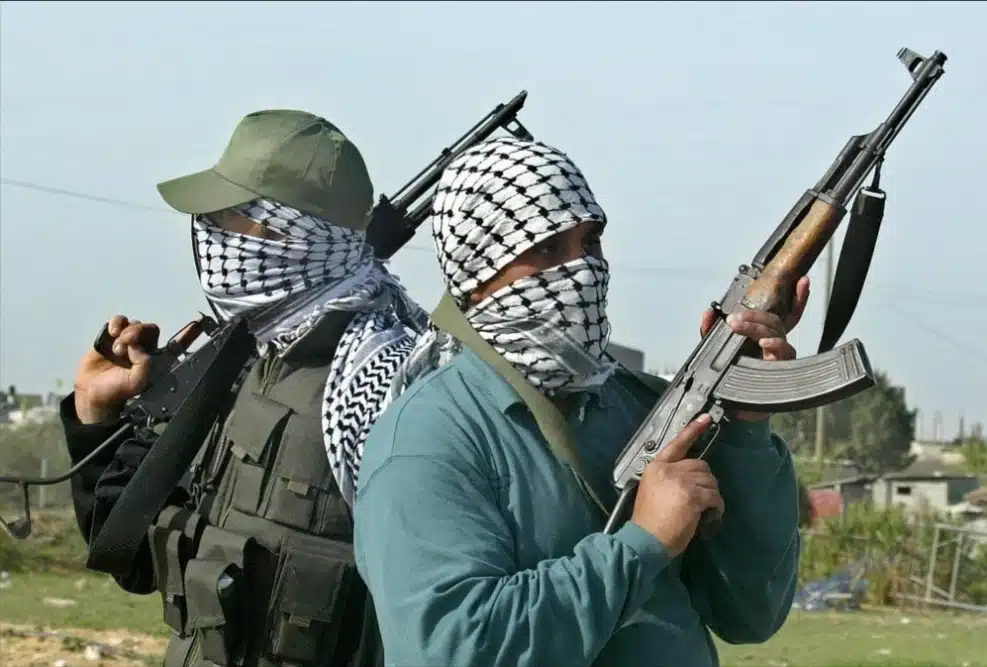
There are moments in the life of a nation when condolences become an insult. The massacre in the Woro and Nuku communities of Kwara State is one such moment. Over one hundred and sixty Nigerians men, women and children were rounded up, bound, and executed in cold blood.
Not in a war zone. Not in a declared battlefield. But in their homes, on their farms, in the ordinary spaces of daily life where citizens are supposed to be protected by the state.
In response, government spoke. It always speaks. Condolences were offered. Troops were deployed after the fact. Statements were issued. And then silence followed, the familiar Nigerian silence that descends after tragedy, as though the mere passage of time could substitute for justice.
“The opposite of love is not hate, it is indifference.”- Elie Wiesel
But when citizens are slaughtered in one coordinated attack and the primary response is sympathy, the issue is no longer insecurity alone. It is governance failure.
When warnings are ignored, graves multiply
Several years ago, a former Chief of Army Staff and Minister of Defence publicly expressed loss of confidence in the ability of Nigeria’s security architecture to protect its citizens. He warned that communities were becoming sitting targets and suggested that citizens might have to defend themselves. At the time, the statement was controversial. Some dismissed it as reckless; others saw it as frustration.
Today, after repeated mass killings across the North-Central, the North-West, parts of the Middle Belt, and now creeping steadily into the South-West, that warning no longer sounds extreme. It sounds like an unaddressed alarm.
When a figure who once sat at the heart of the military establishment openly questions the system’s effectiveness, responsible governance demands inquiry and reform. Instead, the system closed ranks. The result is visible in mass graves.
Missing weapons, unanswered questions
Nigeria’s insecurity is sustained not only by ideology but by logistics. Armed groups operate with weapons, ammunition, intelligence and mobility. This raises a fundamental question that has never been satisfactorily answered: how do non-state actors consistently acquire arms in such quantities in a country with supposedly regulated armouries?
Over the years, there have been persistent allegations of missing or diverted weapons from police and military stockpiles. Senate inquiries have been announced. Committees have been formed. Investigations have been promised. Yet the outcomes remain largely invisible to the public.
Weapons do not simply disappear in a functioning state. When they do, and no one is held accountable, it creates an environment where criminal networks thrive. Citizens are entitled to know whether arms procured with public funds to defend them have been mismanaged, diverted, or abandoned to corruption.
Until there is a transparent forensic audit of arms procurement, storage and deployment, every massacre will raise the same disturbing suspicion: that state failure is not accidental.
Security agencies under scrutiny
It must be stated clearly: many officers have paid with their lives trying to protect communities. Their sacrifice deserves respect. But institutions are judged by outcomes, not intentions.
Nigeria’s security agencies have long struggled with poor intelligence coordination, slow response times, weak oversight, and public trust deficits. Allegations of corruption, abuse of power and selective enforcement are not new. They are part of a documented pattern that has eroded confidence between citizens and those tasked with protecting them.
When attacks occur despite repeated warnings, when perpetrators operate for hours without resistance, and when accountability rarely follows, citizens are justified in asking whether the problem is merely incompetence or something deeper.
Asking such questions is not an attack on the uniform. It is a demand for institutional accountability.
Violence reaches the South-West
For years, the South-West assumed a measure of insulation from the scale of violence seen elsewhere. That assumption is now dangerously outdated. Criminal networks and extremist violence have found entry points into parts of Osun State through Ora-Igbomina and surrounding communities.
Farmers are afraid to work their land. Families fear nightfall. The early warning signs are unmistakable.
Yet political leadership appears distracted by ceremonies, anniversaries and public celebrations. At a time when security coordination should dominate governance priorities, optics and pageantry seem to take precedence.
Leadership is not measured by appearances in moments of comfort, but by decisiveness in moments of crisis.
Unequal seriousness across regions
Across Nigeria, a contrast is emerging. Some states, particularly in parts of the East and South-South, are investing in intelligence gathering, technological support, community surveillance and structured engagement with security professionals. These efforts are not perfect, but they demonstrate seriousness.
The question is unavoidable: what are other states prioritising? What value does infrastructure, celebration or political theatre hold when citizens are unsafe? Development without security is an illusion.
Security is not one policy item among many. It is the foundation upon which every other policy rests.
Beyond religion and ethnicity
This tragedy must not be misrepresented as religious or ethnic conflict. Terror does not discriminate by faith. Bullets do not recognise identity. Christian or Muslim, Yoruba or Hausa or Igbo — the dead are united by vulnerability, not belief.
Reducing these massacres to sectarian narratives only benefits those who profit from chaos. The real divide is between citizens protected by power and citizens exposed to violence.
A government that cannot protect its people, regardless of who they are or what they believe, has failed its most basic obligation.
The dangerous appeal of self-help
In the face of repeated state failure, some citizens ask whether they must protect themselves. This is not rebellion; it is despair. But history shows that widespread vigilantism leads not to safety, but to cycles of revenge and instability.
The alternative is not lawlessness. It is accountability.
Citizens must demand:
Transparent investigations into security failures before and during major attacks.
A full forensic audit of missing or diverted weapons.
Clear responsibility for governors, commissioners and security chiefs where negligence is established.
Lawful, supervised community protection mechanisms under strict oversight.
Anything less is performance, not governance.
A quiet erosion of freedom
There is an uncomfortable question many Nigerians now ask privately: are citizens valued only as statistics — to be governed, taxed, and mourned, but not protected?
When deaths are normalised and accountability is endlessly postponed, freedom becomes symbolic rather than real. Democracy cannot survive where life is cheap and power is insulated from consequence.
One death is too many
Let us return to the central truth. One death is too many. One hundred and sixty is a national indictment.
This massacre must not be absorbed into Nigeria’s long list of forgotten tragedies. Condolences cannot replace justice. Silence cannot replace accountability.
History will ask what was done when citizens were slaughtered. Words alone will not be an acceptable answer.
*Ogundipe, A Public Affairs Analyst, Former President Nigeria and Africa Union of Journalists writes from Abuja, Federal Capital City.