
The landscape of professional football is shifting. In a landmark move to bridge the gender gap on the touchline, FIFA has announced strict new regulations requiring every team in its women’s tournaments to include at least one female coach.
FIFA: A New Era for Technical Staff
The FIFA Council confirmed on Thursday that these requirements will take effect immediately, starting with this year’s U-17 and U-20 Women’s World Cups and the Women’s Champions Cup. Under the new ruling, every team must have at least two female staff members on the bench during matches. Crucially, one of these individuals must hold a head coach or assistant coach role.
This mandate applies across the board, covering both youth and senior levels for club and national sides. The decision follows a long-term strategy to improve female representation in a sector still dominated by men.
Closing the Representation Gap
The statistics from the 2023 Women’s World Cup highlight the current disparity. Only 12 of the 32 head coaches were women. England manager Sarina Wiegman was notably the only female coach to reach the quarter-final stage of that tournament.
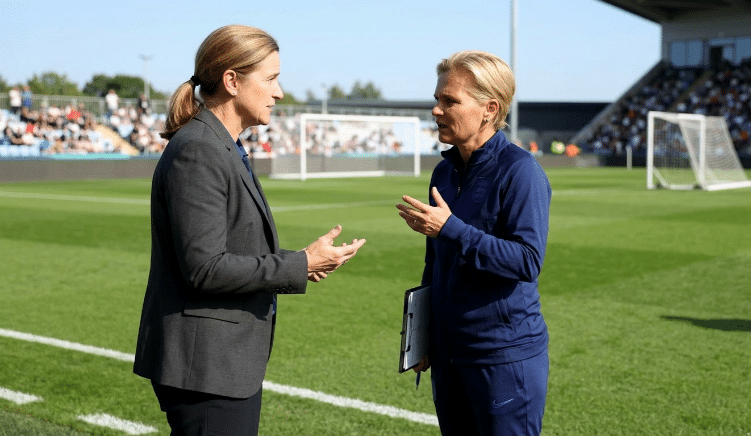
Jill Ellis, FIFA’s chief football officer, was blunt about the current state of the game:
“There are simply not enough women in coaching today. We must do more to accelerate change by creating clearer pathways, expanding opportunities, and increasing the visibility for women on our sidelines.”
Ellis added that these regulations, paired with development programmes, represent a vital investment in both current and future generations.
High-Profile Pioneers
While the numbers remain low, several high-profile women are already leading the way. London-born Emma Hayes currently manages the United States, supported by assistant Denise Reddy. Hayes has previously called the lack of female coaches a “massive issue,” urging administrators to find creative solutions.
Other British coaches making waves abroad include:
- Gemma Grainger (Norway)
- Casey Stoney (Canada)
- Carla Ward (Republic of Ireland)
Sarina Wiegman, a four-time FIFA Best Women’s Coach, remains the gold standard. Speaking on the need for balance, Wiegman noted:
“Of course what we hope is to get more female coaches at the top level and that the balance gets better than it is right now. Males are welcome too but if the balance is better than hopefully that will inspire more women to get involved in coaching.”
With the 2027 Women’s World Cup in Brazil on the horizon, FIFA expects these rules to rapidly transform the look of the technical area, ensuring that the women’s game is led by women.