
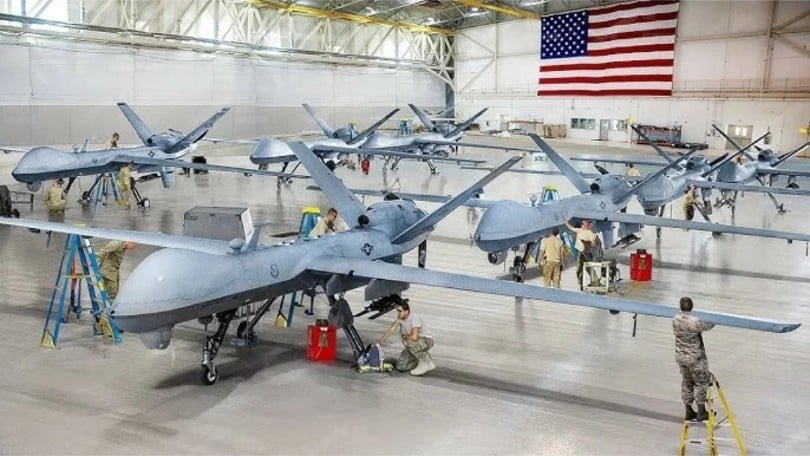
The United States has deployed multiple MQ-9 drones and approximately 200 troops to Nigeria. This move aims to provide vital intelligence and training support to the Nigerian military. The mission focuses on the ongoing fight against insurgents across the northern region.
A Mission Defined by Intelligence and Surveillance
The operation remains strictly limited to surveillance and advisory roles. US personnel are not embedded in frontline units, and no drone airstrikes are currently being conducted.
“The U.S. military has multiple MQ-9 drones operating in Nigeria alongside 200 troops to provide training and intelligence support to the military,” U.S. and Nigerian officials told Reuters.
Nigerian authorities requested the deployment to help identify, track, and respond to local terrorist threats. A US defence official told Reuters: “We see this as a shared security threat.” This underscores that the mission is restricted to intelligence collection.
Tactical Support from Bauchi Airfield
Major General Samaila Uba, director of defence information at Nigeria’s Defence Headquarters, confirmed that US forces are operating from Bauchi airfield.
“This support builds on the newly established U.S.-Nigeria intelligence fusion cell, which continues to deliver actionable intelligence to our field commanders. Our U.S. partners remain in a strictly non-combat role, enabling operations led by Nigerian authorities,” Uba said.
The Role of the Reaper Drones
The MQ-9 drones, often called Reapers, can loiter at high altitudes for over 27 hours. While they can perform strike missions, officials clarified they are used exclusively for surveillance here.
“Our US forces are helping Nigeria identify, track and respond to terrorist threats,” Uba said. He did not provide details on specific operations.
Escalating Violence in the North
The deployment follows a rise in violence. On 16 March, suicide bombers attacked a garrison town in the northeast. This highlights the persistent threat from Boko Haram and Islamic State West Africa Province (ISWAP).
“We continue to assess that these organisations will seek opportunistic targets and may attempt to demonstrate relevance through high-visibility attacks,” Uba noted.
Strategic Military Partnerships
The duration of this mission depends on agreements between both nations. This follows previous American airstrikes on Christmas Day, ordered by President Donald Trump against ISIS-linked elements.
In February, reports indicated that 200 troops were sent to boost counter-terrorism capacity. This came after President Trump criticised Nigeria regarding the protection of Christians from attacks. The current mission reinforces the focus on intelligence-sharing to combat evolving insurgent threats.