

In July 1967, the Nigerian Civil War reached a turning point when the national army captured Bonny Island. As a vital oil terminal, its seizure provided the financial lifeline the government needed to survive. This historical moment highlights a truth that still defines the nation today: “Oil is not just an economic resource; rather, it is an important resource that defines the prosperity of the Nigerian state.”
Now, sixty years after independence, that lesson feels more urgent than ever. Global tensions are once again reshaping the energy landscape. Recent military interventions by the United States and Israel against Iran have sent crude prices soaring. As major global powers draw from their strategic reserves, Nigeria—Africa’s largest producer—stands at a crossroads of immense risk and golden opportunity.
Production Gains Amid Global Turmoil
Rising prices directly bolster Nigeria’s foreign reserves. Thanks to new wells and more effective anti-theft measures, production rose from 1.345 million barrels per day (bpd) in 2024 to approximately 1.45 million bpd in early 2026.
The fiscal implications are massive. For every $10 increase in global oil prices, national revenue can climb by roughly $14 million daily. With the 2026 budget benchmarked at $65, sustained prices hitting $100 or even $150 per barrel could funnel billions of extra dollars into the treasury.
The Refining Hurdle
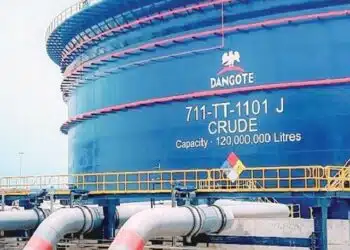
Despite this wealth, Nigeria faces a strange reality: it still imports vast amounts of refined fuel. The Dangote Refinery, a 650,000 bpd “game-changer,” began operations in late 2024. However, it initially produced only 18 million litres of petrol daily—far below the expected 35 million. Consequently, imports of 24 to 44 million litres continue, leaving Nigerians vulnerable to high transport and food costs when global prices spike.
Domestic stability also remains a factor. In late 2025, attacks linked to the Niger Delta Avengers slashed output, briefly allowing Angola to overtake Nigeria as the continent’s top producer.
Tinubu’s Reform Agenda
Addressing these gaps requires a two-pronged strategy: securing the oil value chain and diversifying the economy into agriculture and technology. President Bola Ahmed Tinubu has introduced bold reforms to trigger this shift.
In May 2023, the government scrapped the costly fuel subsidy. According to the administration, “Allowing petrol prices to reflect market conditions has reduced fiscal pressure and improved incentives for investment in domestic refining.
By unifying the exchange rate, the government has also made it easier for firms to transact. While this initially weakened the Naira, it improved transparency. Combined with the rehabilitation of the Port Harcourt, Warri, and Kaduna refineries, Nigeria’s total refining potential could soon exceed 1.09 million bpd.
If these reforms hold, Nigeria will finally move past the paradox of exporting crude while buying back fuel. Instead, it can emerge as a powerful regional hub for petroleum exports and economic resilience.