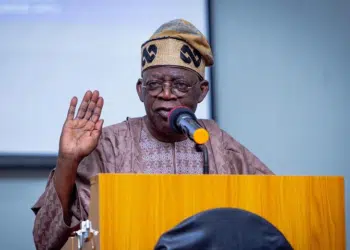


Your Excellency, in 1961, the government of South Korea, led by the disciplined and strategic leadership of Park Chung-hee, took control of its economic destiny and made a deliberate decision to create new billionaires. A small group of competent, ambitious local businessmen, the vanguard of visionaries, were handpicked, shielded from foreign competition, and given cheap credit within a system structured for scale. The state concentrated capital, reduced external pressure, and aligned policy with production, ensuring these firms were not constrained by the limits that prevent most businesses from scaling.
The state did not wait for wealth to trickle down. It engineered it upward. It concentrated national credit in a narrow cadre of roughly seven industrial families and protected them until they could compete globally. This was not favoritism; it was deliberate economic design that intentionally created billionaires. From that system emerged firms that would come to define industrial power, including LG, Hyundai, SK Group, and Kia, names now recognized across the world. One of those early state-backed enterprises, a modest trading firm once obsessed with dried fish and noodles, was pushed through that system until it became the global institution now known as Samsung.
From Seoul to Lagos: Applying the South Korean “Chaebol” Strategy to Nigeria
South Korea’s stellar performance is widely praised as a model for emulation, but what is often admired is rarely understood. It was built on discipline, structure, and a culture of entrepreneurship that relies on audacity, improvisation, and experimentation.
History, when examined without sentiment, reveals this pattern again and again. In China, under Deng Xiaoping, the state did not simply open markets; it engineered outcomes. Since the turning point of 1979, millions have been lifted out of poverty, and alongside that transformation emerged a class of billionaires, not by accident, but by design.
China did not stop at creation; it sustains its enterprises through intentional investment and consistently favorable policy frameworks.
The state understands that when its companies succeed, the returns multiply—through employment, industrial depth, and significantly higher tax revenues.
Your Excellency, the lesson for Nigeria’s salvation is written in the steel of Seoul and the silicon of Suwon. This approach is not new to Nigeria.
The “National Champion” Policy: Why Targeted Incubation is Not Favoritism
In 2000, President Olusegun Obasanjo recognised the necessity of a “National Champion” strategy. He understood that if Nigeria was to reduce its dependence on imported cement and fuel, the state had to deliberately develop industrialists. He cleared the path for a select few, creating the policy conditions that enabled the rise of Aliko Dangote and others.
Today, a single entity like the Dangote Group pays over ₦900 billion in taxes annually, employs tens of thousands, and has become a critical anchor for Nigeria’s industrial stability. It is not far-fetched to say that, without the Dangote Refinery, Nigerians would likely be buying diesel at nearly ₦3,000 per litre today.
The tragedy is not that we lack capacity; it is that we stopped at one. No single industrial anchor, no matter how powerful, can carry the weight of a nation.
One Dangote can stabilise a sector; ten can stabilise an economy.
Who says the price of rice cannot move from ₦80,000 to ₦40,000? Who says the price of cement cannot fall drastically? When you deliberately develop industrial leaders and align them with national priorities, scale begins to work in the interest of the people, driving down costs, expanding access, and strengthening the economy.
What we have is proof of concept. What we lack is replication at scale.
Proof of Untapped Capacity
I will not quickly forget when Sunday Dare brought me to you in 2015. I spoke then of a gigantic vision, the Lorenzo by Sujimoto, conceived as the tallest residential building in Lagos and a monument of architectural ambition envisioned for 16 Bourdillon Road.
Since then, my ambitions have extended far beyond luxury real estate, from 50,000 hectares of rice cultivation to the production of 500,000 tonnes of vegetable oil annually.
At Sujimoto, 2025 has been a gift to us. Over the past five years, we have evolved beyond luxury real estate, recognizing that while we have mastered the sector, luxury alone cannot deliver the level of impact required for a nation of over 240 million resilient and enterprising people.
Today, that evolution is being translated into execution at scale through large-scale, middle-income housing, industrial production, and agriculture. Through our proposed Sujimoto Smart City model, we aim to deliver over 5,000 homes annually across Nigeria’s six geopolitical zones.
Scaling Industrial Capacity: 50,000 Hectares to Feed a Nation
In agriculture, it is our ambition to build from an initial 50,000 hectares, with a clear path to scale to one million hectares of production within the next decade. Beyond this, we bring proven capacity in cost-efficient infrastructure development, including road construction, with the advantage of not being dependent on the dollar.
Nigeria does not lack capable builders; it lacks a system that deliberately identifies, supports, and scales them into national champions.
When Hamid Joda, a renowned banker, set out to establish TAJBank, he moved from investor to investor, knocking on countless doors; many said “NO,” yet a decisive few said yes to his bold vision, and in that minority decision now sits one of Nigeria’s fastest-growing banks, employing over 5,000 people. What would have happened if the bank was never set up or never succeeded? Today, those jobs would not exist, and for many, the stability those opportunities created, the households they sustained, and the futures they quietly enabled would simply never have materialised.
Yet, Nigeria remains a nation of brilliant but fragmented entrepreneurs, each fighting a lone battle against high interest rates, erratic power, and a volatile currency.
Nigerians have talent, but they do not have the resources to scale it. Nigerians are great entrepreneurs, but they do not have access to capital.
Nigerians have the capacity to build, but they do not have the financial backing required to sustain and expand it.
Across today’s economic climate, even high-capacity entrepreneurs face constrained access to capital and limited institutional support.
Overcoming Financial Strain: The Need for Patient Capital in Nigerian Banking
Like many businesses operating in today’s environment, we have faced significant financial strain. At one point, our debts exceeded ₦40 billion, of which we have successfully cleared over 80 percent. Our workforce, once over 1,000 strong, has had to adjust to fewer than 500 employees, an outcome shaped by crunching economic shifts, currency unification, and tightening financial conditions that constrained cash flow.
Despite these challenges, we have not stepped back from Nigeria. We remain committed because we believe in this country, its leadership, and its greatest asset, its people. This reflects a structural gap within our financial system.
Banks are typically positioned to fund short-term ventures, often within one to two years, while building sustainable industries requires patient capital over five to ten years.
We have the raw material, Mr. President; we have the ambition. What we lack is the deliberate policy instrument.
Building on that logic, Your Excellency, if your administration were to deliberately identify and support ten to twenty such industrial leaders, amongst whom I count myself, Dr. Sijibomi Ogundele, across manufacturing, food production, energy including refining, fintech and financial services, the deep-sea economy, semiconductor assembly, large-scale mechanized agriculture, pharmaceuticals, cement, and scalable housing for middle- and low-income households, Nigeria would not only expand its productive base but fundamentally transform its economic capacity.
South Korea understood a fundamental law of economic development: you cannot redistribute wealth if you have not first mastered the art of creating it at scale. You cannot feed a nation of over 200 million people on the output of our most hardworking SMEs alone; you need industrial capacity capable of feeding a continent.
The implication is clear: we cannot fight free-market wars with a stick while our neighbors use state-backed cannons. We must use targeted tariffs and strategic protection to shield our manufacturers from dumping, just as China has done in building and defending firms like Huawei.
From China’s explosive growth to South Korea’s industrial miracle, and even in the early development of the United States, states have deliberately nurtured national champions: firms supported through targeted policies to dominate local markets and compete globally.
But a million “SMEs” cannot build a deep-sea port or anchor a continental trade currency. To lead the African Continental Free Trade Area (AfCFTA), Nigeria must move from being a referee to being the ultimate Venture Capitalist.
The “10 Industrialists” Strategy:
This is not about favoritism; it is about strategic concentration in service of the collective. When the state deliberately develops industrial leaders in key sectors, it is not gifting wealth—it is creating national anchors.
Your Excellency, it is time to identify ten to twenty industrial leaders and bring us into a room to debate and define how Nigeria will build its next generation of economic power. This is not a call for selective support; it is a call for “Value-Chain Capitalism.”
The principle is simple. It is often said that a good tailor must use the fabric at hand to design a masterpiece. You have the entrepreneurs, Mr. President. You have the raw material. What is required is a deliberate policy instrument that says: “We will back you, but you must produce, employ, compete, and deliver affordable value to the economy.”
The “ten to twenty billionaires” are not the goal; they are the tailors. They are the engine of wealth that will employ millions, pay trillions in taxes, and stabilise our currency through massive export revenue.
The “Billionaire-Enabling Government”
Your Excellency, your “Renewed Hope” agenda must now enter its most decisive phase. You must bring together the innovators, the industrialists, and the builders who have already demonstrated capacity, and define how Nigeria will produce its next generation of economic pillars.
To catapult Nigeria into a $1 trillion economy, the Federal Government must pivot from being a regulator to becoming an active architect of domestic industrial power.
This requires the deliberate development of national champions across strategic sectors.
My dear President, you have done this before. The record of Lagos is clear: where deliberate policy met capable entrepreneurs, real outcomes followed. What was achieved between 1999 and 2007 was not accidental; it was the result of intentional choices, identifying builders and backing them to scale. That same clarity of execution can now be applied on a national scale, with far greater consequence.
The lesson is consistent across every serious economy: nations that rise do not wait for wealth; they create it. They identify their strongest builders, back them deliberately, and hold them to results. That is how industrial power is built. That is how billionaires emerge, not by chance, but by design.
Nigeria has already seen what one can do. The task now is to do it again, this time at scale.
On a personal note, as I mark my birthday today, I consider it an honour to present these reflections to the Presidency at such a defining moment for our dear nation.
Thank you, Your Distinguished Excellency.
God bless the Federal Republic of Nigeria.
About Sijibomi Ogundele
Dr. Sijibomi Ogundele is the Group Managing Director of Sujimoto, the Czar of Luxury Real Estate Development, and the mastermind developer behind the renowned Giuliano. Our other audacious projects, such as the most sophisticated building in Banana Island, LucreziaBySujimoto, the grandiose Sujimoto Twin Tower, the tallest twin towers in Africa; the regal Queen Amina by Sujimoto, a monument to royal affluence; the magnificent high-rise LeonardoBySujimoto; the Sujimoto Farm; an advanced farm estate system that incorporates housing, farm hospitals, hotels, and markets within an ecosystem, creating opportunities for agro-tourism and affordable housing, among other projects that have etched an indelible imprint on Nigeria’s skylines, a testament to Sujimoto’s unrivalled mastery of modern-day engineering.