

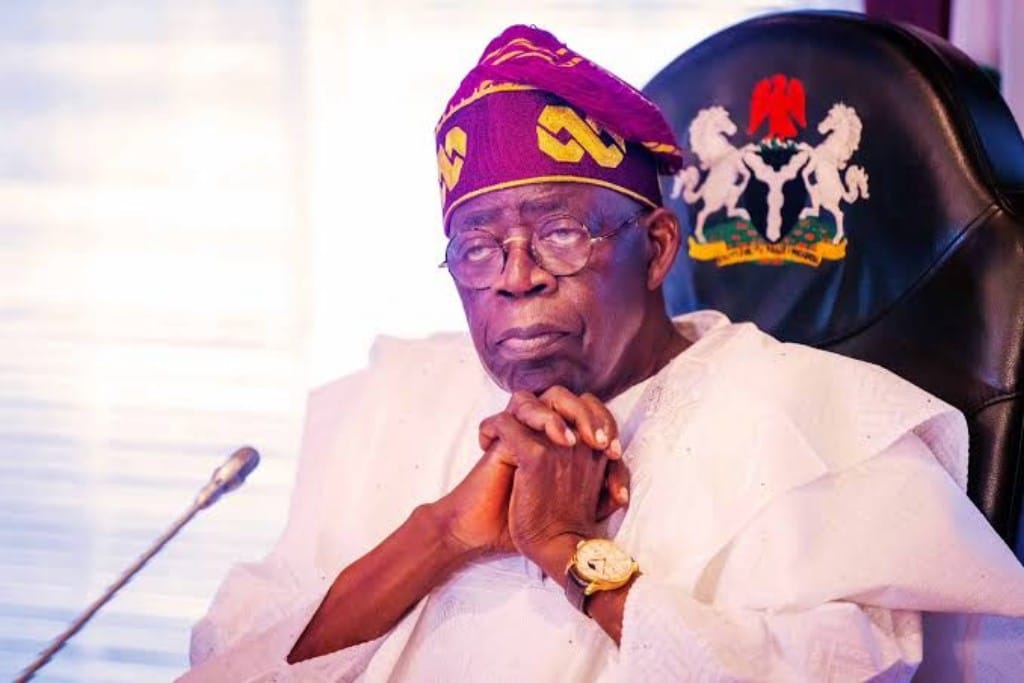
If previous analyses examined the structures of power surrounding President Bola Ahmed Tinubu, a more decisive question remains: what actually animates them? Power does not operate on inertia. It requires continuous interpretation of actors, moments, and shifting alignments. It requires judgment. At the centre of Tinubu’s durability lies a factor frequently acknowledged but movingly misunderstood—political intelligence.
This is not reducible to formal education or years in public life. Nor is it identical with experience, although experience refines it. This faculty is a distinct faculty: the ability to read patterns within elite power dynamics, anticipate shifts before they materialise, and act within narrow windows of opportunity where others hesitate. It is the difference between participating in politics and shaping its trajectory.

The Cognitive Architecture of Influence
In Tinubu’s case, this faculty functions as the cognitive engine behind the political architecture. The first dimension of this intelligence is anticipatory perception—the ability to read the field before it fully forms.
Political change rarely announces itself; it emerges through subtle signals such as fractures within ruling coalitions or fatigue within dominant narratives. Most actors respond only when patterns become obvious, but by then, the strategic advantage has narrowed. Tinubu’s trajectory suggests repeated engagement with moments of early interpretation. His movement from regional consolidation to broader national relevance reflected an assessment that existing alignments had reached a point of internal contradiction.
Timing as an Instrument of Political Intelligence
In political systems, the value of a decision is inseparable from its timing. Actions taken too early encounter resistance; those taken too late lose impact.
”Whether in alliance formation, candidate positioning or strategic withdrawal, there is a pattern of acting not at moments of clarity, but at points of emerging direction.”
This is not infallibility; it is a calculated engagement with uncertainty. Timing, therefore, becomes an instrument of power that converts ambiguity into opportunity.
Psychology and Risk in Strategic Leadership
Politics at scale is not merely institutional; it is behavioural. Tinubu’s method involves a granular understanding of elite psychology. He treats political actors not as homogeneous blocs, but as individuals driven by ambition, fear, and calculation.
His political intelligence focuses on aligning interests rather than enforcing uniformity. This includes accommodating ambition where possible and structuring relationships to encourage continued engagement within a shared framework. The result is the containment of rivalry within an overarching system.
Risk Calibration and Narrative Awareness
Enduring political actors are neither reckless nor excessively cautious. Tinubu’s decisions reflect a pattern of measured exposure—engaging risk where potential structural advantage outweighs immediate uncertainty. This is risk as a strategic instrument.
Furthermore, his journey has been accompanied by persistent and often conflicting narratives. What is notable is his apparent capacity to operate through these stories without immediate recalibration of core strategy. This suggests a vital distinction between short-term perception and long-term positioning.
Translating Strategy into Governance
The analysis must move beyond political effectiveness to a more demanding inquiry: Can the political intelligence that acquires power be translated into the intelligence required for Nigerian State governance?
The distinction is critical. One is oriented toward competition and positioning; the other requires policy coherence, institutional strengthening, and administrative execution. Success in one domain does not automatically translate into the other.
At the national level, the variables are broader and the consequences more immediate. Decisions affect livelihoods, inflation, and social stability. This is where the Tinubu model encounters its most significant test. The same faculties that enable coalition management must now operate within frameworks that demand clarity and measurable outcomes.
For Bola Ahmed Tinubu, this reconfiguration is the defining challenge. The political engine has been built, and the intelligence behind it has demonstrated resilience across decades. What remains unresolved is whether that same political intelligence can produce a national development strategy that extends beyond continuity into national transformation. This will be answered not in abstraction, but in the lived experience of citizens.