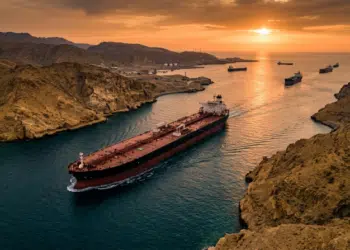

Tensions in the Middle East have intensified significantly after a US-led US naval blockade of Iranian ports resulted in the forceful seizure of an Iranian-flagged ship.
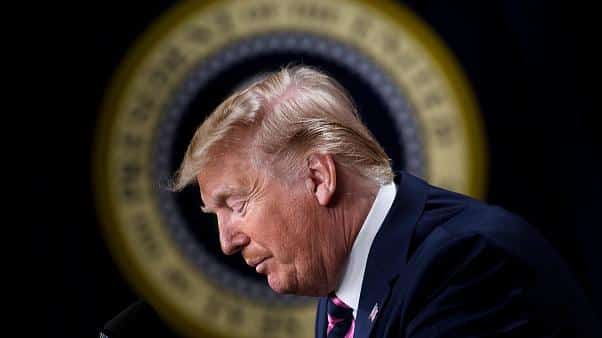
President Donald Trump confirmed on Sunday that American forces intercepted the vessel, the Touska, while it was navigating the Gulf of Oman. The incident marks a critical escalation as the international community watches for the next development in this fragile geopolitical standoff.
Confrontation in the Gulf of Oman
The confrontation occurred when the Touska attempted to evade the restrictions imposed by Washington. According to reports from the President, the vessel failed to heed multiple warnings to cease its movement.
The US Navy subsequently engaged the vessel, an action described in vivid detail by the President on his social media platform.
“The Iranian crew refused to listen, so our Navy ship stopped them right in their tracks by blowing a hole in the engineroom,” Trump stated.
Following this decisive maneuver, US Marines successfully boarded the ship to establish control. The President confirmed that the vessel is now under official US custody as authorities conduct a thorough inspection of the cargo on board.
The Status of the US Naval Blockade
This seizure represents a major test for the US naval blockade, which was implemented to restrict trade access to and from Iranian ports. The policy was formalised following the breakdown of recent ceasefire negotiations. The blockade aims to enforce strict sanctions on vessels suspected of prior illegal activity, further complicating the already precarious maritime security situation in the region.
While the US maintains that these measures are necessary, Iran has consistently decried the restriction of movement in international waters as a breach of maritime law. Tehran has described the blockade as an act of hostility, creating a volatile environment for all commercial traffic attempting to transit the region.
Diplomatic Uncertainty and the Strait of Hormuz
The incident has cast significant doubt over the future of peace talks regarding the Strait of Hormuz. Earlier, it was announced that a high-level US delegation, led by Vice-President JD Vance, would travel to Pakistan to continue discussions with Iranian representatives. However, the latest maritime engagement has left the status of these potential negotiations in limbo.
Iran’s state media has contradicted reports of renewed talks, stating that suggestions of fresh meetings in Pakistan are “not true.” Despite these conflicting signals, the international community remains hopeful that a diplomatic path can be secured before the current ceasefire agreement expires on Wednesday.
Threats and Escalation
The atmosphere remains tense as both sides trade accusations. President Trump has issued stern warnings, threatening to strike critical infrastructure, including power plants and bridges, should a lasting agreement fail to materialise. Meanwhile, Iran has accused the United States of violating the existing ceasefire by enforcing the port restrictions.
As the situation develops, the global community continues to monitor the impact on shipping lanes and energy security. With the Touska now secured, the focus shifts back to the diplomatic mission in Islamabad and whether the two sides can bridge their deep ideological divides to avoid further conflict.