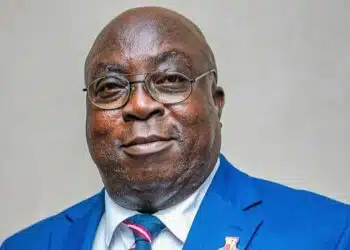


The Catholic Bishop of Sokoto Diocese and Convener of the National Peace Committee (NPC), Most Rev. Matthew Kukah, has reiterated that alleged Christian killings in Nigeria do not amount to genocide, stressing that the defining factor of genocide is intent rather than casualty figures.
Addressing alleged misinterpretations of his past comments while presenting a paper at the 46th Supreme Convention of the Knights of St. Mulumba (KSM) in Kaduna, Kukah said, “People say there is genocide in Nigeria. What I presented at the Vatican was a 1,270-page study on genocide in Nigeria and elsewhere. My argument is that it is not accurate to claim there is genocide or martyrdom in Nigeria.”

He also faulted sweeping claims of martyrdom. “Because someone is killed in a church, does that automatically make them a martyr? Whether you are killed while stealing someone’s yams or attacked by bandits, does that qualify as martyrdom? I am worried because we must think more deeply.”
Kukah said he aligns fully with the Vatican Secretary of State, the President of the Catholic Bishops’ Conference of Nigeria, and all Catholic bishops in the country on the position that there is no persecution of Christians in Nigeria.
He questioned figures being circulated about church attacks. He said, “They are saying that 1,200 churches are burnt in Nigeria every year, and I ask myself, in which Nigeria? Interestingly, nobody approached the Catholic Church to get accurate data.
“We do not know where these figures came from. All those talking about persecution, has anyone ever called to ask, ‘Bishop Kukah, what is the situation?’ The data being circulated cleverly avoids the Catholic Church because they know Catholics do not indulge in hearsay.”
Clarifying what constitutes genocide, he stated, “Genocide is not based on the number of people killed. You can kill 10 million people, and it still won’t amount to genocide.
“The critical determinant is intent—whether the aim is to eliminate a group of people. So, you don’t determine genocide by numbers; you determine it by intention. We need to be more clinical in the issues we discuss.”
Challenging claims of Christian persecution, Kukah added, “If you are a Christian in Nigeria and you say you are persecuted, my question is: how? At least 80% of educated Nigerians are Christians, and up to 85% of the Nigerian economy is controlled by Christians. With such figures, how can anyone say Christians are being persecuted?”
He argued that unity among Christians would counter discrimination.
“The main problem is that Christians succumb to bullies. The day we decide to stand together, believing that an injury to one is an injury to all, these things will stop.”
In October, Kukah urged the United States not to redesignate Nigeria as a “Country of Particular Concern” (CPC) for religious freedom violations.
Kukah argued that redesignating Nigeria as a CPC would increase tensions and allow criminals to exploit religious sentiments.
According to him, it would harm ongoing efforts by Nigerian religious leaders and the government to promote dialogue and interfaith understanding under President Bola Tinubu’s administration.
Instead of punishment, he called for “vigilance and partnership” from global institutions to help Nigeria reform and build peace. While acknowledging the reality of violence and religious persecution in Nigeria, he stated it is not total.
However, in November, U.S. President Donald Trump officially redesignated Nigeria as a “Country of Particular Concern” (CPC) for severe violations of religious freedom.
This is the second time Nigeria has received this designation from a Trump administration; the first was in December 2020. The Biden administration removed the status in November 2021.