
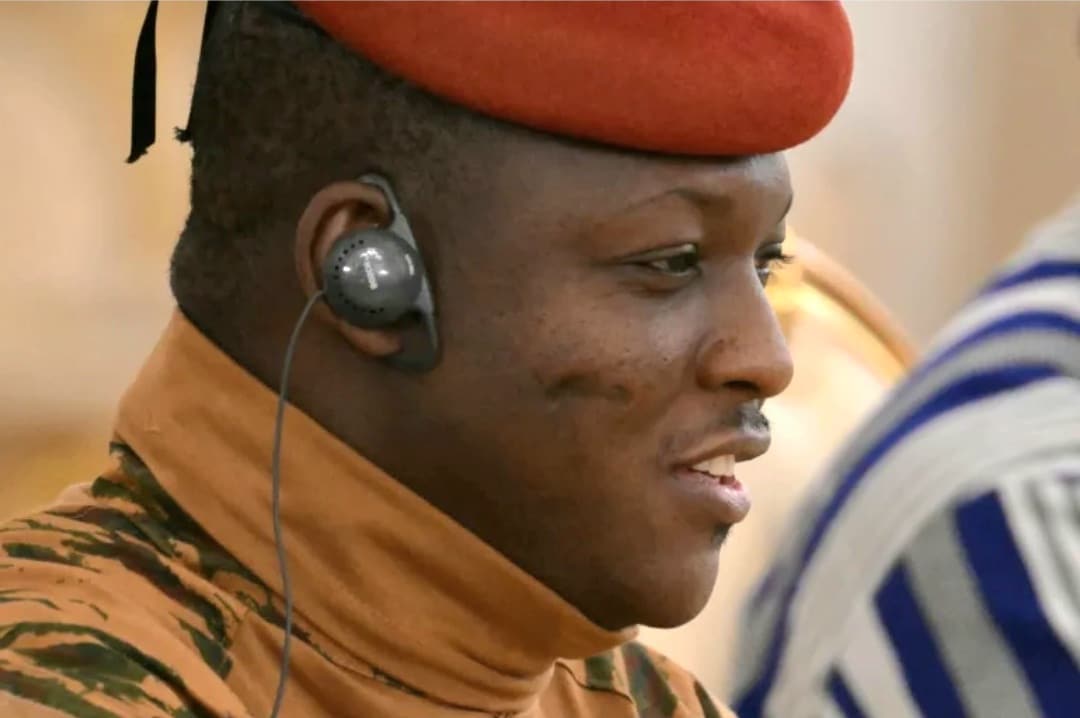
Burkina Faso’s military leader, Ibrahim Traore, has told his citizens to “forget” about democracy. This blunt statement comes only three months after his government dissolved every political party in the West African nation.
During a lengthy state television interview on Thursday, Traore used Libya as a warning. He claimed outsiders tried to “impose democracy” there and failed miserably.

“People need to forget about the issue of democracy,” he said. “We have to tell the truth: democracy isn’t for us.”
Traore went further, according to French broadcaster RFI, stating, “Democracy kills. Look at Libya; it’s a prime example right next to us! Everywhere they try to establish democracy in the world, it’s done with bloodshed … Democracy is slavery…”
Broken Promises and Rising Violence
This rhetoric marks a final shift away from Traore’s initial vows. Since seizing power in the September 2022 Burkina Faso coup, the military leader has moved the country further from its democratic roots.
Though he originally promised elections for 2024, Traore later reneged. He now insists that no voting will occur until the country is entirely safe. However, safety remains elusive. Despite promises to defeat al-Qaeda and ISIL-linked groups, violence has worsened.
Fatalities tripled during Traore’s first three years, reaching 17,775 by last May. Data from the Africa Centre for Strategic Studies shows a grim reality: most of those killed were civilians, often at the hands of government forces or allied militias.
The Crackdown on Dissent
The Sahel security crisis has provided a backdrop for intense domestic suppression. In January, the government scrapped over 100 political parties and seized their assets. This followed the 2025 dissolution of the Independent National Electoral Commission, which the government labelled “too expensive.”
Opposition leaders, prosecutors, and journalists have faced harsh consequences for criticism. Many have been forcibly conscripted and sent to the front lines of the conflict.
A New Regional Alliance
Burkina Faso is not alone in this pivot. Alongside Niger and Mali, the country exited the ECOWAS bloc to form the Alliance of Sahel States (AES) last January.
After evicting French forces, these nations have turned toward Russian paramilitary fighters for support. While Traore enjoys support from the African diaspora for his anti-Western stance, the internal cost of his “non-democratic” path continues to rise for the people of Burkina Faso.