
The global transition toward electric vehicles (EVs) is no longer a futuristic projection; it is a multi-billion-pound reality actively reshaping our motorways and factories. Yet, the initial euphoria that drove hyper-growth and aggressive automotive investments has hit a stark period of market recalibration.
While global sales volume continues to rise, the rate of growth is slowing dramatically. In major Western markets, high inventory levels, the expiration of consumer tax subsidies, and a sudden pragmatism from legacy automakers have triggered what industry insiders are calling an “EV winter.”

As car manufacturers pivot toward hybrids to hedge their bets, the road to full electrification faces deep structural challenges. Here are the seven critical risks currently threatening the trajectory of the electric vehicle industry.
1. The Residual Value Tailspin of Electric Vehicles
For the average consumer or fleet manager, a vehicle is an asset that depreciates over time. However, Electric Vehicles depreciation has proven to be incredibly volatile. A flood of ex-lease vehicles returning to the market, combined with aggressive price-cutting by manufacturers fighting for market share, has caused the second-hand value of electric cars to plummet far faster than their internal combustion engine (ICE) counterparts. This residual value uncertainty introduces severe financial risk for leasing firms and lenders, who must protect themselves by raising financing costs for new buyers.
2. Infrastructure Friction and Regional Divergence
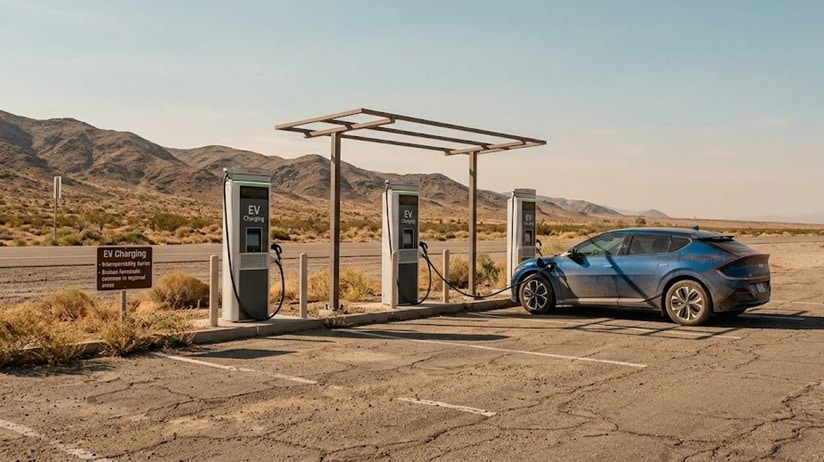
While home-charging is a luxury for those with private driveways, the public charging network remains fragmented and unreliable. The risk here is two-fold: the literal availability of rapid chargers along major transport corridors, and interoperability issues—from broken payment terminals to varying plug standards. This infrastructure gap has created a profound geographic divide; while major urban centres feature dense charging networks, rural and economically peripheral regions remain “charging deserts,” stifling widespread mass-market adoption.
3. Grid Capacity and Peak Demand Shock
Replacing millions of petrol tanks with lithium-ion batteries requires an unprecedented overhaul of national electrical grids. The risk is not necessarily a shortage of total energy generation but the acute stress placed on localised distribution networks during peak hours—specifically between 17:00 and 20:00 when commuters plug in simultaneously. Without massive, immediate investments in smart grid software, long-distance transmission lines, and stationary battery storage, local grids face the risk of brownouts or highly inflated localised electricity pricing.
4. Supply Chain Vulnerability and Critical Mineral Monopolies
The heart of an EV is its battery, a component reliant on minerals like lithium, cobalt, nickel, and graphite. The supply chain for these materials remains highly concentrated, primarily controlled by a handful of state-backed entities, with China remaining the dominant force in refining capacity. Western automakers face extreme geopolitical and regulatory risks—including sudden export restrictions or shifting tariff regimes. A single localised supply bottleneck or geopolitical dispute can bring entire assembly lines across Europe or North America to a grinding halt.
5. The Environmental and Human Rights Backlash
Marketed as zero-emission saviours of the planet, EVs carry a significant carbon and ethical footprint before they ever turn a wheel. The mining of critical minerals is frequently tied to severe environmental degradation, local water depletion, and human rights abuses—including unregulated artisanal mining and infractions on Indigenous Peoples’ rights. Global scorecards reveal that few automakers score above 50% on supply chain transparency and decarbonization of raw materials like green steel and aluminium. As consumer awareness grows, brands risk severe reputational damage if their supply chains do not clean up their act.
6. Geopolitical Protectionism and Trade Wars
The automotive sector has become a primary battleground for economic nationalism. The influx of highly competitive, vertically integrated Chinese EVs has forced Western governments to erect steep trade barriers. The US and Europe have maintained heavy countervailing duties and software restrictions on foreign-built vehicles. While designed to protect domestic manufacturing, these tariffs carry the counter-intuitive risk of slowing down the green transition by locking consumers out of the affordable, mass-market electric models needed to achieve national net-zero targets.
7. Rapid Technological Obsolescence
The pace of battery innovation is a double-edged sword. Currently, billions are being funnelled into lithium-ion infrastructure, yet next-generation technologies like sodium-ion batteries and semi-solid-state cells are rapidly approaching mass-market viability. For consumers and fleet operators, purchasing an expensive Electric Vehicles today carries the distinct technological risk that the vehicle’s battery chemistry could be rendered completely obsolete within five years. This fear of buying into the “wrong generation” of technology is causing a noticeable segment of cautious buyers to sit on their hands or retreat to the safety of traditional hybrids.
The Bottom Line: The electrification of transport remains a necessary pivot for global decarbonization, but the current market correction proves that forcing a technological shift through policy mandates alone is not enough. Until the automotive industry resolves the underlying friction of infrastructure, supply chain ethics, and asset depreciation, the electric road will remain a bumpy one.