

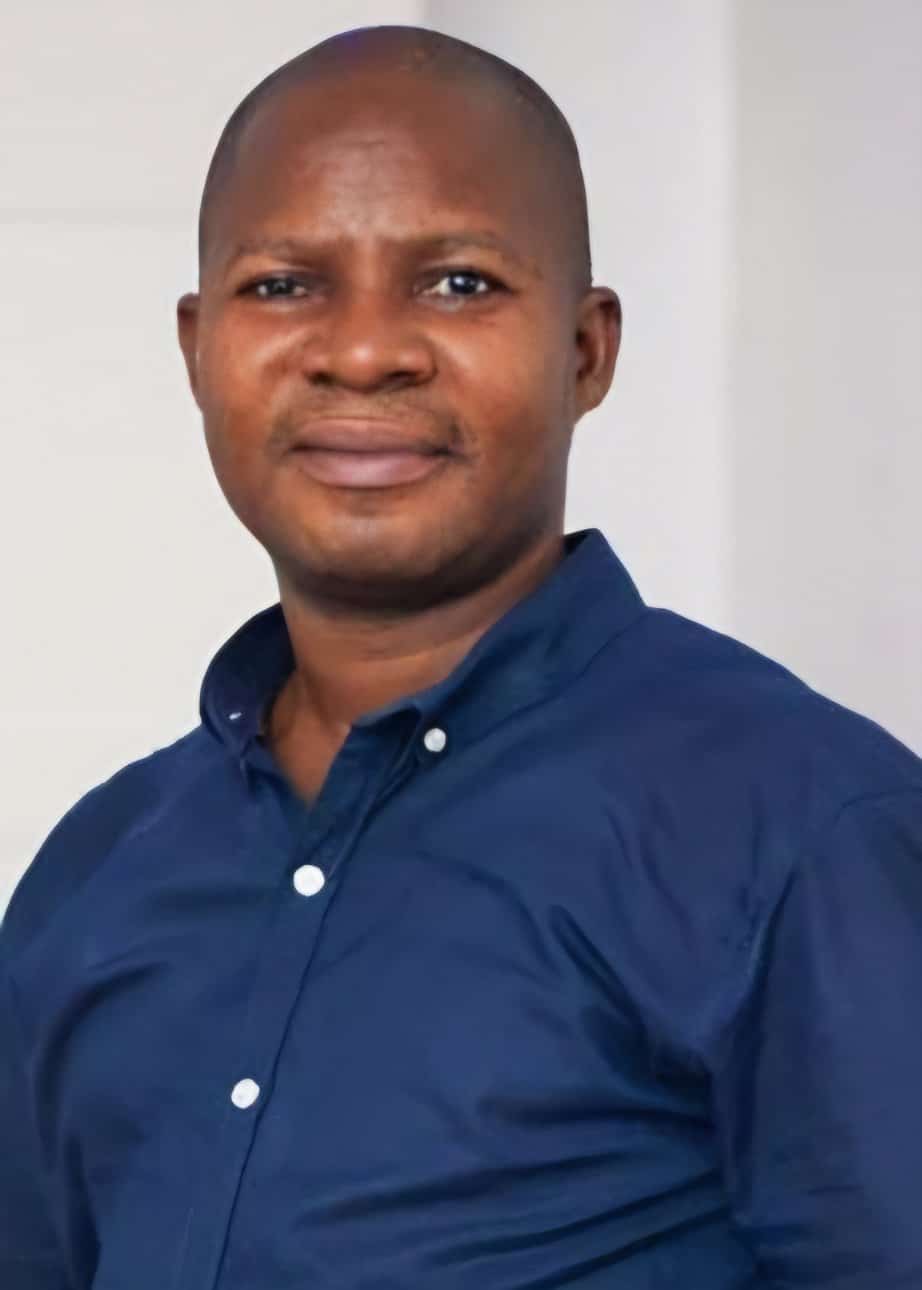
Dr Samson Sunday Owolabi, arpa, anipr}, of Ajayi Crowther University, addressed members of the NUJ (FRCN Ibadan Chapel) during the 4th Tunde Oluwanike Memorial Lecture. His presentation, “The Future-Ready Journalist: Harnessing Emerging Technologies for Professional Excellence, Public Trust and Financial Sustainability,” focused on how modern journalists can leverage emerging tools to build trust, maintain editorial integrity, and secure revenue.
Protocol
The Chairman of this occasion;
The Chairman and Executive Members of the Nigeria Union of Journalists, FRCN Ibadan Chapel;
The family of our late colleague, Mr Tunde Oluwanike;
Distinguished veterans of the journalism profession;
Media executives;
Editors;
Broadcasters;
Members of academia;
Representatives of government and civil society organisations;
Distinguished guests;
Ladies and gentlemen.

Good morning.
Why We Are Here
It is my great honour to deliver the 4th Tunde Oluwanike Memorial Lecture. I appreciate the goodwill of
the leadership and membership of the Nigeria Union of Journalists, FRCN (Ibadan Chapel) for this
invitation. I accept it with humility, thank you with joy and in great responsibility.
A Memorial Lecture is not just a yearly occurrence. It is a chance to remember and honour the abiding traditions and the fine service, and to tell those who are that we should keep going with the best things that have left us. These are moments for us to consider the lives we celebrate and the future that we are creating together.
Today, we remember the journalist, Tunde Oluwanike, who lived a life that took journalism beyond mere information collection and dissemination. Journalism is the conscience of society when it’s at its best. It is a source of information for citizens, an instrument of control of power, an expression of accountability and enhances democratic governance. The core elements of the job have not changed: the responsibility for covering the news regardless of technology or media platforms. The best honours for a brilliant journalist are not just to list his accomplishments but to let the magazine and journalism that he dedicated his life to grow. That, I think, is the meaning of today’s assembly.
We have not gathered merely to remember a journalist. We have gathered to remember what journalism ought to be. The greatest memorial we can build for Tunde Oluwanike is not a monument of concrete. It is a generation of journalists whose integrity outlives their careers.
Remember this: the future does not belong to the journalist who fears technology. Neither does it belong to the journalist who worships technology. It belongs to the journalist who is wise enough to make technology serve truth. Know this also and have peace: artificial intelligence will not determine the future of journalism. The future of journalism will be determined by whether journalists remain more intelligent than the machines they use.
Introduction
There are defining moments in the lives of every generation of journalists that define the profession. Some witnessed radio broadcasting. Some people had the experience of revolution: TV.
Journalism underwent yet another metamorphosis with the advent of the Internet. Now is our time – the time of artificial intelligence, automation, big data, immersive technologies, and constantly changing digital ecosystems.
Technology has revolutionised the way journalists work. AI can now help with the transcription of interviews, headline generation, document analysis, document translation, multimedia content creation, and newsroom decision-making processes. The algorithms and personalised content delivery of sophisticated digital platforms are increasingly used to produce, distribute and consume news (Newman et al., 2025).
The outcome of these developments has clearly opened up journalism possibilities. Meanwhile, they’ve added levels of difficulty. Information is transmitted at unprecedented speed, and so is misinformation and disinformation. The deepfake technologies pose a risk to the credibility of visual evidence. Public trust in the media is still subject to fluctuations, and traditional business models are still facing the challenge of digital disruption (UNESCO, 2023).
These are the realities experienced by Nigeria. Citizens’ access to and interaction with information has changed drastically because of the widespread ownership of smartphones, increased Internet access, and the rise of social media platforms. Digital platforms are often quicker to inform readers about breaking news than traditional newsrooms. In the era of information overload, when journalists are faced with the challenge of competing for information and information overload during elections, public emergencies and national crises, they are under a great deal of pressure.
These developments are not only technological but also of great importance. As new media technologies change the political economy of communication, they have altered the structure of media ownership, production and audience engagement, as well as the nature of economic sustainability, Popoola (2025) contends. To this end, having an understanding of the future of journalism isn’t just about knowing the digital tools. It requires an understanding of the impact of technological progress on the wider social, economic and political context in which journalism exists.
This is already happening in the Nigerian media. Digital-native newsrooms like Premium Times, TheCable and Dataphyte are still proving the power of technology to enhance investigative reporting, data-driven reporting and audience engagement. Similarly, Dubawa and Africa Check have demonstrated that the power of technology is to speed up information sharing, but that trust and credibility come from thorough checks and responsible reporting.
From these developments, we draw an important conclusion. Technological innovation will not be the only factor that will define the future of journalism. Instead, it will rely on the capacity of journalists to be adaptable and smart, but not to sacrifice the high moral standards and ethical principles of their trade.
The next-generation journalist needs to have so much more than skills. It is a professional who has to possess critical thinking, ethical judgment, flexibility, creativity, and a sense of public interest as well as a level of digital literacy.
The simple and persuasive proposition for this lecture is therefore this: For this lecture, the simple and compelling proposition is therefore this: A future-ready journalist is the individual who leverages new technologies effectively to enhance professional performance, build trust in public journalism and ensure the financial sustainability of journalism. The three are closely interconnected. Credibility is built upon professional excellence. Legitimacy depends upon public trust. The survival of the institutions depends on financial sustainability. They are both the pillars on which the future of journalism should stand.
Throughout this lecture, I will make an argument that technology is not the end. It is the vehicle. The goal has never changed: journalism that is accurate, responsible and a force for good citizenship.
Today, as we honour the life and work of Tunde Oluwanike, let us recommit ourselves to a profession that is both innovative and yet not at the same time compromising on integrity, influential but not at the same time losing its independence, and sustainable but never at the sacrifice of those who have a public service mandate.
Now I call your mindful attention to this vital discussion.
The Future-Ready Journalist: Beyond Technology
The biggest fallacy from the modern era in journalism is the idea that technology is the sole measure of professional significance. The advent of new technologies has reinvented journalism, but it has not changed its nature. Journalism still has a mission to fulfill in the realm of truth, accuracy, fairness and responsibility to society.
This is no trivial point, as the future of journalism is a human one more than a technological one.
Technologies neither gather facts independently nor exercise ethical judgement. They don’t comprehend context and don’t value the impact of false information. These are duties that only the journalist can take.
The future-ready journalist is no longer just a tech-savvy journalist. Instead, the journalist for the future reflects, adapts, is ethically grounded and uses technology to enhance the public service role of journalism.
According to Akinfeleye (2008), the professionalism of journalism is the very basis on which it gets its legitimacy. Professional competence is not only manifest in technical ability, but it is also expressed by the acceptance of ethical standards and dedication to the public interest. So, no technology can replace integrity, sound judgement and responsible reporting.
Likewise, Pate (2011) claims that African journalism should constantly evolve to reflect new political, economic and technological realities, while maintaining its democratic duties. Innovation is not the only factor that makes journalism sustainable, and the capacity of journalists to maintain public trust with credible and responsible practice is also crucial.
Popoola (2025) also notes that the advent of emerging media technologies has reshaped communication systems by changing the behaviour of the audience, the economics of the media and the production of culture. Such changes mean that journalists must acquire new skills and competencies beyond reporting.
The modern journalist needs to be familiar with digital platforms, media metrics and analytics, and the evolving economics of news production, as well as entrepreneurship in the media sector.
The hint is obvious. The future journalist has to be a lifelong learner. Knowing enough to work in journalism is no longer enough for a whole career. New technologies come to the fore every day.
Newsroom practices continue to evolve. The audience’s expectations are constantly evolving. Journalists who fail to continue to learn can thus lose their professional relevance.
According to the World Economic Forum (2025), analytical thinking, technological literacy, creativity, resilience and continuous learning are some of the most crucial skills for the future workplace. Such qualities are now just as essential in the field of journalism. The aspiring journalist of the future thus must be both inquisitive and disciplined. Such a journalist constantly learns, unlearns and relearns.
Emerging Technologies Reshaping Journalism
Journalism has always been affected by technology. The current world is one of new technologies, but one in which change is happening at a faster rate than ever before in all aspects of the journalistic process.
Artificial Intelligence
AI is one of the greatest technological breakthroughs in modern journalism. AI tools are widely used by news organisations to transcribe interviews, summarise content, analyse vast amounts of data, suggest headlines, translate content and personalise user experiences (UNESCO, 2023). These applications help newsrooms to be more efficient by saving time on repetitive tasks. Journalists can focus on investigation, verification and analysis, rather than transcribing interviews or organising documents, which takes hours.
Yet, AI should be used as a tool for aid, not a tool of replacement for professional judgement. There is a need for moral thinking, situational awareness and ethical judgement in journalism. AI is not able to make the judgement on its own whether or not to publish certain information that will be in the public interest. It can’t respect cultural sensitivities or understand the potential impact of a misrepresentation.
This may be significant in Nigeria’s multi-cultural and multi-lingual landscape. A machine can work efficiently with language without being aware of the contexts that can help to make meaning, such as historical, ethnic or religious contexts. Therefore, editorial judgement has to be decisively put under human control. The concern of artificial intelligence (AI) should not be that journalists would be replaced by machines, but rather that they become adept in its use to ensure that the news spreads in a responsible manner. It’s not about if AI will enter into journalism, but when. Whether journalists will gain the expertise to promote its responsible use is the question.
Data Journalism
Data is now one of the most valuable resources in journalism in the digital age. Nowadays, the amount of public data created by governments, electoral bodies, research institutions and international organisations is very large. Journalists with the skills to gather, analyse and interpret this data are more likely to be able to explain complex issues and hold public institutions to account. Data journalism reinforces the investigative reporting process, as it’s based on facts and figures instead of guesses.
There have been great strides in this area in Nigeria. Dataphyte has always shown the way in which data- based journalism can make complex public problems easy to understand when it comes to elections, governance, public finance, education and healthcare. The organisation has developed public awareness of national development challenges with data visualisation and evidence-based reporting. Likewise, Premium Times has reinforced investigative journalism using detailed documentary evidence, a trail of financial records and public datasets. Its investigative reports have brought to light corruption, fanned the flames of transparency and helped to create a public discussion about governance.
The examples illustrate that in this digital era, journalism is more and more a job that involves interpreting evidence rather than simply reporting events.
Mobile Journalism
The smartphone is one of the biggest technology advancements that have levelled the playing field in journalism. Nowadays, journalists can capture HD video, perform live interviews, edit multimedia content and broadcast reports live from the field with a mobile device. Mobile journalism has revolutionised the news gathering process, especially in the case of emergencies, elections and natural disasters, where it is necessary to get the news out fast. In Nigeria, broadcasters, particularly the Federal Radio Corporation of Nigeria (FRCN), are increasingly using smartphones during field reporting. Today, mobile technologies are supporting traditional broadcasting gear, allowing reporters to provide instant updates without compromising on quality broadcasting.
In environments where resources are scarce, mobile journalism can be a tremendous opportunity for journalists. It cuts down on operational expenses, boosts mobility and allows for swift dissemination of verified information. But technology shouldn’t be used as a rationale to forgo editorial standards.
Whatever equipment is used, journalists are always responsible for the accuracy and fairness of all their reports.
Fact-Checking and Verification Technologies
A technology that has never been more beneficial than digital verification technologies has emerged. The modern information landscape is filled with tampered videos, quotes, photos and generated AI content.
Falsified information often proliferates more quickly than substantiated reports due to the fact that sensational claims grab the attention of many members of the public, making fact-checking a necessary skill for journalists.
The development of institutional fact-checking has put Nigeria in the spotlight as one of the key actors in Africa’s information integrity ecosystem. Organisations like Dubawa and Africa Check use a variety of digital verification tools, including reverse image search, geolocation, metadata analysis and open source intelligence (OSINT), to verify claims before publishing. They have been particularly useful during election cycles, the COVID-19 pandemic, in times of heightened insecurity, and in situations where misinformation and disinformation can undermine public trust, affect electoral behaviour and aggravate social tensions (Africa Check, 2023; Africa Check, 2026). Credibility is journalism’s greatest asset (Kperogi, 2019). While audiences can be forgiving of delayed reporting, they can’t be forgiving when they are consistently misinformed. So you can see, it’s better to be verified than fast. The journalist who always ensures that information is verified before publication has a role to play in sustaining the credibility of the organisation but also in maintaining the continuity of the democratic discourse.
Technology Is an Enabler, Not the Destination
What has been stated above is indicative of a significant lesson. Journalism is becoming more technological, yet more personal.
- AI could manage information.
- You can make it possible to recommend stories according to algorithms.
- Production could be automated and accelerated.
- Patterns may be discovered by making use of data analysis.
However, none of these can take the place of the qualities of a good journalist: curiosity, empathy, integrity, wisdom and courage. Journalistic capacity is boosted by technology. The technologically literate journalist is well aware that technology must not replace professionalism.
This makes the next part of this lecture come into your mind. The journalist’s competence with the technology is improved and the reliability with which the capacity is being utilised is judged by professional standards. It is excellence that keeps technological innovations serving public service interests, that public confidence in technological innovations will not be compromised and that journalism will continue to be an integral part of democratic society.
Professional Excellence and Public Trust in the Age of Intelligent Journalism
The ability to be a good journalist will be one of the most important factors in enhancing or debasing the practice of journalism as technology continues to change. Journalism never had its strength in the fastest machine to print, the strongest machine to transmit or the most sophisticated newsroom. Credibility is the basis of its power. There is one thing that all the newspapers, radio stations, television and Internet outlets share, and that is that readers, listeners, and viewers trust them. The trust of readers, listeners and viewers is the core of every newspaper, radio station and TV channel, even online.
Trust can be earned or lost. It is capable of being done over several years, and when it’s lost, it’s lost whenever a professional is negligent.
Moving the conversation from technology to professionalism, the debate around ‘future of journalism’ should be more about the people who do the job than machines. Professionalism is not just the greatest asset of a journalist; it is his moral integrity. That distinction has never been more important than it is today.
Allow me to make a simple but important submission.
The greatest threat to journalism is not artificial intelligence. It is natural stupidity masquerading as professional competence. Technology does not diminish journalism; it merely exposes the difference between those who report facts and those who merely distribute information.
As a professional in the field of journalism, it has to be constantly borne in mind that:
- AI can compose a news report. It has no way of knowing if that report is in the public interest.
- Content can be recommended to readers by algorithms. They are incapable of judging right or wrong.
- Information can be retrieved by a search engine. It is incapable of judging truth.
- Ethical judgement is the competence that only a professional journalist can have.
Journalism is a profession of responsibility (Akinfeleye, 2008). Professionalism goes beyond just technical skills. It requires honesty, fairness, accountability and respect for ethical standards. Its values are growing in significance as more technology is influencing the opportunities, and risks, that the medium of journalism offers.
Learning from Nigerian Examples
The #EndSars protest posed a challenge for professional journalists, unlike any they encountered in the past. There was no end to the information flowing in and out of Facebook, X, Instagram, TikTok and WhatsApp. Numerous photographs, videos and claims were sent out without verification and many citizens provided valuable eyewitness accounts. Journalists, as professional journalists, were forced to do what defines journalism from content production: verification.
What we learned in that experience is still instructive. Often the first person to publish information is not the journalist. It is typically the first person to check out the facts.
This was also highlighted during the 2023 general elections. In response to the fast spread of political misinformation over digital platforms, organisations like Dubawa, Africa Check and the Centre for Journalism Innovation and Development (CJID) reinforced public trust by verifying claims before publishing. Their findings showed credibility still plays the biggest competitive advantage in journalism.
Kperogi (2019) claims the digital revolution has made the distinction between journalism and regular communication hard to distinguish. Now everyone with a mobile phone can share information with the rest of the world. But that is no guarantee of journalistic credibility.
Journalism still has a high standard for reliability, putting things in context and responsibility in every sense of the word. That is something that must be continually drummed into people’s minds.
- All journalists are communicators.
- Not all communicators are journalists.
- The difference is in professional discipline.
Future-ready journalists should then be professionals at verification. All images must be validated. All quotations need to be verified. All statistics should be referenced to the source. All claims must be able to stand up to public testing. As a result of the abundance of information in today’s age, verification is worth more than information.
Professional excellence also requires intellectual curiosity. The Nigerian journalist is no longer solely to rely on the traditional method of reporting. Knowledge of artificial intelligence, data analysis and processing, cybersecurity, digital verification and audience behaviour and media entrepreneurship has become a part of the competence of modern professionals. Popoola (2025) notes that technological change is not only remaking the economics of media, but also the role of audiences and cultural production. Therefore, if journalists do not grasp these changes, they may become observers rather than participants in a profession they once dominated.
But if journalism cannot win the trust of the public, then it becomes professionally impotent. Newman et al. (2025) state that loss of trust in the media is one of journalism’s biggest issues around the world. The implications are similar but the reasons are different by country. The public is becoming skeptical of news, especially in hyper-polarised online spaces. Nigeria is no exception.
The antidote, however, is not louder journalism.
- It is better journalism.
- Better journalism is transparent about its sources.
- Better journalism admits its mistakes.
- Better journalism separates fact from opinion.
- Better journalism values accuracy above speed.
- Better journalism serves the public before serving algorithms.
As journalists, we must therefore ask ourselves a difficult but necessary question.
When history judges this generation of Nigerian journalists, will it remember us for generating traffic or for generating trust?
Notably, all editorial decisions, all newsroom policies and all professional aspirations should be based on that question. Trust is the foundation upon which sustainable journalism can be developed once it is established. Finally, the last area of this lecture is financial sustainability. A healthy newsroom is economically healthy, which in turn means it can serve society. The future-ready journalist must be able to create great journalism and retain institutions that create great journalism.
Financial Sustainability: Securing the Future of Journalism
If it is unable to provide the livelihood of its members, no profession can perform its public responsibility. This is true of journalism too. The media’s traditional business model has been impacted by the digital revolution. Ad revenues have been cut back, consumers are getting accustomed to getting ads for free, and worldwide tech giants now have a significant amount of control over digital advertising.
As a result, many news outlets are seeing increasing audiences but decreasing revenue (Newman et al., 2025). This is the case in Nigeria. Rising production costs, falling print numbers and the economic pressures of digital migration are among the challenges several media organisations face. However, the issues also present opportunities for innovation.
Financial sustainability should not be confused with commercialisation for the sake of unethical business activities. Instead, it calls on media companies to diversify their sources of legal revenue, but maintain editorial independence. There are other avenues to explore besides relying on advertising, such as subscription models, membership schemes, sponsored events, specialised publications, podcasts, training services, branded content, which is clearly identified, philanthropic partnerships and audience-supported journalism.
Journalists are also required to have an entrepreneurial mindset. The journalist of the future should have skills that are not just for reporting, but also in digital content strategy, multimedia production and audience engagement and media innovation. This versatility helps to make the courses more relevant to the profession without lowering ethical standards. The current political economy of communication requires journalists to acquire knowledge of the process of producing news as well as the funding and sustaining of news. (Popoola, 2025). Professional excellence and financial sustainability go hand in hand.
Framework for the Future-Ready Journalist
In the light of this discussion, I propose seven imperatives for every Nigerian journalist. They are as follows:
- Embrace lifelong learning because technology evolves faster than professional routines.
- Prioritise verification over speed. Accuracy remains journalism’s greatest competitive advantage.
- Deploy artificial intelligence responsibly. Use it to improve efficiency, never to replace editorial judgement.
- Uphold ethical standards irrespective of platform or technology.
- Strengthen public trust through transparency, accountability and factual reporting.
- Acquire entrepreneurial competencies that support the long-term sustainability of journalism.
- Finally, remember that every story has consequences. Journalism should illuminate society, not inflame it.
- These principles are not merely professional aspirations. They are the foundation of journalism’s future.
Conclusion
Ladies and gentlemen, the future of journalism will not be determined by artificial intelligence. It will be determined by the intelligence, integrity and courage of journalists. Technology will continue to evolve. Platforms will continue to change. Newsrooms will continue to adapt. But the enduring mission of journalism will remain unchanged: to seek the truth, hold power accountable and serve the public interest.
Let us always remember as we celebrate the life of Tunde Oluwanike, and pledge ourselves to create a profession that our children will look back on with pride, not in shame, that we must be technologically competent journalists with ethical values. We must become experts who have a dedication to credibility not popularity. Let us be communicators who know that excellence is germane to securing public trust.
I leave you all with this thought:
The greatest threat to journalism is not artificial intelligence. It is natural stupidity masquerading as professional competence. Technology does not diminish journalism; it merely exposes the difference between those who report facts and those who merely distribute information.
May the life of Tunde Oluwanike continue to remind us that while technologies may transform journalism, character remains its most enduring currency.
God bless the Nigeria Union of Journalists.
God bless the Federal Republic of Nigeria, and may the soul of our departed colleague continue to rest in
peace.
Thank you.
References
- Akinfeleye, R. A. (2008). Mass media and society: A multi-perspective approach. Department of Mass Communication, University of Lagos.
- Africa Check. (2023). A qualitative evaluation of Africa Check’s contributions to fact checking in Nigeria. https://africacheck.org/sites/default/files/media/documents/2023-09/Qualitative%20evaluation%20of%20the%20impact%20of%20Africa%20Check%20in%20Nigeria.pdf
- Beckett, C. (2023). Generative AI in the newsroom. Polis, London School of Economics and Political Science.
- Centre for Journalism Innovation and Development. (2024). State of media freedom in Nigeria 2024. CJID.
- Kperogi, F. A. (2019). Digital dissidence: Social media and political communication in Africa. Routledge.
- Newman, N., Fletcher, R., Robertson, C. T., Eddy, K., & Nielsen, R. K. (2025). Reuters Institute digital news report 2025. Reuters Institute for the Study of Journalism, University of Oxford.
- Oso, L. (2012). Press and politics in Nigeria: On whose side? In L. Oso & U. A. Pate (Eds.), Mass media and society in Nigeria (2nd ed., pp. 1–18). Malthouse Press.
- Owens-Ibie, N. (2018). Communication, culture and media studies. Stirling-Horden Publishers. Pate, U. A. (2011). Media and society in Nigeria. Stirling-Horden Publishers.
- Popoola, B. O., & Fadipe, I. A. (Eds.). (2025). Political economy, new media, and Nigerian popular cultures. Kraft Books.
- Popoola, M. (2015). A discourse on personality-induced conflicts in Nigeria’s politics: The media and their narratives. Lambert Academic Publishing.
- UNESCO. (2023). Guidelines for the governance of digital platforms: Safeguarding freedom of expression and access to information. UNESCO.
- World Economic Forum. (2025). The future of jobs report 2025. World Economic Forum.