
• About
  • Advertise
  • Careers
  • Contact
Wednesday, November 12, 2025
  • Login
No Result
View All Result
NEWSLETTER
Reporters At Large
  • Home
  • News
    • World
    • For The Record
    • Metro
    • Opinion
    • Press Releases
  • Business
    • Auto Trend
  • Politics
  • Tourism
  • Lifestyle
    • People & Events
    • Health
  • RAL TV
    • Video
    • Video News
  • More
    • Advertisement
    • Privacy
    • Disclaimer
    • Contact Us
  • Home
  • News
    • World
    • For The Record
    • Metro
    • Opinion
    • Press Releases
  • Business
    • Auto Trend
  • Politics
  • Tourism
  • Lifestyle
    • People & Events
    • Health
  • RAL TV
    • Video
    • Video News
  • More
    • Advertisement
    • Privacy
    • Disclaimer
    • Contact Us
No Result
View All Result
Reporters At Large
No Result
View All Result
Home News For The Record

Naira: What You Need To Know About Nigerian Currency

by ReportersAtLarge
November 14, 2022
in For The Record
Reading Time: 3 mins read
0
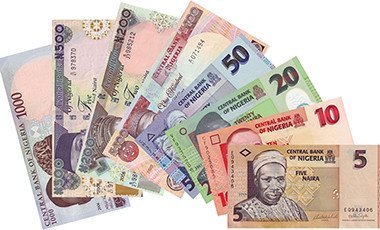
Naira Nigerian Currency
Share on WhatsappShare on FacebookShare on TwitterShare on Linkedin

During the pre-colonial era, different cultures used a variety of items as means of exchange. These included cowries, manilas, beads, bottles and salt amongst others.

ADVERTISEMENT

The first major currency issue in Nigeria was undertaken sequel to the colonial ordinance of 1880 which introduced the Shillings and Pence as the legal tender currency in British West Africa. The units of coins managed by the Bank of England were one shilling, one penny, 1/2 penny and 1/10 penny and were distributed by a private bank, the Bank for British West Africa till 1912.

From 1912 to 1959, the West African Currency Board (WACB) issued the first set of banknotes (insert hyperlink) and coins in Nigeria, Ghana, Sierra Leone and the Gambia. The highest banknote denomination was one pound, while the one shilling coin was the highest coin denomination.

ADVERTISEMENT

On 1st July 1959, the Central Bank of Nigeria (CBN) issued Nigerian currency banknotes, while the WACB-issued banknotes and coins were withdrawn. It was not until 1st July 1962 that the currency was changed to reflect the country’s republican status. The banknotes which bore the inscription, ’FEDERATION OF NIGERIA‘, now had, ‘FEDERAL REPUBLIC OF NIGERIA’, inscribed at the top. The notes were again changed in 1968 following the misuse of currency banknotes during the civil war.

Sequel to the decision by the government to change from metric to decimal, the name of the Nigerian currency was changed in January 1973. The major unit of currency which used to be £1 ceased to exist and the one naira which was equivalent to ten shillings became the major unit, while the minor unit was called the kobo; a hundred of which made one naira.

RelatedPosts

Ibadan: The Largest Indigenous City In The Week

44th Olubadan Of Ibadanland: A Short Biography Of Oba Rashidi Adewolu Ladoja

Bashorun Akinwale Akinwole: 100 Days Of Transformation At Oyo LG Service Commission

On 11th February 1977, a new banknote with the value of twenty naira (N20) was issued. It was the highest denomination introduced at the time as a result of the growth of the economy; the preference for cash transactions and the need for convenience.

The banknote was the first in Nigeria to bear the portrait of a prominent Nigerian citizen, the late Head of State, General Murtala Ramat Muhammed (1938-1976) who was the torch bearer of the Nigerian Revolution in July 1975. The note was issued on the 1st anniversary of his assassination as a fitting tribute to a most illustrious son of Nigeria. He was declared a national hero on 1st October 1978.

On 2nd July, 1979, new currency banknotes of three denominations, namely N1, N5 and N10 were introduced. These notes were of the same size i.e. 151 X 78 mm as the N20 note issued on 11th February 1977. In order to facilitate identification, distinctive colours were used for the various denominations. The notes bore the portraits of three eminent Nigerians, who were declared national heroes on 1st October 1978. The engravings at the back of the notes reflected various cultural aspects of the country.

In April 1984, the colours of all the banknotes in circulation were changed with the exception of the 50 Kobo banknote to arrest the currency trafficking prevalent at the time. In 1991, the 50K and N1 were both coined.

In response to the expansion in economic activities and to facilitate an efficient payments system, the N100, N200, N500 and N1000 banknotes were introduced in December 1999, November 2000, April 2001 and October 2005 respectively.

On 28th February, 2007, as part of the economic reforms, N20 was issued for the first time in polymer substrate, while the N50, N10 and N5 banknotes; as well as N1 and 50K coins were reissued in new designs, and the N2 coin was introduced.

On 30th September, 2009 the redesigned N50, N10 and N5 banknotes were converted to polymer substrate following the successful performance of the N20 (polymer) banknote. Thus, all lower denomination banknotes were now printed in the polymer substrate.

Finally, the CBN, as part of its contribution towards the celebration of the nation’s 50th anniversary of Nigeria’s Independence and 100 years of its existence as a nation, issued the N50 Commemorative polymer banknote on 29th September 2010; and the N100 Commemorative banknote on 19th December 2014 respectively.

Tags: BREAKING NEWSHistory of Nigerian CurrencyNairaNigeriaNigerian Currency Notes
SendShareTweetShare
ReportersAtLarge

ReportersAtLarge

Reporters At Large is the world’s fastest-growing online news platform and public service broadcaster. We’re impartial and independent, and every day we create distinctive, world-class programmes and content which inform, educate and entertain millions of people in Nigeria and around the world.

More

Mapo Hall - Ibadam City
For The Record

Ibadan: The Largest Indigenous City In The Week

by ReportersAtLarge
October 26, 2025
0

Ibadan. The name itself, a melodic whisper across the savannah, evokes images of terracotta roofs, bustling markets, and a vibrant...

Read moreDetails
44th Olubadan Of Ibadanland Oba Rashidi Adewolu Ladoja Arusa I
For The Record

44th Olubadan Of Ibadanland: A Short Biography Of Oba Rashidi Adewolu Ladoja

by ReportersAtLarge
September 9, 2025
0

His Imperial Majesty, Oba Rashidi Adewolu Ladoja, was born on 25 September 1944 in Gambari village near Ogbomoso, Oyo State,...

Read moreDetails
Bashorun Akinwale Akinwole 100 Days in Office
For The Record

Bashorun Akinwale Akinwole: 100 Days Of Transformation At Oyo LG Service Commission

by ReportersAtLarge
August 27, 2025
0

When Bashorun Akinwale Solomon Akinwole assumed office on May 19, 2025, as Chairman of the Oyo State Local Government Service...

Read moreDetails
Load More

Leave a Reply Cancel reply

Your email address will not be published. Required fields are marked *

Recommended

Amaka Amatokwu-Ndekwu on Tourism Growth

Hotels’ Roles In Tourism Growth Very Critical, Can’t Be Overemphasized —Amatokwu-Ndekwu

6 years ago
African Democratic Congress ADC

Nigeria: APC, PDP, AD Lose 6,000 Members To ADC

7 years ago

Popular News

  • Ataiyese-Designate Tajudeen Adigun Raheem

    Ataiyese-Designate, Tajudeen Adigun Raheem Lights Up Isan-Ekiti with 100 Supersonic Solar Poles

    0 shares
    Share 0 Tweet 0
  • Wolekanle, Ojo-Lanre, Prince Adeleye, Ejide, Others Storm Ogbomoso As Remi Oladoye Buries Mother In Style

    0 shares
    Share 0 Tweet 0
  • Alhaji Monsuru Ejide: The Semo King’s Legacy Of Hope

    0 shares
    Share 0 Tweet 0
  • Makinde’s Multi-Pronged Strategy Tames Multi-Dimensional Poverty In Oyo

    0 shares
    Share 0 Tweet 0
  • Should Ooni Of Ife Be Stoned for Walking The Runway?

    0 shares
    Share 0 Tweet 0

Connect with us

ADVERTISEMENT

About Us

Reporters At Large is the world’s fastest-growing online news platform and public service broadcaster. We’re impartial and independent, and every day we create distinctive, world-class programmes and content which inform, educate and entertain millions of people in Nigeria and around the world.

With a high level of professionalism, fairness, objectivity, accuracy and speed, we publish Breaking News Nigeria Today Headlines and International news on Politics, Tourism and Travel, Entertainment, Sports, Business Lifestyle and Sports.

Category

  • Auto Trend
  • Breaking Bones
  • Business
  • Columns
  • Entertainment
  • Featured
  • For The Record
  • Health
  • Innovation
  • Lifestyle
  • Metro
  • News
  • Opinion
  • People & Events
  • Politics
  • Press Releases
  • Science & Technology
  • Sponsored
  • Sport
  • Tourism & Culture
  • Video
  • Video News
  • WorldNews

Recent Posts

  • Ataiyese-Designate, Tajudeen Adigun Raheem Lights Up Isan-Ekiti with 100 Supersonic Solar Poles November 11, 2025
  • Wolekanle, Ojo-Lanre, Prince Adeleye, Ejide, Others Storm Ogbomoso As Remi Oladoye Buries Mother In Style November 11, 2025
  • Alhaji Monsuru Ejide: The Semo King’s Legacy Of Hope November 10, 2025
  • Makinde’s Multi-Pronged Strategy Tames Multi-Dimensional Poverty In Oyo November 10, 2025
  • Should Ooni Of Ife Be Stoned for Walking The Runway? November 10, 2025
November 2022
SMTWTFS
 12345
6789101112
13141516171819
20212223242526
27282930 
« Oct   Dec »
  • Home
  • News
  • Business
  • Politics
  • Tourism
  • Lifestyle
  • RAL TV
  • More

© 2016-2024 RAL - Guided by professionalism

Welcome Back!

Login to your account below

Forgotten Password?

Retrieve your password

Please enter your username or email address to reset your password.

Log In
No Result
View All Result
  • Home
  • News
    • World
    • For The Record
    • Metro
    • Opinion
    • Press Releases
  • Business
    • Auto Trend
  • Politics
  • Tourism
  • Lifestyle
    • People & Events
    • Health
  • RAL TV
    • Video
    • Video News
  • More
    • Advertisement
    • Privacy
    • Disclaimer
    • Contact Us

© 2016-2024 RAL - Guided by professionalism

Verified by MonsterInsights