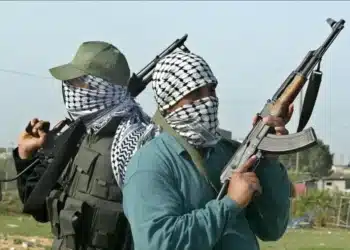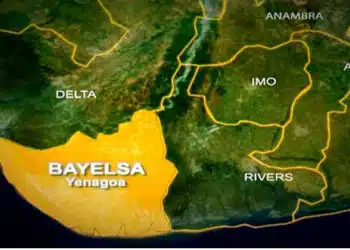


Security concerns in parts of northern Nigeria have again come into focus following renewed bandit attacks in Niger State and the account of a Christian convert from a Hausa/Fulani background who says his family endured years of threats and intimidation.
The Senator representing Niger East Senatorial District, Mohammad Sani Musa, has condemned the persistent bandit attacks in parts of the district, describing them as “one of several too many to bear.”
In a statement issued by the Director of Media and Publicity of the Sani Musa 2023 Campaign Organisation, the senator decried a recent attack in Gurara and Paikoro Local Government Areas of Niger State, which claimed the lives of the Paiko Divisional Police Officer (DPO) and four other police personnel.
Musa commended the gallantry and sacrifice of the slain officers while strongly condemning what he described as the incessant attacks on communities by bandits. He expressed sympathy to the Niger State Police Command and condoled with the families of the deceased security operatives.
The lawmaker said he would continue to work closely with relevant security agencies to improve safety across the Niger East Senatorial Zone. He noted that the repeated attacks had severely disrupted economic activities in the area, which is widely known for its contribution to Nigeria’s food security.
“We will continue to work and encourage security agents to go after the hoodlums and end banditry in our senatorial zone. They may try our will and think they are succeeding, but Allah SWT will continue to guide us to end their nefarious acts,” the senator said.
He also prayed for the repose of the souls of the fallen officers and asked God to grant their families the strength to bear the loss.
The security situation has also drawn attention to broader social challenges affecting some communities in the region, including the experiences of individuals who convert from Islam to Christianity.
One such account is that of Dikko I. Dikko, a Nigerian Christian from a Fulani Muslim background, whose childhood was reportedly shaped by threats, fear and repeated displacement.
According to the account, Dikko’s father, originally from Katsina State, relocated his family to Jos after converting from Islam to Christianity. Tensions reportedly escalated after he later emerged as national president of the Hausa/Fulani and Kanuri Christian Association, an advocacy group representing Christians from predominantly Muslim ethnic groups.
Family members said the position attracted repeated threats, property damage and sustained intimidation, eventually forcing Dikko’s father to step down from the role in 2015. As insecurity intensified, Dikko and his siblings were moved from their family home to a private dormitory for safety.
Despite the precaution, the threats allegedly persisted. On one occasion, the children reportedly noticed they were being followed while returning from school, a development later confirmed by their driver.
By 2018, after years of fear and instability, the family decided to relocate the children to the United States.
Dikko’s experience underscores the broader struggles faced by some Christian converts from Hausa/Fulani backgrounds in parts of Nigeria, where religious tensions and ethnic pressures have, in certain cases, forced families to seek safety elsewhere.
Observers say the combination of banditry, communal tensions and religious intolerance continues to pose significant security and humanitarian challenges in several northern states, underscoring the need for sustained efforts by authorities and community leaders to promote peace and stability.