
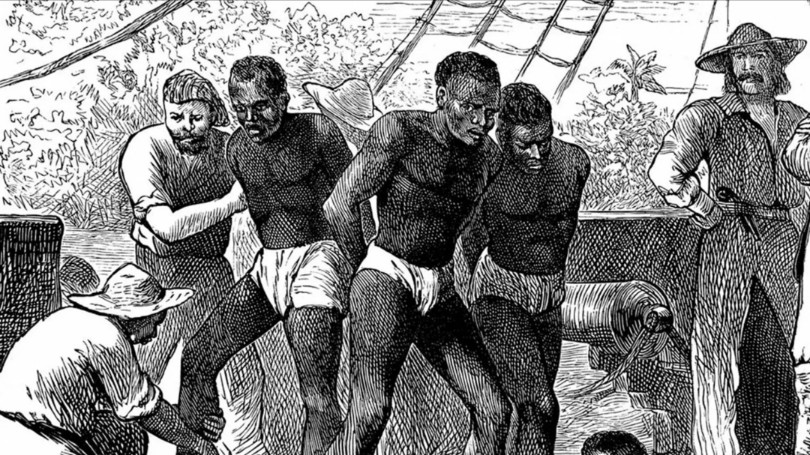
The United Nations General Assembly has voted to officially recognise the enslavement of Africans during the transatlantic slave trade as “the gravest crime against humanity”. Advocates of the landmark move hope the designation will finally pave the way for global healing and reparatory justice.
A Global Mandate for Reparations
The resolution, proposed by Ghana, called for this specific designation while urging UN member states to consider issuing formal apologies and contributing to a reparations fund. Notably, the document does not specify a fixed monetary amount.
The proposal was adopted with 123 votes in favour and only three against: the United States, Israel, and Argentina. A further 52 countries abstained, including the United Kingdom and various European Union member states.
While General Assembly resolutions carry the significant weight of global opinion, they are not legally binding in the same manner as UN Security Council decisions.
“A Safeguard Against Forgetting”
Speaking to the assembly ahead of the historic vote, Ghana’s President John Mahama emphasised the moral weight of the moment.
“Let it be recorded that when history beckoned, we did what was right for the memory of the millions who suffered the indignity of the slave trade and those who continue to suffer racial discrimination,” Mahama said. “The adoption of this resolution serves as a safeguard against forgetting. It also challenges the enduring scars of slavery.”
Earlier, Ghana’s Foreign Minister, Samuel Okudzeto Ablakwa, clarified the intent behind the financial aspect of the resolution during an interview with the BBC’s Newsday.
“We are demanding compensation – and let us be clear, African leaders are not asking for money for themselves,” Ablakwa stated. “We want justice for the victims and causes to be supported, educational and endowment funds, skills training funds.”
The Cost of History
Between 1500 and 1800, it is estimated that 12-15 million people were captured in Africa and transported to the Americas. Over two million people are believed to have died during the journey alone.
The UK, a major power during the era of the trade, acknowledged the “untold harm and misery” caused to millions. However, British officials maintained their long-standing rejection of financial reparations.
UK Ambassador to the UN, James Kariuki, told the assembly the resolution was “problematic” regarding international law. “No single set of atrocities should be regarded as more or less significant than another,” he noted.
Political Friction and Stolen Heritage
The United States also voiced strong opposition. US Ambassador Dan Negrea argued that the country “does not recognise a legal right to reparations for historical wrongs that were not illegal under international law at the time they occurred.”
Negrea further criticised what he termed the “cynical usage of historical wrongs” to reallocate modern resources. This comes amidst domestic tension, as President Donald Trump has recently moved to restore Confederate statues and dismantle certain slavery exhibits.
President Mahama previously criticised these moves as “normalising the erasure of black history,” though Negrea countered that Trump had “done more for black Americans than any other president.”
Beyond financial compensation, the resolution demands the return of cultural artefacts stolen during the colonial era. “We want a return of all those looted artefacts, which represent our heritage, our culture and our spiritual significance,” Ablakwa concluded.