
• About
  • Advertise
  • Careers
  • Contact
Sunday, April 12, 2026
  • Login
No Result
View All Result
NEWSLETTER
Reporters At Large
  • Home
  • News
    • World
    • For The Record
    • Metro
    • Opinion
    • Press Releases
  • Business
    • Auto Trend
  • Politics
  • Tourism
  • Lifestyle
    • People & Events
    • Health
  • RAL TV
    • Video
    • Video News
  • More
    • Advertisement
    • Privacy
    • Disclaimer
    • Contact Us
  • Home
  • News
    • World
    • For The Record
    • Metro
    • Opinion
    • Press Releases
  • Business
    • Auto Trend
  • Politics
  • Tourism
  • Lifestyle
    • People & Events
    • Health
  • RAL TV
    • Video
    • Video News
  • More
    • Advertisement
    • Privacy
    • Disclaimer
    • Contact Us
No Result
View All Result
Reporters At Large
No Result
View All Result
Home News Opinion

Not Words But Watts: Nigeria’s Electricity Crisis Beyond Promises

by Lanre Ogundipe
April 4, 2026
in Opinion
Reading Time: 3 mins read
0
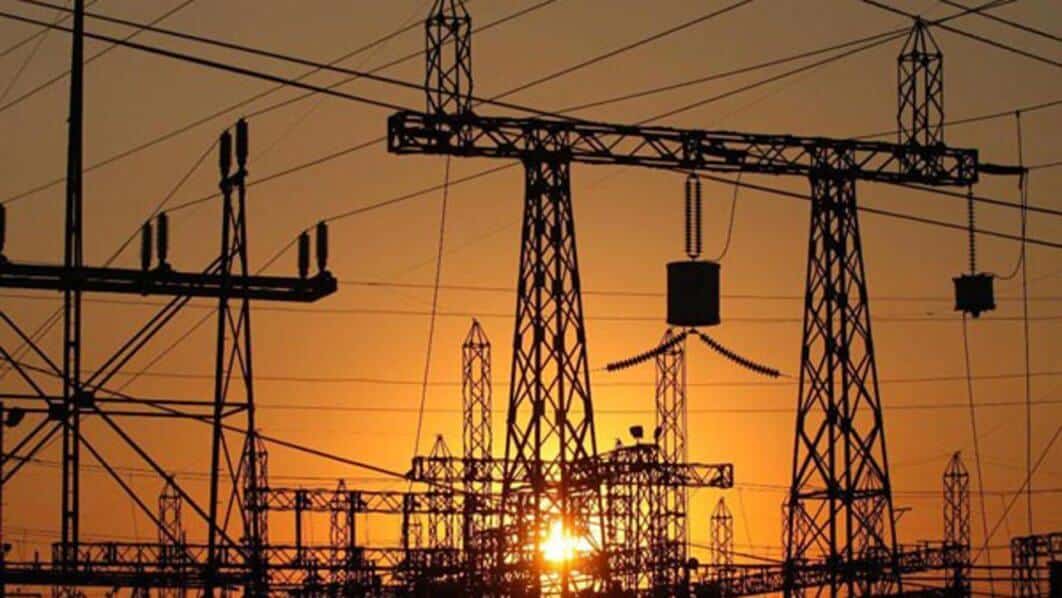
electricity - Energy Security
Share on WhatsappShare on FacebookShare on TwitterShare on Linkedin

Nigeria’s electricity crisis has once again taken centre stage—not because it is new, but because it remains unresolved. Power outages persist, industries stagger, households improvise, and political actors return to familiar lines of accusation and defence. The opposition has predictably turned its fire on the administration of President Bola Ahmed Tinubu, citing unmet electoral promises. The criticism is politically convenient. It is also, in many respects, analytically incomplete.

Electricity in Nigeria did not fail yesterday.

It is the cumulative outcome of decades of structural distortion—policy inconsistency, financial imbalance, institutional fragmentation and governance failure. To isolate the current administration as the origin of the crisis is to ignore history. To excuse it from responsibility is equally untenable.

The truth demands more rigour.

The Ghost of Power Sector Privatisation

Nigeria’s 2013 power sector privatisation was presented as a solution. Generation and distribution assets were transferred to private operators with the expectation that efficiency, investment and improved service delivery would follow. What emerged instead was a partial reform—ownership changed, but dysfunction endured.

RelatedPosts

National Security Preparedness: Do We Now Die by Appointment?

Why Nigeria Needs 10 More Dangotes

National Assembly Of Nigeria: House Of People Or Deals?

Privatisation did not resolve the problem. It redistributed it.

At the core of the crisis lies a financial architecture that does not sustain itself. Electricity tariffs remain politically constrained and often below cost-reflective tariffs. Government subsidies, designed to bridge the gap, have been inconsistent. Distribution companies struggle with revenue collection, partly because millions of consumers remain unmetered and distrust estimated billing. Generation companies are not fully paid. Gas suppliers, unpaid, reduce supply.

The system weakens itself. Generation declines. Supply becomes erratic. The national grid collapse or falter becomes a recurring headline. This is not sabotage. It is systemic failure.

A Legacy of Abandoned Ambition

The persistence of this failure is further illustrated by Nigeria’s long catalogue of abandoned or unrealised power projects. The Mambilla Hydroelectric Power Project remains emblematic. Conceived decades ago and repeatedly presented as a transformative intervention, it has moved through cycles of approval, financing announcements and renewed timelines without delivering power to the national grid.

It is not alone. Such projects expose a recurring flaw in Nigeria’s infrastructure governance: ambition consistently outpaces execution. Agreements are treated as outcomes. Announcements are mistaken for delivery. Yet electricity is not generated by declarations, but by completed, functional systems.

Governance and the Procurement Problem

Recent disclosures by the Economic and Financial Crimes Commission (EFCC) regarding procurement irregularities in the power sector point to a deeper institutional problem. Allegations that contractors, in collaboration with officials, supplied substandard equipment while receiving full payment are not merely instances of misconduct—they are acts that directly undermine national capacity.

“A power sector cannot be fixed by investment alone if procurement continues to reward failure and shield inefficiency.”

When infrastructure fails prematurely, the nation pays twice—first in financial cost, and again in lost functionality. Investment becomes expenditure without output. This is how systems decay.

Beyond the Political Slogan

Political discourse remains fixated on surface arguments. Opposition parties are right to demand improved electricity supply. That is their democratic function. But it is intellectually dishonest to reduce a decades-long structural crisis to a single administration’s failure without acknowledging its complexity.

Electricity in Nigeria is not a slogan problem. It is a system problem.

What recent official acknowledgements have now made clear is that even within government, there is a growing recognition of the scale of the challenge. Statements indicating that the crisis cannot be resolved in the immediate term mark a departure from the confident simplicity of campaign rhetoric.

The Path to Resolution

The current administration must move beyond the language of inheritance. Yes, the crisis is inherited. But responsibility is immediate. What is required now is structural correction:

  • Financial Viability: Tariffs must gradually move toward cost-reflective levels, supported by targeted protections for vulnerable consumers.
  • Closing the Metering Gap: A system that bills without measurement cannot command trust.
  • Infrastructure Priority: Transmission must be strengthened. Generation without delivery is meaningless.
  • Sanitising Procurement: Contractors who fail must be excluded. Oversight must be real.

Nigeria is drifting into a parallel energy reality. Generators remain widespread, and solar adoption is rising. While this provides temporary relief, it signals a deeper fragmentation where electricity becomes a private commodity rather than a public service.

The time for rhetorical contest is over. Nigeria’s electricity crisis will not be solved by accusation. It will be solved by discipline, structural reform, and the courage to replace political convenience with institutional truth.

If Nigerians are to frame a request, it would not be for rhetoric. It would be for resolution. Not promises, but power. Not projections, but supply. Not announcements, but electricity that works.

Tags: Cost-Effective TariffsNational Grid CollapsePower Sector Privatisation
SendShareTweetShare
Lanre Ogundipe

Lanre Ogundipe

Lanre Ogundipe Public Affairs Analyst, former President Nigeria and Africa Union of Journalists, writes from Abuja.

More

Nigerian President, Bola Tinubu
Opinion

National Security Preparedness: Do We Now Die by Appointment?

by Lanre Ogundipe
April 11, 2026
0

A biting look at whether national security preparedness has shifted from prevention to mere scheduling. Can administrative transparency coexist with...

Read moreDetails
Dr. Sijibomi Ogundele Sujimoto Open Letter to President Tinubu Nigeria Economy.
Opinion

Why Nigeria Needs 10 More Dangotes

by Lanre Ogundipe
April 10, 2026
0

One Dangote can stabilise a sector; ten can stabilize an economy." In a bold birthday open letter to President Bola...

Read moreDetails
Nigerian Senate Plenary Session
Opinion

National Assembly Of Nigeria: House Of People Or Deals?

by Lanre Ogundipe
April 9, 2026
0

The National Assembly of Nigeria faces scrutiny as critics question if it serves the public or private interests. This report...

Read moreDetails
Load More

Leave a Reply Cancel reply

Your email address will not be published. Required fields are marked *

Recommended

Ekiti Grassroots Movement

Ekiti 2018: Group Declares June 12 Fasting and Prayer Rally For Continuity

8 years ago
Hon Adedeji Dhikrullahi Stanley Olajide and wife with Olubadan Rashidi Adewolu Ladoja

Hon Olajide Hails Makinde’s Transparent Reconstitution Of Oyo Obas Council

3 months ago

Popular News

  • Donald Trump Social Media App

    Trump Orders Strait Of Hormuz Blockade As Iran Talks Fail

    0 shares
    Share 0 Tweet 0
  • Nigeria Cuts Import Duty On Cars, Others In 2026 Fiscal Policy

    0 shares
    Share 0 Tweet 0
  • Women’s Health And Wellness: Princess Seyi Warns Against Toxic Relationships

    0 shares
    Share 0 Tweet 0
  • US-Iran Peace Talks Collapse In Islamabad: No Deal Reached

    0 shares
    Share 0 Tweet 0
  • Nigeria Convicts 386 Islamist Militants In Mass Trials

    0 shares
    Share 0 Tweet 0

Connect with us

ADVERTISEMENT

About Us

Reporters At Large is the world’s fastest-growing online news platform and public service broadcaster. We’re impartial and independent, and every day we create distinctive, world-class programmes and content which inform, educate and entertain millions of people in Nigeria and around the world.

With a high level of professionalism, fairness, objectivity, accuracy and speed, we publish Breaking News Nigeria Today Headlines and International news on Politics, Tourism and Travel, Entertainment, Sports, Business Lifestyle and Sports.

Category

  • Auto Trend
  • Breaking Bones
  • Business
  • Columns
  • Entertainment
  • Featured
  • For The Record
  • Health
  • Innovation
  • Lifestyle
  • Metro
  • News
  • Opinion
  • People & Events
  • Politics
  • Press Releases
  • Science & Technology
  • Sponsored
  • Sport
  • Tourism & Culture
  • Video
  • Video News
  • WorldNews

Recent Posts

  • Trump Orders Strait Of Hormuz Blockade As Iran Talks Fail April 12, 2026
  • Nigeria Cuts Import Duty On Cars, Others In 2026 Fiscal Policy April 12, 2026
  • Women’s Health And Wellness: Princess Seyi Warns Against Toxic Relationships April 12, 2026
  • US-Iran Peace Talks Collapse In Islamabad: No Deal Reached April 12, 2026
  • Nigeria Convicts 386 Islamist Militants In Mass Trials April 11, 2026
April 2026
SMTWTFS
 1234
567891011
12131415161718
19202122232425
2627282930 
« Mar    
  • Home
  • News
  • Business
  • Politics
  • Tourism
  • Lifestyle
  • RAL TV
  • More

© 2016-2024 RAL - Guided by professionalism

Welcome Back!

Login to your account below

Forgotten Password?

Retrieve your password

Please enter your username or email address to reset your password.

Log In
No Result
View All Result
  • Home
  • News
    • World
    • For The Record
    • Metro
    • Opinion
    • Press Releases
  • Business
    • Auto Trend
  • Politics
  • Tourism
  • Lifestyle
    • People & Events
    • Health
  • RAL TV
    • Video
    • Video News
  • More
    • Advertisement
    • Privacy
    • Disclaimer
    • Contact Us

© 2016-2024 RAL - Guided by professionalism

Verified by MonsterInsights