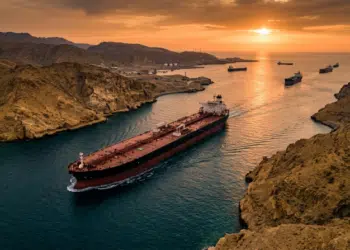

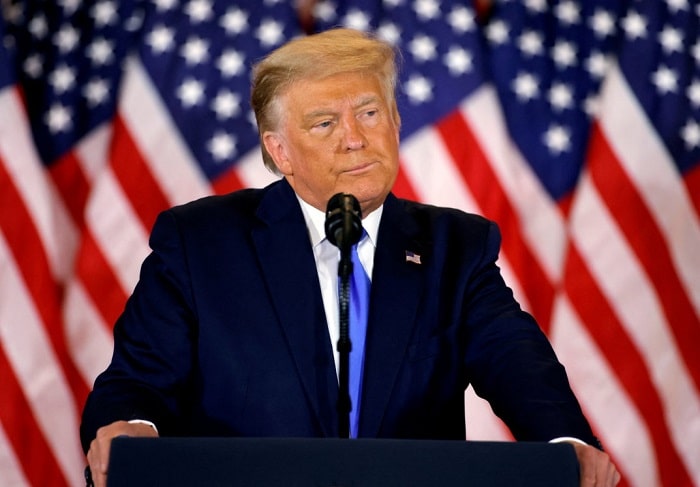
President Donald Trump confirmed on Sunday that the U.S. Navy will immediately begin a Strait of Hormuz blockade. This move raises the stakes significantly after marathon talks with Iran failed to secure a deal to end the war, threatening a fragile two-week ceasefire.
Writing on Truth Social, Trump stated the U.S. would interdict every vessel in international waters that had paid a toll to Iran. He also ordered the destruction of mines allegedly placed by Iranians in the strait—a vital artery for 20% of global energy supplies.
“Effective immediately, the United States Navy, the Finest in the World, will begin the process of BLOCKADING any and all Ships trying to enter, or leave, the Strait of Hormuz,” he said.
“I have also instructed our Navy to seek and interdict every vessel in International Waters that has paid a toll to Iran. No one who pays an illegal toll will have safe passage on the high seas,” Trump added.
The President issued a stern warning to Tehran: “Any Iranian who fires at us, or at peaceful vessels, will be BLOWN TO HELL!”
A Collapse in Diplomacy
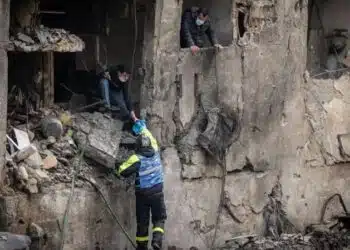
Both sides blamed one another for the breakdown of the Islamabad summit. Six weeks of fighting has already killed thousands and sent oil prices soaring.
Vice President JD Vance, leading the U.S. delegation, expressed disappointment earlier on Sunday.
“The bad news is that we have not reached an agreement, and I think that’s bad news for Iran much more than it’s bad news for the United States of America,” he said. “We’ve made very clear what our red lines are.”
Iran Cites Lack of Trust
Mohammad Baqer Qalibaf, Iran’s Parliamentary Speaker, accused the U.S. of failing to earn Tehran’s trust despite “forward-looking initiatives” from his team.
“The U.S. has understood Iran’s logic and principles and it’s time for them to decide whether they can earn our trust or not,” Qalibaf posted on X.
These U.S.-Iran peace talks represented the first direct meeting between the nations in over a decade. However, the fundamental divide remains. Trump clarified the sticking point later that day: “There is only one thing that matters — IRAN IS UNWILLING TO GIVE UP ITS NUCLEAR AMBITIONS!”
Regional Tensions Escalate
While the ceasefire technically remains, the situation is volatile. Pakistan’s Foreign Minister Ishaq Dar called it “imperative” to preserve the truce. Meanwhile, Israeli security cabinet minister Zeev Elkin warned that “the Iranians are playing with fire.”
Conflict also continues on other fronts. Israel maintained its strikes on Hezbollah targets in Lebanon, arguing these operations are separate from the Iran-U.S. ceasefire.
Economic and Military Demands
Tehran is currently demanding control of the Strait of Hormuz, war reparations, and the release of frozen assets. They also seek to collect transit fees—a move the U.S. deems illegal.
While three supertankers successfully exited the Gulf on Saturday, hundreds remain trapped. Trump’s minimum objective is now clear: ensure free passage for shipping and the complete crippling of Iran’s enrichment capabilities. Tehran continues to deny seeking a nuclear weapon.