

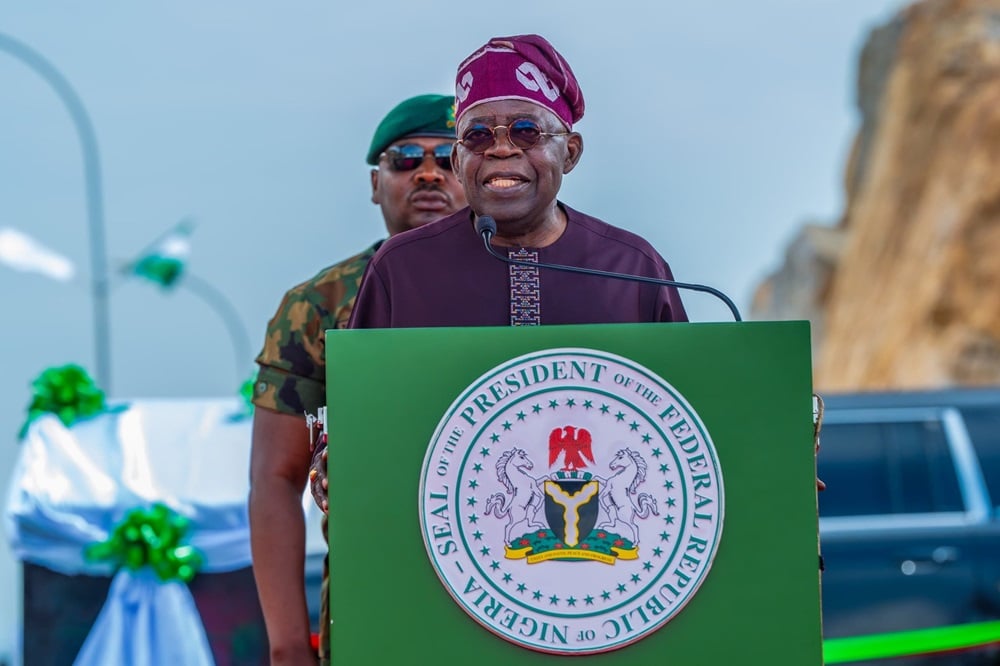
If the previous chapters of this series dissected the ascent of President Bola Ahmed Tinubu and the strategic architecture of his influence, we must now address a more decisive challenge. The President Bola Ahmed Tinubu administration faces a question that transcends political strategy: how does a durable power system maintain Nigerian democratic legitimacy? While power is often sustained through networks and institutional reach, transparency in Nigerian governance is the only mechanism that converts raw influence into lasting constitutional authority.
The Distinction Between Influence and Accountability
Power can be acquired through mastery and reinforced through discipline, but democratic stability demands more than efficiency. It requires that authority be subject to visible limits and public institutional accountability in Nigeria. No political system can sustain itself if it appears answerable only to its own internal logic.
In highly networked systems, influence often extends beyond formal office. Authority may be exercised through strategic alignments and informal structures that do not appear on official government charts. While these systems can produce continuity, they create a difficult institutional void: where exactly does accountability reside?
Formal office carries formal responsibility, yet informal influence does not. This distinction is vital for the health of the republic. A minister can be questioned and a governor held to constitutional standards, but when significant influence exists outside formal boundaries, public trust begins to erode. This is not an argument against political influence—which is inseparable from politics—but an argument for clarity. Citizens must know where authority sits and who bears responsibility when policy succeeds or fails.
The Friction Between Political Machines and State Institutions
A political machine naturally prefers speed and internal discipline. It survives by being organised. However, state institutions operate differently; they require procedure, independence, and occasionally, resistance. The presidency demands not only command over systems but the willingness to be constrained by them.
This is the real test of democratic maturity. Can the same machine that sustains power also submit to restraint? Can a structure built for political durability tolerate institutional independence without viewing it as disloyalty? That is where Nigerian democratic legitimacy truly begins.
Transparency as a Functional Necessity
Transparency is not a cosmetic slogan or a managed public appearance. It is the structural visibility of governance—the ability of institutions to function in ways that are reviewable and defensible. Economic policy illustrates this clearly. Citizens may disagree with reforms like subsidy removal or fiscal restructuring, but disagreement is not necessarily destabilising.
What creates instability is uncertainty. When people do not understand the rationale or the process, policy breeds resistance. This is why the economics of power must confront the discipline of **transparency in Nigerian governance**. Resource mobilisation without visible accountability quickly transforms into public suspicion.
The State vs. The Party
The boundary between party structure and state structure is critical. While political loyalty is legitimate within parties, the state is larger than any political organisation. When this line blurs, appointments are read as rewards rather than administrative choices, and regulatory bodies lose their perceived independence.
At the federal level, this concern is magnified. The presidency is not Lagos politics. Federal institutions must carry a weight beyond political management. The judiciary, the Economic and Financial Crimes Commission (EFCC), and the National Assembly must function as the architecture of republican stability, not as ornaments of power.
Legacy and the Future of the Republic
Nigeria’s history warns us that many administrations entered office with vast political capital only to leave behind weakened institutions. The problem is often the gradual substitution of systems with personal authority. Institutional accountability in Nigeria must be proven by building processes that survive leadership.
Whether compared to the ideological structures of Obafemi Awolowo or the command authority of Olusegun Obasanjo, the current model of networked power must face the same historical question: what democratic inheritance will it leave behind? Power that depends on personal mastery is fragile; power that strengthens institutions outlives its architect.
For the President, the legacy question is no longer about victory. History will not ask how power was won, but what power protected. Did it expand transparency or normalise opacity? The ultimate test of power is not how it controls the present, but how securely it protects the future from depending on one man.