

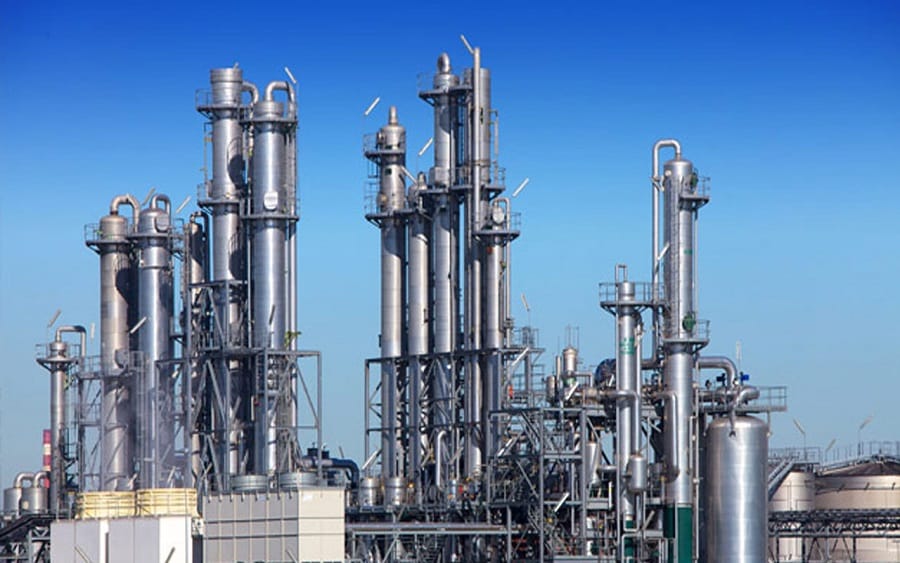
The recent decision by the Nigerian government to seek new NNPC foreign partners and external financing for Nigeria refinery rehabilitation arrives with a sense of desperate urgency. However, this move is shadowed by a heavy weight of history. It is certainly not the first time the nation has turned to external capital in the hope of restoring its domestic refining capacity. Instead, it represents another familiar moment in a long, weary cycle of ambition, massive expenditure, and underwhelming results. This repetitive pattern now raises a fundamental question: is Nigeria attempting to solve a deep-seated structural problem using the same tools and infrastructure governance frameworks that have repeatedly failed in the past?
A History of Costly Ambition
From the early 2000s under the administration of Olusegun Obasanjo, when attempts were made to reform the system before policy reversals intervened, through successive governments that approved multiple turnaround maintenance programmes, Nigeria has consistently returned to the idea of Nigeria refinery rehabilitation as both economic necessity and political promise. Each intervention came with the same assurances: technical upgrades, improved efficiency, and increased output. Every round was presented as a definitive turning point. Yet the outcome has been strikingly consistent: substantial financial commitments without any sustained operational transformation.

Over the years, billions of dollars, amounting to trillions of naira when converted and accumulated, have been channelled into efforts to resuscitate refineries in Port Harcourt, Warri, and Kaduna. Under the restructured Nigerian National Petroleum Company Limited (NNPC), the rehabilitation of the Port Harcourt refinery alone has been associated with significant financial outlays. Similar commitments were announced for other facilities. These investments were justified on the basis that increasing domestic refining capacity would reduce import dependence, conserve foreign exchange, and finally stabilise fuel supply.
The Governance Gap in Infrastructure
Yet despite these commitments, sustained, verifiable refining output that reflects the scale of expenditure has remained limited. The gap between investment and outcome is not marginal; it is structural. It is tempting to interpret this pattern as evidence of inadequate funding or outdated infrastructure. But such explanations do not fully capture the problem.
Nigeria’s refinery challenge has never been solely about money, nor has it been strictly about technology. It is fundamentally about infrastructure governance—how projects are conceived, funded, monitored, and enforced.
In systems where funding is not tightly linked to measurable performance, where oversight is episodic rather than continuous, and where consequences for failure are weak or absent, even substantial investment can fail to produce results. The issue, therefore, is not simply that money has been spent; it is that the system into which that money is introduced has not consistently ensured accountability.
Engaging NNPC Foreign Partners
This is the context within which the current proposal to engage NNPC foreign partners must be understood. On its face, the approach is rational. External partners can bring technical expertise, operational discipline, and access to capital. They often operate under frameworks that emphasise efficiency, cost control, and return on investment. In theory, such partnerships can impose a level of rigour that domestic processes have struggled to maintain. But theory depends on structure.
If foreign partners are introduced into a system that has not been fundamentally reformed, the risk is not merely that projects will underperform. The greater risk is that new funding will be absorbed into old patterns, producing outcomes that differ in scale but not in nature. Capital, whether domestic or foreign, does not correct governance weaknesses; it operates within them.
Financial Risks and Sovereign Debt
There is also a broader financial dimension to the Nigeria refinery rehabilitation plan that cannot be ignored. Where external financing is secured with sovereign backing, explicitly or implicitly, the obligations extend beyond the life of the project itself. Debt must be serviced regardless of whether the underlying investment achieves its intended outcomes. If performance falls short, repayment pressures persist. In certain scenarios, poorly structured agreements can expose national assets to forms of external leverage that may not be immediately apparent at the point of signing.
At the same time, the urgency of Nigeria’s refining challenge is undeniable. The country continues to export crude oil while relying heavily on refined product supply, leaving it exposed to global price fluctuations and exchange rate volatility. The emergence of the Dangote Petroleum Refinery has demonstrated that large-scale refining is achievable within Nigeria and has begun to alter supply dynamics. It has also underscored the contrast between private-sector efficiency and the persistent underperformance of state-owned facilities.
Designing a Framework for Success
If Nigeria is to avoid repeating its past, the current initiative must be anchored on a fundamentally different framework. Funding must be tied directly to verifiable output measured in actual refining throughput and operational uptime rather than to milestones that can be declared without corresponding performance. Independent technical audits must be embedded into the process, providing real-time monitoring rather than retrospective evaluation.
Equally important is the structure of financing. Funds must be ring-fenced, ensuring that they are used strictly for defined project purposes and cannot be diverted through administrative discretion. Payment mechanisms should be designed to reward delivery, not merely activity. And perhaps most critically, there must be a credible framework for consequences where failure carries measurable implications for both contractors and overseeing officials.
The refinery question is not simply about infrastructure renewal. It is about institutional credibility. If the current effort is to succeed, it must break decisively from precedent—not in rhetoric, but in design and execution.