

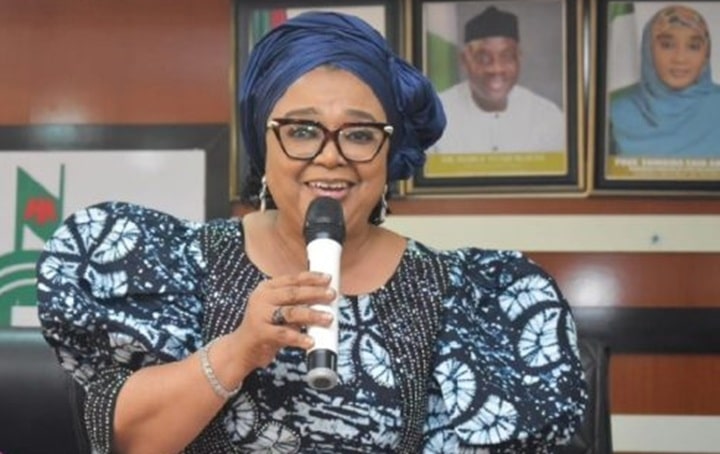
The Executive Secretary of the National Commission for Colleges of Education (NCCE), Dr. Angela Ajala, has disclosed that the full implementation of the Federal Government’s Dual Mandate Policy for Colleges of Education to award degrees will commence in the 2026/2027 academic session.
This structural shift eliminates the long-standing requirement for these campuses to secure formal affiliations with established universities, representing a fundamental NCCE teacher education reform.

Legislative Framework and Timeline
Dr Angela Ajala, the Executive Secretary of the NCCE, announced the implementation timeline during an educational media parley in Abuja. The regulatory shift is legally anchored by the Federal Colleges of Education Act No. 132 of July 24, 2023, which was signed into law by President Bola Tinubu.
“The Federal Ministry of Education directed that the full implementation of the Dual Mandate should commence unfailingly from the 2026/2027 Academic Session,” Ajala stated.
Under the new operational guidelines, the NCE track will retain its three-year duration, while the independent degree component will span two years. The NCCE has developed a transitional curriculum designed to allow NCE graduates to advance directly into the degree streams.
The commission is currently synchronising its quality control measures with university regulators to guarantee institutional parity.
“We are working in collaboration with the National Universities Commission to work out the modalities for its seamless take-off as directed by the Federal Government. A draft curriculum that allows NCE to dovetail into the degree programmes has been drafted by the Commission and forwarded to NUC for more inputs to ensure that the quality of the degrees to be awarded by Colleges of Education is at par with that of the universities,” Ajala said.
Institutional Status and Autonomy
A primary objective of the policy is to elevate the institutional status of non-university teacher training facilities and reduce intense competition for standard university admissions.
“Let me say this without hesitation: The Dual Mandate is the most significant structural reform in Nigerian teacher education in decades. For many years, Colleges of Education were seen by some people as limited institutions. That perception is now changing,” Ajala noted.
She added that the changes aim to position these facilities as competitive hubs for professional training rather than secondary choices for applicants.
“A student who chooses a College of Education today is not choosing a lesser path. It means Colleges of Education are being repositioned as stronger, more competitive and more attractive institutions for teacher preparation,” she said.
The federal directive mandates that state-owned and private institutions must formally adapt and domesticate the reform guidelines within their local frameworks before they can begin offering the expanded degree courses.
“The Dual Mandate Policy will help to expand access to higher education, reduce pressure on universities, strengthen teacher specialisation, improve institutional autonomy, attract more candidates into teaching and elevate the prestige and competitiveness of Colleges of Education,” Ajala stated.
Curriculum Revision and Technology Integration
The NCCE is shifting its regulatory mandate from strict administrative compliance to an active focus on classroom learning outcomes.
To modernise the qualification, the updated curriculum will incorporate training in digital literacy, artificial intelligence awareness, entrepreneurship, competency-based learning, inclusive education, and emotional intelligence.
“The child has changed. The classroom has changed. Technology has changed. The economy has changed. The skills required for the future have changed. Therefore, teacher preparation must also change. We cannot prepare teachers for chalkboard-only classrooms when children are growing up in a digital world. Technology will not replace teachers. But teachers who understand technology will become more effective, more relevant and more prepared for the future,” Ajala explained.
Professional Standards
While admission pathways are undergoing review to improve accessibility, the commission stated that professional entry benchmarks will not be lowered to solve staff shortages.
“We want to remove administrative barriers, not professional standards. Teacher education must become accessible, but not careless. Flexible, but not weak. Inclusive, but not substandard. Nigeria needs more teachers, but Nigeria does not need just anybody in the classroom,” Ajala emphasised.
The agency called on national media institutions to support the transition by accurately reflecting the changing status of the teaching profession.
“The media is not a bystander in this reform. The media is a reform partner. For too long, teaching has been portrayed as a last-resort profession. That narrative is inaccurate. That narrative is harmful. That narrative must change,” she said.
The commission concluded that the long-term success of the academic overhaul remains vital to the country’s broader human capital development.
“The future of Nigeria is not waiting somewhere far away. It is sitting in our classrooms today. But the quality of that future depends on the quality of the teachers standing before those children. This is a new dawn for NCCE, a new dawn for Colleges of Education, a new dawn for teacher education and a new dawn for Nigerian classrooms,” Ajala added.