
Stakeholders in Nigeria’s travel sector have called for stronger regional partnerships and policy reforms to boost intra-African tourism and create seamless travel across Africa.
Speaking at the 4th Annual National Association of Nigeria Travel Agencies (NANTA) symposium in Ibadan, Oyo State, industry leaders argued that unlocking the continent’s commercial travel potential requires urgent, practical solutions to long-standing border barriers across the continent.
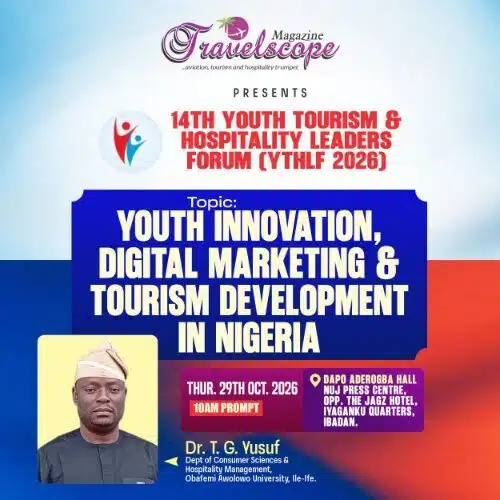
Organised by the Western Zone of the National Association of Nigeria Travel Agencies, the event focused on the theme “Africa for Africans: The Role of Policymakers and Tour Operators Towards Sustainable Destination Management, Growth and Development.” Attendees examined how sustainable destination strategies can accelerate broader African tourism development.
Delivering the keynote address, Professor Wasiu Adeyemo Babalola emphasised that Africa needs robust systems to make cross-border travel safer, cheaper, and more accessible.
“Africa for Africans should not be interpreted as isolation from the rest of the world, but as stronger African participation in global tourism,” Prof. Babalola, said
Babalola noted that true economic growth will occur only when Africans actively create, manage, and consume their own travel products, keeping more value within domestic markets.
Overcoming Air Connectivity and Visa Barriers in Intra-African Tourism
Addressing systemic obstacles to intra-African tourism, Babalola identified poor transit infrastructure as a major barrier to expansion. High travel costs, complex visa restrictions, expensive accommodation, and excessive taxes consistently erode destination competitiveness.
To resolve these bottlenecks, he urged governments to digitise visa procedures, lower fees, and improve coordination between aviation, security, and immigration authorities. He also called on state governments to transition from passive hosts into active destination managers.
Tour operators, whom Babalola described as “destination architects,” play a critical role in shaping visitor experiences and supporting local economies.
“Africa must learn to discover Africa,” Prof. Babalola emphasised.
He stressed that operators must build authentic itineraries, integrate local businesses, and cater directly to African purchasing power across business, cultural, and leisure travel. Furthermore, Babalola highlighted the role of artificial intelligence in refining itineraries and customer service, while stressing that human expertise remains essential for safety and cultural integrity.
He advocated transforming the sector through professional certification, digital skills, and structured apprenticeships to ensure lasting African tourism development.
Commercial Gaps and Solutions Highlighted at the NANTA Symposium
Chief Olaleye Abiodun Ajibade, Vice President of NANTA Western Zone, observed that rising global travel costs make local market expansion urgent. Despite a population exceeding 1.4 billion people, internal cross-border travel across the continent remains low.
Ajibade noted that Africa possesses exceptional travel assets—from wildlife reserves and heritage sites to eco-tourism hubs. However, restrictive visa regulations, weak regional integration, and fragmented marketing prevent these assets from achieving commercial success. He called for direct public-private collaboration to reduce aviation taxes and secure seamless travel across Africa.
Representing NANTA National President Dr Yinka Folami, First Deputy National President Mr Mustapha Muhammed stated that African travel agencies must actively direct their influence toward promoting continental destinations. He reaffirmed the association’s commitment to improving member welfare and strengthening trust across the sector.
Contributions from local officials and trade partners further highlighted the collective drive for reform. Speaking for Oyo State Commissioner for Tourism Dr Wasiu Olatunbosun, Mr A.O. Akinola pledged government support for travel practitioners.
Similarly, Mrs Wonuola Olatunde Lamidi, representing NATOP President Hajia Bolaji Mustapha, urged tour operators to package and market regional destinations aggressively.
Industry figures—including Mr Ernest Kwaku Asiedu Gyekye of Safari Valley Eco Resort, Dr Moji Davids of Xtralarge Farms, and Dr Kola Lawal of The Polytechnic Ibadan—joined the call for an integrated market where local communities benefit directly from sustainable tourism growth.