
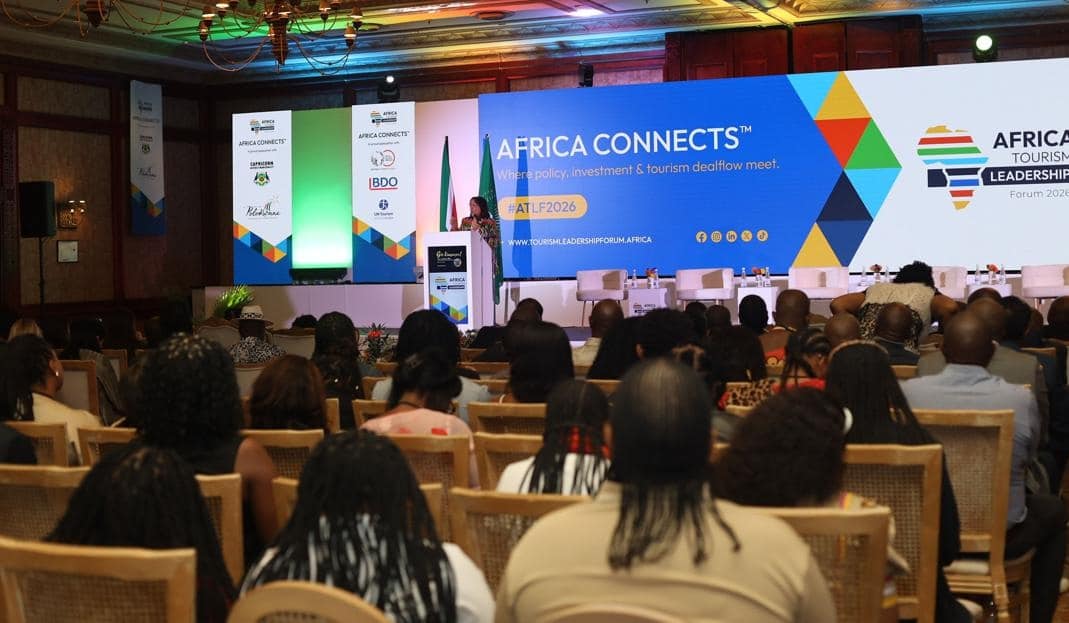
The marimba’s rhythmic resonance echoed across the main conference centre at the Meropa Hotel, setting a vibrant, expectant tone in Limpopo’s capital. As members of the Badira Mmogo Cultural Group sang and danced at the opening ceremony, the cultural heartbeat of the continent signalled the start of the 2026 Africa Tourism Leadership Forum (ATLF) on September 2, with the theme ‘Africa Connects’.
Outside the plenary, dynamic exhibition stands transformed the venue into a sprawling showcase of Africa’s vast travel potential. Regional destinations, bespoke hospitality products, and high-yielding investment opportunities were on full display, drawing policymakers, global investors, and industry pioneers into intense deliberations.
At its core, the 8th edition of ATLF was built around a singular imperative: turning pan-African collaboration from a diplomatic buzzword into an economic engine.
Unlocking Brand Equity and Destination Potential at ATLF 2026
Hosting an event of this magnitude carries profound strategic weight for local economies. For Kwakye Donkor, Chief Executive Officer of Africa Tourism Partners, the presence of the forum in Polokwane serves as a live blueprint for what targeted destination marketing can achieve.
Donkor highlighted that bringing the gathering to Limpopo instantly catapulted the province onto the global map, putting it directly before international actors who previously had minimal exposure to the region. With delegates representing approximately 32 countries and participating individuals hailing from over 60 nations, the event delivered immediate international outreach.
He pointed out that achieving a similar level of global presence through conventional roadshows across dozens of markets would have demanded vast time and resources from the Limpopo Tourism Agency.
“So the benefit of such events is not just about numbers; it’s about priceless brand equity, priceless visibility,” he said.
Driving African Tourism Connectivity and Seamless Travel
Addressing the assembly, South African Tourism Minister Patricia de Lille called for a radical overhaul of continent-wide travel networks, framing African tourism connectivity as the foundation of future economic growth.
De Lille urged governments, commercial airlines, aviation authorities, and private sector leaders to actively collaborate on establishing viable routes, expanding flight frequencies, cutting airfares, and eliminating administrative friction for intra-African travel.
“Because Africa must visit Africa. Africa must invest in Africa. And Africa must explore Africa,” she said.
The Minister also addressed the complex issue of border management against the backdrop of ongoing domestic debates surrounding immigration policy. She emphasised that maintaining sovereign border controls must not lead to isolationism.
“Managing irregular migration must never be confused with closing South Africa off from Africa,” she said.
She affirmed that South Africa remains fully capable of protecting its national borders while cultivating an open, welcoming tourism landscape that accommodates lawful travel, trade, and economic exchange across borders.
Strategic Regional Growth and Limpopo Tourism Investment
For the Premier of Limpopo Province, Dr Phophi Ramathuba, hosting the summit marks a decisive turning point in positioning the province as a premier gateway for continental trade and investment.
Dr Ramathuba underscored her administration’s commitment to creating an enabling environment where external capital and local enterprises intersect to create lasting economic value.
“So we want investors to see the opportunity. We want businesses to find new markets. We want entrepreneurs to establish meaningful partnerships and communities to benefit from inclusive economic growth,” she said.
“Because what we know is that for us, tourism is the backbone of our economy”.
Aligning with this vision for integrated growth, UNESCO Director-General Khaled El Nany emphasised the role of cultural preservation and creative industries in building sustainable tourism models.
“By strengthening connectivity and supporting cultural, and creative industries, we can diversify tourism and distribute its benefits more widely. UNESCO is committed to supporting this approach,” he said.
El Nany noted that UNESCO and UN Tourism recently deepened their institutional partnership to advance resilient, inclusive travel practices that safeguard national heritage while driving tangible revenue to host communities.
Action Beyond Deliberations: The Post-ATLF 2026 Agenda
Representing the Secretary-General of the AfCFTA Secretariat, Wamkele Mene, Director of Trade in Services, Investment, Intellectual Property Rights and Digital Trade, Emily Mburu Ndoria, delivered a firm reminder that the event’s success depends on post-forum implementation.
“The African tourism leadership forum provides an opportunity and an important platform to challenge existing approaches, generate new ideas, and build partnerships. But the true measure of our discussions, as was also mentioned by the minister, will be the progress we make after we leave Polokwane,” she said.
Ndoria challenged delegates to turn institutional commitments into measurable outputs through strategic questions:
“Can we enable more Africans to travel within Africa? Can we build stronger African tourism businesses and value chains? Can we make our destinations more connected? and competitive? And can we ensure that a greater share of the economic value that is generated by African tourism remains within African economies.”
She stressed that answering these questions positively must define the next chapter of Africa’s growth. To ensure these goals are met, the AfCFTA Secretariat is expanding its collaboration with regional tourism boards, private investors, and creative networks to build a seamless, competitive African tourism ecosystem.
“Let us use this forum, not only to rethink trajectory, but to take the practical steps necessary to change it.”