
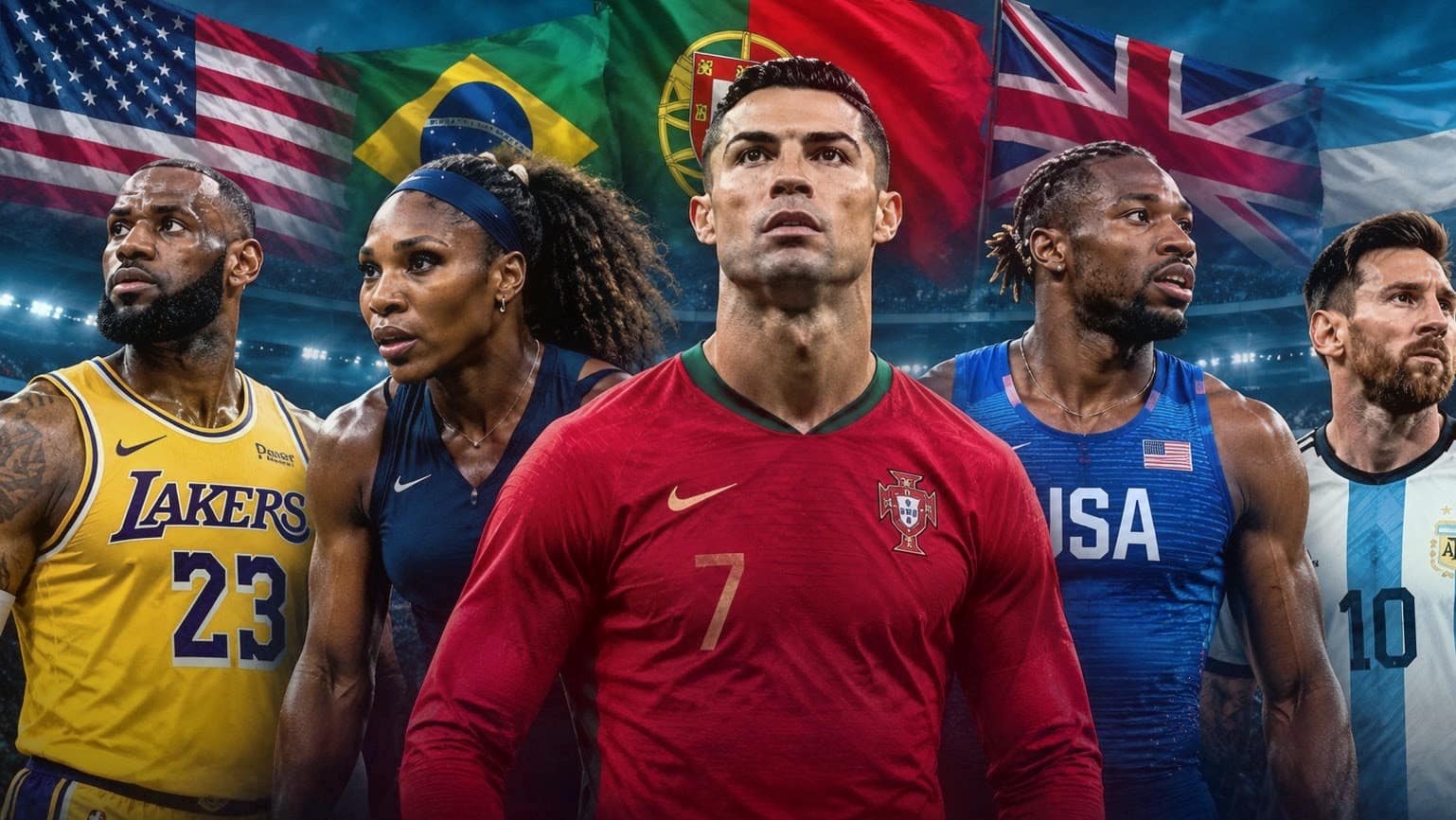
The United States leads the world in the latest 2026 provisional World Ranking of Countries in Elite Sport (WRCES), with Spain and France completing the top three in a ranking that measures sporting success across multiple disciplines rather than focusing exclusively on football or Olympic medals.
The rankings offer a broader picture of international sporting power, highlighting countries that consistently produce elite athletes, compete successfully in major tournaments and maintain a strong presence across different sports.
What Are Sports Country Power Rankings?
Sports country power rankings assess how successfully nations compete in international sport. Rather than measuring the strength of a single national team, an overall ranking considers sporting achievements across multiple disciplines.
Top 10 Sports Countries in the World in 2026
The following table presents the published 2026 provisional WRCES ranking and the points displayed by its ranking platform.
- United States: 716,282
- Spain: 488,722
- France: 483,565
- Germany: 393,778
- Argentina: 293,233
- Canada: 290,486
- Italy: 255,799
- Australia: 243,607
- Brazil: 239,895
- Great Britain: 224,302
1. United States: The World’s Leading Sporting Power
The United States occupies first place in the 2026 provisional ranking, reflecting its extensive presence across international sport.
American athletes and teams compete at the highest level in basketball, athletics, swimming, gymnastics, tennis, golf, baseball and numerous other disciplines. The country also benefits from a large professional sports industry, established collegiate competitions, extensive sports infrastructure and substantial commercial investment.
2. Spain: A Sporting Powerhouse Across Multiple Disciplines
Spain ranks second, demonstrating its strength in several prominent international sports.
Spanish football remains one of the country’s most recognisable sporting assets, supported by successful national teams, elite domestic clubs and a strong player-development system. Spain also has an important presence in tennis, basketball, cycling, motorsport and other disciplines.
3. France: Consistency Across Global Competitions
France occupies third place and remains one of the world’s most versatile sporting nations.
The country has a strong tradition in football, rugby, cycling, handball, judo, fencing, athletics and other Olympic disciplines. Its domestic competitions, national training facilities and established sports federations provide pathways for athletes to progress from youth competition to elite international events.
4. Germany: Strong Sporting Institutions
Germany ranks fourth, supported by its established sporting institutions and broad participation across international competitions.
Football remains central to its sporting identity, but Germany also has a significant presence in athletics, cycling, handball, motorsport, winter sports and other disciplines.
The country benefits from organised club structures, coaching programmes, sports science and competitive domestic leagues.
5. Argentina: Football Excellence and a Broader Sporting Tradition
Argentina occupies fifth place, making it the highest-ranked South American country in this top 10.
The country is internationally recognised for football, with a rich history of producing elite players like and competing successfully in major tournaments. Rugby, basketball, field hockey, tennis and other sports also contribute to Argentina’s sporting reputation.
6. Canada: Strength Beyond Its Most Popular Sports
Canada ranks sixth and has a broad sporting presence across summer and winter disciplines.
Ice hockey is a defining part of Canadian sporting culture, while basketball, athletics, swimming, rowing, cycling, skiing and other sports also contribute to its international profile.
7. Italy: A Deep Sporting Heritage
Italy occupies seventh place, drawing on a strong history across several major sporting disciplines.
Football is a central part of the country’s sporting identity, but Italy also performs in cycling, motorsport, fencing, swimming, athletics, volleyball and winter sports.
8. Australia: International Success Across Diverse Sports
Australia ranks eighth and has a particularly broad sporting profile.
The country has a strong tradition in swimming, cricket, rugby, tennis, athletics, cycling and several Olympic sports. Its professional competitions and high-performance training programmes provide opportunities for athletes to develop and compete internationally.
Australia’s geography and sporting culture also support participation in aquatic and outdoor disciplines.
9. Brazil: A Major Force in World Sport
Brazil ranks ninth and remains one of the most influential sporting nations, particularly in South America.
Football is the country’s most internationally recognised sport, but Brazil also has strong traditions in volleyball, beach volleyball, judo, surfing, athletics and other disciplines.
10. Great Britain: A Broad International Sporting Presence
Great Britain completes the top 10, supported by a long history of international competition across numerous sports.
Its sporting strengths include athletics, cycling, rowing, swimming, tennis, football, rugby and several Olympic disciplines.
National governing bodies, professional leagues, sports science and targeted high-performance programmes contribute to the country’s sporting infrastructure.
How Are Sports Country Power Rankings Calculated?
The methodology is important because there is no single universally accepted ranking that definitively determines the strongest sporting country in every context.
The WRCES uses a points-based system that evaluates national performance across a broad range of sports. Its research-based approach considers several important elements.
1. Performance in international competition
Countries earn points through the results of their athletes and teams in recognised competitions. The system is designed to consider more than just gold, silver and bronze medals, allowing a wider range of international results to contribute.
2. Universality of each sport
The methodology considers how widely a sport is practised and how many countries participate in its international structures. A sport contested across many nations can present a different competitive challenge from one with a smaller international field.
3. Global media popularity
The ranking also considers the worldwide popularity and media exposure of different sports. The objective is to account for differences in the international reach and competitive environment of individual disciplines.
4. Olympic and non-Olympic sports
Unlike an Olympic medal table, WRCES incorporates sports beyond the Olympic programme. This allows achievements in competitions such as major football tournaments, tennis events and other international championships to contribute to a wider picture of national sporting performance.
The underlying methodology has also been examined in published academic research. Nevertheless, the resulting ranking should be understood as one research-based measurement of sporting performance, not an official declaration by the International Olympic Committee that one country is universally the best at sport.
How Does Africa Perform in the 2026 Rankings?
Africa’s representation is an important part of the global sporting picture. The published WRCES table places Egypt at 38th, Nigeria at 45th, South Africa at 58th and Morocco at 64th. Senegal ranks 66th, Tunisia 67th, Kenya 69th, Cameroon 72nd, Algeria 73rd and Uganda 74th.
These positions reflect the ranking’s overall methodology and should not be interpreted as a direct ranking of African football teams.
Nigeria: A Sporting Giant With Room to Grow
Nigeria ranks 45th in the published table and remains one of Africa’s most recognisable sporting nations.
Football has a major role in Nigeria’s sporting identity, with the men’s national team, Super Eagles, and women’s national team, Super Falcons, attracting considerable attention. Nigeria also has a history of achievement in athletics, basketball, wrestling, weightlifting and other sports.
However, football popularity alone does not determine a country’s position in a multi-sport ranking.
To strengthen its overall sporting standing, Nigeria needs sustained investment in grassroots development, coaching, facilities, athlete welfare, sports science and international competition. Better organisation and more consistent support for sports beyond football could also help expand its competitive base.
Egypt: A Strong African Contender
Egypt ranks 38th in the published table, ahead of Nigeria and the other African countries listed above.
The country has a prominent football culture and a strong presence in sports such as squash, handball, weightlifting and other disciplines. Its performance in a broad ranking reflects the contribution of multiple sports rather than football alone.
South Africa: A Diverse Sporting Tradition
South Africa ranks 58th and has established international traditions in rugby, cricket, athletics, swimming and football.
Its experience across team sports and individual disciplines gives it a varied sporting profile. Continued investment in development programmes and access to facilities remains important for strengthening participation and elite performance.
Morocco, Senegal and Kenya
Morocco’s football achievements have helped raise its international profile, while Senegal has a strong football tradition and growing influence in other sports.
Kenya is especially well known for distance running and athletics. Its position in an all-sport ranking, however, is determined by the broader methodology rather than its reputation in a single discipline.
Why the United States Ranks Above Football Powerhouses
One of the most interesting features of an overall sports ranking is that the country with the strongest combined sporting record may not be the leading nation in football.
The United States has considerable strength in basketball, athletics, swimming, gymnastics, baseball and other sports. Spain, France, Germany, Argentina, Italy and Brazil are also highly competitive across multiple disciplines.
A football-only ranking would measure something different. FIFA’s men’s world ranking, for example, evaluates national football teams using a separate points system. A country can rank highly in FIFA’s table without ranking equally highly in an all-sport index.
What Determines a Country’s Long-Term Sporting Success?
Several factors can help explain why certain countries repeatedly produce elite athletes and successful national teams.
- Investment and infrastructure: Training centres, playing fields, equipment and accessible facilities help athletes develop their abilities.
- Grassroots participation: A strong base of young participants expands the pool from which future elite athletes can emerge.
- Coaching and sports science: Technical training, injury prevention, nutrition, analytics and performance research can improve results.
- Funding and athlete welfare: Reliable financial support allows athletes to train consistently and compete internationally without unnecessary disruption.
- Strong governance: Transparent selection processes, effective sports federations and accountable leadership can support long-term progress.
- International exposure: Competing against high-quality opposition helps athletes and teams gain experience and identify areas for improvement.
These factors do not guarantee success, and countries face different economic and social circumstances. However, long-term sporting performance generally requires more than individual talent alone.
Conclusion: The World’s Sporting Balance of Power
The results underline the importance of sporting depth, investment, athlete development and success across different disciplines. They also demonstrate why football alone cannot determine which country is the world’s strongest overall sporting nation.
For African countries, including Nigeria, the rankings provide a reference point for assessing international performance and identifying opportunities to strengthen sports development.