
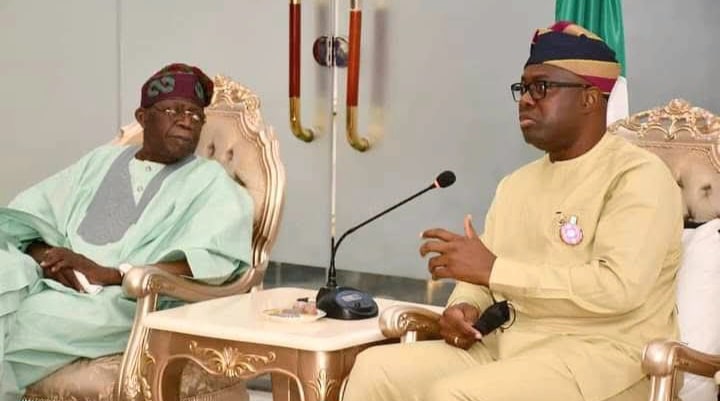
Oyo State Governor Seyi Makinde has stood firmly by his assertions regarding the Federal Government’s withholding of statutory NLNG Dividends belonging to states and local government councils.
In a direct rebuttal to the Presidency, the Nigeria Governors Forum vice-chairman maintained that a comprehensive reconciliation exercise formally identified an unpaid shortfall of approximately ₦9 trillion owed to the lower tiers of government.

The Unresolved Question Surrounding NLNG Dividends
The controversy intensified after the Presidency released an official response addressing Makinde’s earlier statements on revenue allocation. However, the governor’s media team pointed out that the federal government completely sidestepped the fundamental issue at the heart of the dispute.
According to the Oyo State government, the Nigeria Governors Forum, operating with the explicit support of the Federal Government, engaged an independent consultant to reconcile historical dividend payments from Nigeria LNG Limited. That reconciliation exercise revealed a massive shortfall of about ₦9 trillion due to state and local governments. Crucially, the Federal Government accepted those findings, and the resulting audit report remains in the custody of both the Presidency and the forum.
Disbursing Funds Through the Federation Account
Addressing official figures released by Abuja, Governor Makinde in a statement by his Special Adviser (Media), Dr Sulaimon Olanrewaju, noted that highlighting top-line receipts does not explain where the money actually went. The Presidency stated that NLNG had paid $21.5 billion in dividends into the Federation Account since inception, including $3 billion received under the current administration.
Yet, the key question remains unanswered: have states and local governments actually received their rightful statutory shares of these payments? The governor asked:
“The Presidency stated that NLNG had paid $21.5 billion in dividends into the Federation Account since inception, including $3 billion received under the current administration. But it did not explain how these funds were disbursed.
“Have states and local governments received their shares? How much did they receive, and how were those amounts calculated? What happened to the $3 billion received under this administration?”
These specific questions highlight the growing demand for fiscal transparency between the central government and the sub-national units.
Seyi Makinde Demands Accountability on Public Revenue
Refusing to back down, the Oyo State administration emphasized that Seyi Makinde conducts public discourse with decorum and never makes unfounded claims or quotes financial figures without a solid factual basis. As the incumbent Vice-Chairman of the governors’ body, his statements carry significant weight in ongoing fiscal negotiations.
Speaking through his Special Adviser on Media, Dr Sulaimon Olanrewaju, the governor reaffirmed his readiness to provide further technical details while calling on federal authorities to focus on the core substance of the audit findings rather than issuing evasive retorts. The official statement concluded:
“Governor Makinde conducts public discourse with decorum and does not make unfounded claims or quote figures without a basis. We remain ready to provide further clarification while we urge the presidency to address the substance of the matter.”
Fiscal Transparency and the Future of State Allocations
As sub-national governments face mounting economic pressures, the resolution of this multi-trillion naira discrepancy carries immense consequences for state budgets across Nigeria. State governments rely heavily on statutory transfers to fund critical infrastructure, public sector wages, and essential services.
With both parties holding copies of the reconciliation report, pressure is growing on the Presidency to publish full disbursement records. Until the central authority provides a line-by-line accounting of how the $3 billion in recent revenue was distributed, the debate over state entitlements will remain a major political and economic flashpoint.