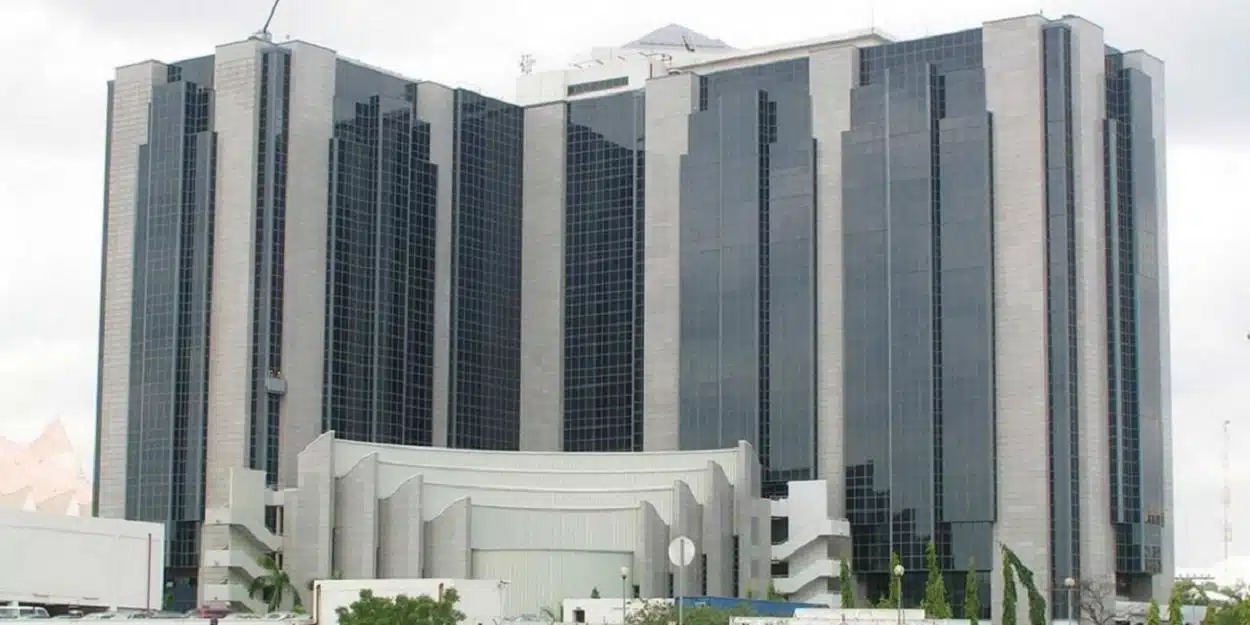

The Central Bank of Nigeria (CBN)’s liquidity mop-up has intensified, with more than N90tn withdrawn from the financial system through Open Market Operations (OMO) securities in the first 11 months of 2026. The apex bank is seeking to contain inflationary pressures ahead of the 2027 general elections.
The amount is a sharp increase from the N40.9tn withdrawn in 2025. It reflects aggressive monetary tightening to rein in excess liquidity and prevent renewed price pressures amid concerns about election-related spending.
Policymakers warn that political spending could inject substantial funds into the economy and complicate the CBN’s efforts to sustain the disinflationary trend.
CBN liquidity mop-up: how 2026 compares with 2024 and 2025
The CBN withdrew N50.23tn through liquidity mop-up operations in 2024, while its sales of OMO securities fell to N40.90tn in 2025, according to the apex bank’s 2025 Annual Report.
Liquidity absorption has accelerated significantly this year. Data from CBN auctions, FMDQ and the Financial Market Dealers Association (FMDA) show that more than N90tn was withdrawn between January and November. The figure excludes OMO maturities for some months and may not reflect the net liquidity absorbed.
Some sources put OMO sales at over N103tn so far this year. This report relied on data from CBN auctions, FMDQ and FMDA.
OMO securities: month-by-month liquidity withdrawals
Monthly FMDA data show the following:
- January: N13.41tn
- February: N6.3tn
- March: N2.36tn
- April: N4.48tn
- May: N5.42tn, through two auctions on May 21 and 29
- June: N13.96tn
- July: N7.18tn
- August: N4.72tn
- September: N17.5tn, the highest OMO allotment of the year
In October, the CBN allotted N6.182tn in new OMO bills, while N9.051tn worth of existing securities matured. That resulted in a net repayment of about N2.87tn before other adjustments, according to FMDA data. The apex bank then withdrew N7.53tn through OMO auctions on November 3, 4 and 10.
The aggressive issuance comes as the CBN balances monetary stability against potential liquidity pressures from the election cycle.
MPC warns 2027 elections spending could fuel inflation
Members of the CBN’s Monetary Policy Committee (MPC) warned in late October that increased government spending ahead of the 2027 elections could fuel inflation, weaken fiscal discipline and complicate monetary stability.
The warnings came as broad money supply rose to N146.60tn in September 2026, up N28.82tn from a year earlier. Credit to the government climbed 63.09 per cent to N39.40tn.
The concerns were contained in personal statements issued after the committee’s 307th meeting on September 21 and 22, 2026. Members cautioned that election-related expenditure, together with fuel, food and production costs, could slow progress in bringing inflation under control.
Deputy Governor of the CBN’s Corporate Services Directorate, Dr Muhammad Abdullahi, warned that election-related fiscal expansion could transmit inflationary pressure through transportation, energy and production costs.
“I recognise that election-related fiscal expansion and other incipient price pressures may propagate through transport, energy and production cost channels, amplifying economy-wide cost-push inflation,” he said.
He called for closer coordination between fiscal and monetary authorities to prevent government measures from injecting additional liquidity and undermining price stability.
Dr Aloysius Ordu, an MPC member and Senior Fellow at the Brookings Institution, urged fiscal discipline as political activities intensify.
“And as the election cycle approaches, stronger safeguards against fiscal slippage and pro-cyclical spending will be important,” he said.
Ordu noted that improved oil receipts were strengthening government finances. He warned, however, that converting foreign exchange earnings into domestic liquidity could complicate inflation control.
MPC member Bandele Amoo identified political activities and budget implementation as potential sources of renewed spending pressure.
“As global uncertainty remains elevated, domestic political activities may introduce new spending pressures, and supply-side vulnerabilities continue to pose risks to the inflation outlook,” Amoo said.
He expressed optimism that better coordination between the CBN and the Federal Ministry of Finance would help manage the pressures. He stressed that monetary policy decisions should remain guided by economic evidence and medium-term price stability.
Can CBN tools contain 2027 elections liquidity risks?
Professor Murtala Sagagi acknowledged that election-related spending has historically pressured demand and prices. He said existing monetary policy tools could help contain the risks.
He cited the CBN’s liquidity management instruments, its Cash Reserve Requirement and a memorandum of understanding on fiscal-monetary coordination between the CBN and the Federal Ministry of Finance.