
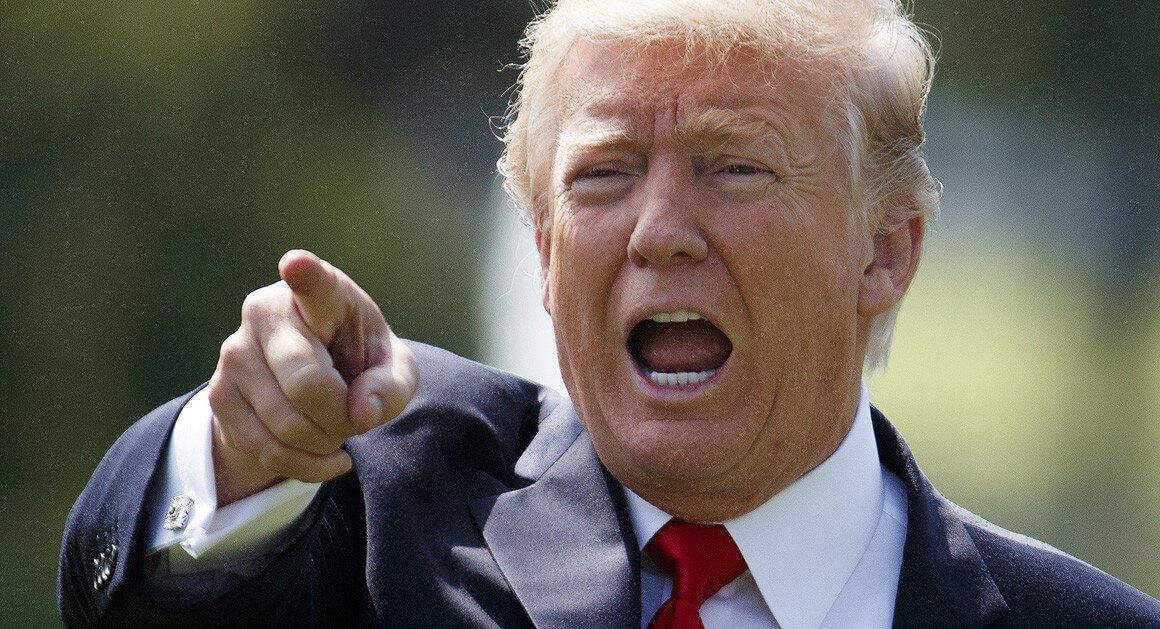
US President Donald Trump announced a phased Gaza disarmament deal on Thursday following talks between mediators and Hamas leaders in Cairo.
Writing on social media, Mr Trump declared that the US-backed Board of Peace had reached a consensus to disarm all armed factions in the territory. However, senior Israeli officials expressed deep scepticism, while Hamas leaders stressed that any agreement remains a draft dependent on a full Israeli military withdrawal.
“Today, the Board of Peace reached a HISTORIC agreement for the COMPLETE DISARMAMENT of Hamas and all other armed groups in Gaza,” Mr Trump wrote. He described the proposal as “a monumental step toward lasting PEACE and SECURITY.”
Under the framework, a new Palestinian administration would govern Gaza alongside the Board of Peace. Mr Trump added that the arrangement would ensure “Israel will have the security it deserves, with Gaza no longer used as a base for terror attacks.”
Despite the White House’s optimism, severe obstacles remain. An Israeli official confirmed that Tel Aviv had already rejected a 15-point draft proposal before Mr Trump’s statement, citing insufficient guarantees on total demilitarisation.
“Israel demands the complete disarmament of Hamas, including the removal of weapons from Gaza and the complete demilitarisation of the Strip as a precondition for any process,” the Israeli official stated. “The 15-point document in question does not provide a satisfactory response to these demands, and Israel conveyed its objections.”
Hamas representatives also pushed back against immediate military concessions. Ghazi Hamad, a member of the Hamas negotiating delegation, confirmed to reporters that forces would not surrender arms while Israeli forces remain inside the enclave.
“We will not take any action regarding disarmament prior to Israel’s withdrawal from the Strip,” Mr Hamad said.
A Hamas source clarified that under the current draft, Hamas heavy weapons would not be handed to Israel, but rather stored under the direct control of an incoming Palestinian administration.
The Geopolitical Void Behind Trump’s Gaza Mandate
The public divergence between Washington, Tel Aviv, and Cairo highlights a dangerous structural flaw in the White House’s diplomatic strategy.
By bypassing traditional multilateral structures in favour of a presidential Board of Peace, the US administration has created an international framework that lacks binding commitments from the primary belligerents on the ground. For Gaza’s civilian population, the diplomatic friction offers little immediate relief, as military operations continue alongside high-level negotiations.
For Israel, accepting a phased reduction of Hamas heavy weapons without immediate, total demilitarisation represents an unacceptable security risk. Conversely, demanding the total capitulation of Hamas before an Israeli withdrawal creates a diplomatic deadlock that neither Egypt, Qatar, nor Turkey can bridge.
Timelines Disconnect Amid Ongoing Violence
Uncertainty also surrounds the practical execution and duration of any proposed peace process.
While one Board of Peace official estimated that implementing the full agreement would take between 200 and 320 days, US diplomats quickly moved to downplay that specific timeframe. A senior US official admitted that Tel Aviv remains “very sceptical that Hamas will disarm,” but insisted Washington expects compliance.
“We’re very confident they will adhere to it,” the US official stated. “If they don’t, obviously President Trump would be very, very disappointed.”
Nickolay Mladenov, the Board of Peace envoy for Gaza, insisted the plan opens “a political horizon to a meaningful resolution” that leaves Gaza “rebuilt, governed by Palestinians and at peace with Israel.”
Yet the reality on the ground remains volatile. Hours before the Cairo talks concluded, Israeli strikes killed at least six Palestinians in Gaza, including two children, according to local medical personnel.