

If lawful, then the public deserves structured clarification about the scope and boundaries of such authority. If unlawful, the breach is grave.
When a former governor publicly alleges that he learned of an impending arrest because the National Security Adviser’s phone call was “tapped,” the matter ceases to be personal. It becomes constitutional.
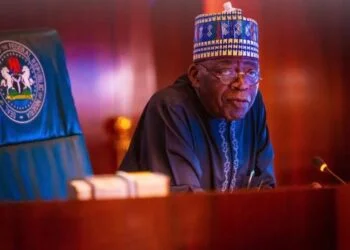
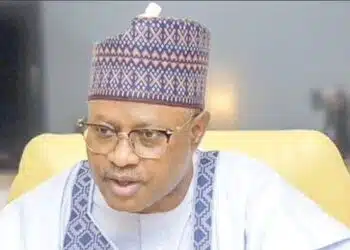
In a televised interview on Arise TV, Nasir El-Rufai suggested that he became aware of official moves against him through intercepted communications allegedly linked to the office of the National Security Adviser. The statement was delivered almost casually, as if surveillance at the highest level of national security were an ordinary feature of political life. It is not.

If taken seriously, the implications cut to the heart of the republic.
Surveillance Is an Exceptional Power – under Nigeria’s constitutional order and relevant telecommunications and cybercrime laws, interception of private communication is not a political instrument. It is an extraordinary power, reserved for narrowly defined circumstances and subject to legal authorization.
Surveillance requires lawful approval. It must be tied to national security threats or serious criminal investigation. Judicial oversight is not decorative; it is foundational.
If the National Security Adviser’s communication was intercepted, immediate questions arise: Was there judicial authorization? On what legal suspicion was the interception predicated?
Which agency executed it?Was the NSA himself under lawful scrutiny?
If lawful, then the public deserves structured clarification about the scope and boundaries of such authority. If unlawful, the breach is grave. Unauthorized interception violates constitutional privacy protections and potentially attracts criminal liability.
Either possibility unsettles institutional confidence.
Access Is Also a Legal Question
The constitutional concern does not end with the interceptor. It extends to the recipient of the intercepted intelligence.
Under established legal principles, unauthorized possession, dissemination, or use of classified or illegally obtained communication may itself constitute an offense. The law scrutinizes not only the act of interception, but the chain of custody and benefit.
When a prominent citizen publicly implies access to tapped communications, it invites inquiry: Who provided the information?
Was it classified? Was its acquisition lawful? Was there collusion or breach of protocol?
The audacity is not merely in alleging surveillance; it is in invoking access to its product.
If the claim is rhetorical flourish, it weakens institutional credibility. If literal, it raises serious legal exposure. In either case, democratic confidence is strained.
Perhaps the most disturbing element is normalization.
When exceptional surveillance powers are referenced casually, their gravity diminishes. Intelligence interception exists to protect national security — not to become currency in elite rivalry.
Nigeria’s security architecture has long contended with overlapping mandates and contested transparency. Oversight mechanisms exist, but public trust in their robustness remains uneven.
Public assertions of intercepted communications deepen that distrust.
Yet institutional imperfection does not excuse individual responsibility. No citizen, however influential, stands beyond the reach of legal scrutiny. If the claim is true, it reveals potential vulnerability within intelligence discipline. If exaggerated, it erodes institutional credibility.
Both outcomes are injurious.
The rule of law is not selective.
If unlawful interception occurred, it must be investigated. If classified intelligence circulated improperly, it must be examined.
If the allegation lacks evidentiary basis, reputational consequences must follow.
Exceptional powers must remain exceptional — constrained by law, supervised by oversight, insulated from factional deployment.
A republic governed by law cannot function through whispered intercepts and informal access to state intelligence.
Boundaries must hold.
Postscript: When the State Falls Silent Abroad
If the surveillance episode raises concerns about the boundaries of state power at home, unfolding events abroad raise equally serious questions about state responsibility.
Nigerian names have appeared in casualty disclosures connected to the Russia–Ukraine war.
Hamzat Kazeen Kolawole.
Mbah Stephen Udoka.
Reportedly killed in November 2025 while attached to a Russian military unit.
Before these confirmations, another Nigerian, widely reported as Abubakar Adamu — surfaced in a distress video, appealing in Hausa for rescue and repatriation after allegedly discovering that his overseas “employment” had led into military entanglement.
This is no longer conjecture. It is loss.
How are Nigerian citizens entering foreign military formations?
Were the contracts fully understood? Were recruitment channels transparent? Were intermediaries operating within Nigeria?
If citizens knowingly enlisted, clarity must be provided. But if recruitment occurred through deception, misrepresentation, or exploitation of economic vulnerability, then the issue transcends migration. It becomes a security concern.
Economic strain at home makes risk seductive. Youth unemployment and inflation sharpen vulnerability. But vulnerability must not become a pipeline to foreign battlefields.
If recruitment networks are operating within Nigeria; formal or informal — they must be investigated. If regulatory loopholes are being exploited, they must be closed. If citizens are being misled, prosecution must follow.
Diplomatic engagement must also be firm. The Ministry of Foreign Affairs should seek structured clarification regarding recruitment and deployment of Nigerian nationals.
Reports suggest that other African nationals have also appeared among casualties in the same conflict. If recruitment patterns extend across borders, the African Union must treat this as urgent. Intelligence coordination and preventive advisories are essential.
Africa must not become expendable manpower in external rivalries.
The surveillance controversy and the foreign war casualties appear separate. They are not.
The boundary between intelligence power and political rivalry. The boundary between opportunity and exploitation.
The boundary between rhetoric and criminal implication.
The boundary between sovereignty and vulnerability.
A republic survives when those boundaries are respected. When exceptional powers become normalized, when intelligence becomes theatre, when citizens drift into foreign wars through opaque channels, the state must respond, not selectively, not theatrically, but consistently.
The rule of law at home. Protection of citizens abroad.
That is the standard.
A nation is measured not only by the authority it wields and by the boundaries it enforces.
*Ogundipe, Public Affairs Analyst and former President, Nigeria and Africa Union of Journalists, writes from Abuja.