
There is something almost comical about the purported gathering of Mogajis, Baales and other traditional titleholders at Engr. Muftau Open Salawu’s residence at Iyaganku on Saturday. It looks like a desperate attempt to diminish the unprecedented show of love for President Bola Ahmed Tinubu in Ibadan, and to bolster Governor Seyi Makinde’s camp. The meeting was allegedly attended by 250 traditional leaders from all 11 local government areas of Ibadanland. Yet the organisers have offered no convincing photographic or video evidence of that turnout.
In an age when politicians document even the arrival of three supporters, this gathering appears to have taken place in a remarkably camera-shy atmosphere.
Was the Iyaganku Meeting Against Tinubu Real?
One is entitled to ask whether this was a gathering of influential traditional leaders or another exercise in political imagination. Its aim would be to manufacture an impression of grassroots rejection of President Tinubu.
Even if the meeting took place, the identities, standing and influence of those present deserve scrutiny. A collection of obscure titleholders and politically convenient personalities cannot suddenly become the voice of Ibadanland. Chieftaincy titles do not automatically translate into electoral influence, much less the ability to deliver votes.
What Mapo Hall Told Ibadan and the Nation About Tinubu
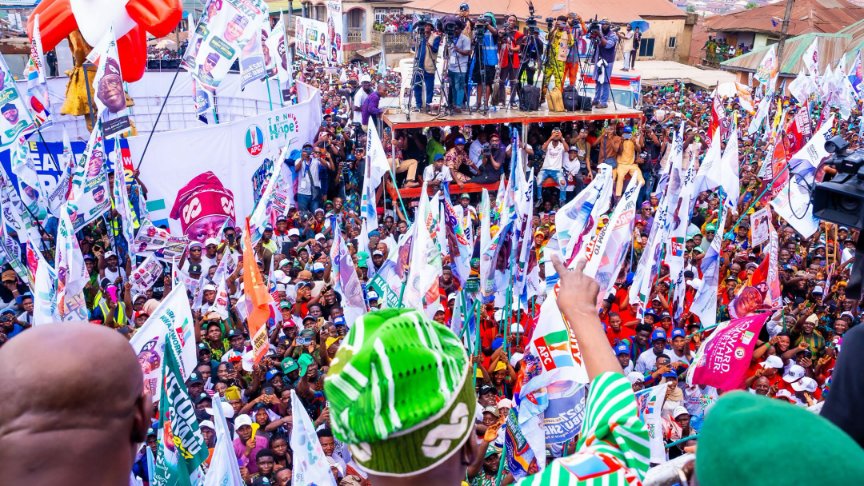
The public spectacle at Mapo Hall told a different story. The Olubadan, accompanied by prominent traditional rulers and heads of family compounds across Ibadanland, received President Tinubu. That visible engagement deserves far more attention than an alleged private meeting whose attendance and composition remain unsubstantiated.
The strategists behind the Iyaganku story should understand that Ibadan’s traditional institution is much bigger than a handful of individuals assembled for political convenience.
Makinde’s Record in Ibadanland Under Scrutiny
Beyond the traditional institution, there are more substantial reasons why Makinde and his political associates should be concerned about public opinion. Several issues have generated serious public debate:
- controversies surrounding local government administration
- the perceived weakening of grassroots governance
- uneven development across Ibadanland
- allegations of questionable land dealings involving politically connected interests
Many communities feel neglected, while critics question why certain areas appear to get disproportionate attention in the administration’s development priorities. These concerns cannot be wished away with political endorsements. Nor can the electorate’s assessment of Makinde’s record be separated from the fate of whoever he is promoting as his successor.
The very idea of a “third edition of Makinde,” as critics describe Adekanmbi’s political ambition, raises legitimate questions about continuity. Adekanmbi must also address the corruption allegations Makinde himself previously made against him. What has changed? Were those allegations investigated and resolved? Why should the electorate accept a succession arrangement without satisfactory answers?
Why Supporters Say Tinubu Deserves a Second Term
There is also the wider national context. President Tinubu’s second-term argument rests on the chance to consolidate and complete reforms already begun. These include:
- the proposed state policing framework
- the administration’s five-year security strategy
- investments in national security architecture
- the expansion of road infrastructure, particularly across the Southwest
- an increased number of military formations in Oyo State
Supporters argue that interrupting these initiatives midway could undermine their benefits. They want the reforms to mature and their results to become more evident.
Does Makinde’s Presidential Ambition Complicate Tinubu’s Re-election?
Against this background, Makinde’s presidential ambition deserves political scrutiny. Critics question whether his candidacy offers a genuine national alternative or is partly meant to divide the anti-Atiku vote and complicate Tinubu’s re-election prospects. The suggestion that this could indirectly benefit Atiku Abubakar is a political argument worth examining. That is especially so given the debate about regional and ethnic power rotation after Muhammadu Buhari’s eight years in office. But Nigeria’s presidency must ultimately be decided by competence, performance and the freely expressed will of voters, not ethnic arithmetic.
A Biblical Lesson for Oyo State Voters
And what of Oyo State? The electorate should be wary of exchanging one administration for another without weighing the consequences of political succession. The biblical account of Rehoboam, Solomon’s son, offers a timeless lesson. When the Israelites asked him to ease the burdens his father had imposed, he threatened to make their yoke heavier, promising to replace his father’s whips with scorpions. The people rejected him, and the kingdom fractured.
When a successor offers nothing beyond continuing an incumbent’s political arrangement, voters have every reason to ask whether they are inheriting progress or simply extending their burdens. Those who believe Adekanmbi represents a better future must explain why, particularly when Makinde himself made serious allegations against him.
The Train Has Moved
Those celebrating the Iyaganku gathering should remember a Yoruba aphorism: “Èmi kò ní kọ ẹ̀yìn sí ibi tí ayé kò yí sí.” (I will not turn my back on the direction the world has taken.)
The train has moved. Political events have their own momentum, and no amount of manufactured excitement, press statements or questionable assemblies can substitute for the genuine mood of the electorate. The reception at Mapo Hall was an important public demonstration of the bond between Tinubu and his supporters in Ibadan.
The train has moved. Those who missed it should stop pretending they are the ones driving it.