

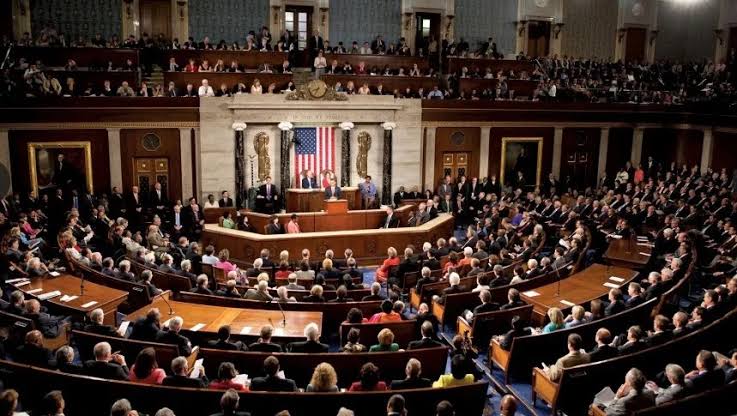
The United States House of Representatives has voted to halt all financial assistance to Abuja, passing a critical legislative amendment linked directly to concerns over systemic Christian persecution.
Sponsored by Congressman Gregory Steube, the legislative change blocks 100% of US foreign aid until Nigeria demonstrates concrete progress in protecting vulnerable religious groups. The dramatic move, approved by a voice vote, was attached to the fiscal 2027 State Department spending bill. This decision signals a major escalation in Washington’s expectations for regional stability.

The underlying bill had originally proposed a moderate approach to checking human rights violations. Initially, lawmakers suggested withholding 50 per cent of funds appropriated for Nigeria. This block would remain until the US Secretary of State certifies that the country has taken “effective steps to prevent and respond to violence and hold perpetrators accountable.”
However, Steube’s successful amendment raises that threshold to a total block. It keeps the certification conditions unchanged but ensures that not a single dollar of taxpayer money leaves Washington without real action.

Congress Escalates Measures Against Christian Persecution
The final vote on the spending bill split largely along party lines, passing 217-209. Following the voice vote, Steube announced the legislative victory on social media.
On X, Steube wrote, “My amendment to withhold 100% of U.S. aid to Nigeria until its government stops the slaughter of Christians has passed. American taxpayers should never bankroll governments that turn a blind eye while Christians are abducted, tortured, and murdered. No more wasteful foreign aid!”
These sharp words highlight a growing frustration in Washington. Many lawmakers believe that previous diplomatic efforts have failed to protect innocent lives. For many in Congress, addressing Christian persecution is no longer a secondary diplomatic talking point. It has become a primary condition for financial diplomacy.
Steube Defends Move to Halt US Foreign Aid to Abuja
On the House floor, Steube defended his hardline approach with passion. He stated that Nigeria “has faced a horrific wave of violence that its corrupt government has failed to address,” and argued that withholding only half the funding meant rewarding a government that “fails to meet such a basic obligation.”
The Florida representative argued that his amendment does not add confusing new rules. Instead, he said the measure “only strengthens” the existing ones, framing the entire debate around accountability.
“Foreign aid should never be a reward for failure,” he explained.
Steube also linked his push to America’s finances, asking why the country should keep sending money to Nigeria “as our national debt is fast approaching $40 trillion.” This dual focus on fiscal conservatism and international human rights helped rally support among colleagues.
Redefining the Nigeria Security Partnership Amid Deepening Tension
Despite the House victory, the measure faces hurdles before it becomes law. The bill must clear the Senate and receive the president’s signature. This legislative process means Wednesday’s vote does not immediately change current funding structures.
However, the political atmosphere between the two nations remains tense. The vote follows a series of diplomatic rifts. In 2025, President Donald Trump redesignated Nigeria as a Country of Particular Concern due to escalating human rights violations and religious violence. Tensions flared further after a US military strike on Nigerian soil on Christmas Day 2025.
While the two nations recently entered a Nigeria security partnership targeting northern terrorist groups, this latest congressional action shows that security cooperation cannot exist in a vacuum. Washington is sending a clear message: military cooperation will not shield foreign partners from scrutiny over domestic violence.