

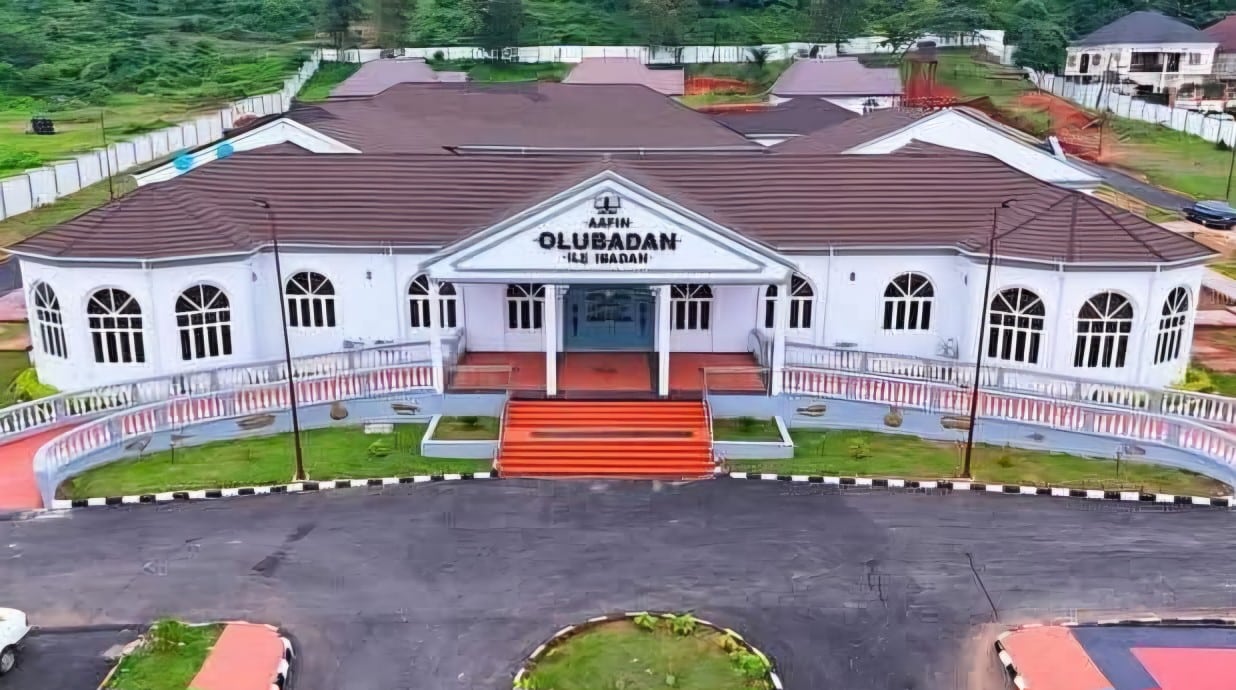
Ibadan: A World On Its Own, the famous city of brown roofs, is an enigma. Having been founded in the 1820s as a war camp, the city has grown into Nigeria’s largest metropolis by land area and is one of the most influential hubs of Yoruba culture, politics, and commerce. From the panoramic sweep of Mapo Hill, the sea of rust-coloured rooftops not only reflects resilience but also a heritage woven into the soul of Yoruba land.
Significantly, the traditional institution of Ìbàdàn is controlled by the ancient stool of the Olúbàdàn. The ancient city is not only immortalised by Cocoa House, West Africa’s first skyscraper, but is also illuminated by the University of Ibadan, Nigeria’s premier university. For the most part, the city is both a custodian of history and a beacon of modern progress. Indeed, Ìbàdàn is not merely a city; it is a conglomerate of the very many different of the Yorùbá and those of other ethnic groups in Nigeria. This is the reason why the Yorùbá commonly say, ‘Ayé n’Ìbádàn,’ meaning, ‘Ìbàdàn is a world on its own.’

Ibadan as Cradle of Leadership and Influence
As the historic capital of the old Western Region, Ìbádàn once presided over a vast political expanse stretching from today’s Ọ̀yọ́, Ògún, Ọ̀ṣun, Èkìtì and Oǹdó States to parts of Lagos, Kwara, Kogi, Edo and Delta. It became the seat of premiers and of both civilian and military governors and administrators. Its political and cultural weight remains unmatched and draws people who have since blended into its cosmopolitan fold from different states of the federation.
Particularly, Ìbàdàn’s embrace is so deeply absorbing that many families, who migrated generations ago, have since lost ties to their ancestral hometowns. The strength of the city lies in this openness; this is significantly a melting pot in which identity is shaped by contributions to the collective Ibadan story, rather than by where one’s ancestors came from.
The Genius of the Olúbàdàn Institution
Among Yoruba monarchical systems, Ibadan’s kingship stands out. Unlike other Yoruba towns in which royal succession is guarded by hereditary dynasties, the Olúbàdàn’s throne is astonishingly open. In principle, any freeborn male native of Ibadan, regardless of ancestral origin, can ascend to the throne.
This system grew out of Ibadan’s martial roots. The city, which was born as a war camp, organised itself around a military order rather than an inherited privilege. Today, succession to the stool of Olúbàdàn follows two parallel chieftaincy ladders: the Ẹgbẹ́ Àgbà (Civil Line) and the Balógun (Military Line). Each line has 22 rungs, beginning at Jagun and rising through ranks until the pinnacles—Ọ̀tún Olúbàdàn (Civil) and Balógun of Ibadan (Military). The crown rotates between these two summits.
Although the progression is slow, ascendancy to the throne of Olúbàdàn is certain. Of course, advancement follows seniority in that when a chief dies or is promoted, everyone below automatically moves up, and there are neither leaps nor backdoors. Rather, the result is predictability as everyone knows the next Olúbàdàn years in advance. This ascendancy system has drastically reduced disputes among the members of the Olubadan-in-Council to the bare minimum. The cost, however, is time since it often takes decades before anyone can assume the throne of Olúbàdàn. The system ensures that Olúbàdàns are seasoned elders by the time that they finally mount the throne.
Most importantly, the beauty of the system is its inclusivity, orderliness and incorruptibility. It is patience, community services and destiny, not royal blood, that determine the person who becomes the Olúbàdàn. It is, in essence, a republican monarchy, that is, a kingship of the people, by the people, and for the people.
Ibadan’s Openness to ‘Outsiders’
Perhaps the most fascinating feature of Ibadan’s kingship is its inclusiveness. The throne is not the preserve of ancient dynasties or ‘sons of the soil’ alone. Since a family has settled, integrated, and contributed to the growth of Ìbàdàn, its sons can rise through the ladder to the ultimate prize.
For example, Oba Alesinloye Abass (1952–1955) was from Nupe in the present-day Niger State; Oba Isaac Babalola Akinyele (1955–1964), the first educated Olúbàdàn, had his ancestral root in Ìkẹ̀rẹ́-Èkìtì, Èkìtì State; Oba Yesufu Oloyede Asanike (1983–1993) traced his lineage to Ẹ̀gbá, Ògùn State; Oba Emmanuel Adegboyega Adeyemo (1993–1999) came from Iwo in Ọ̀ṣun State; and some historical accounts trace the forebears of Oba Samuel Odulana Odugade I (2007–2016) to Ìjebú or, even, Ìgbòho in Òkè-ògùn although he was a native of Ìbàdàn by birth.
This emphasises the character of Ìbàdàn as the city is less concerned about ‘where you come from,’ but is more concerned about ‘what you have contributed.’
Ibadan’s Secret — Accommodation and Hospitality
If Ibadan could be described in one phrase, it would be ‘accommodating and hospitable.’ Its greatness lies in its inclusivity, and its progress stems from the values that its people add, not the origins that they claim. This philosophy explains why Ibadan continues to thrive as a centre of politics, education, culture, and commerce.
As the 44th Olúbàdàn of Ìbàdàn land, His Imperial Majesty, Oba Rashidi Adewolu Ladoja, ascends to the throne, Ibadan is poised for another era of renewal. With his experience, vision, and the city’s resilient spirit, Ìbàdàn—our world—will continue to grow in leaps and bounds.