

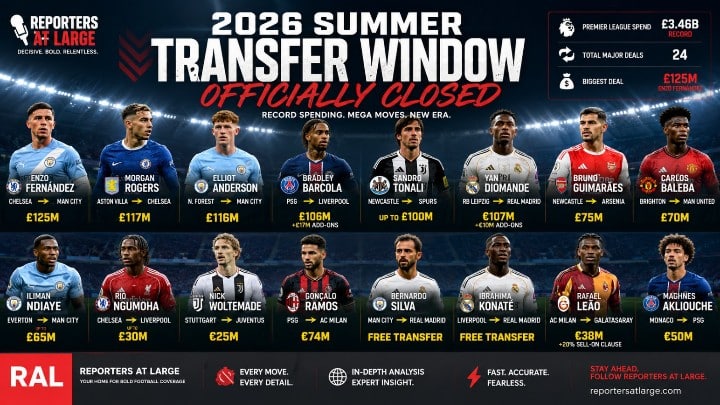
The 2026 summer transfer window is officially closed, bringing an end to months of negotiations, record-breaking fees, late twists and Deadline Day drama across European football. The Premier League finished the window with approximately £3.46 billion spent — a new summer record.
The final hours produced one of the biggest shocks of the window as Manchester City completed a £125 million move for Enzo Fernández from Chelsea, matching the British transfer record.

For clubs, the window is now about results rather than rumours. For supporters, the question is simple: did their club spend wisely?
2026 summer transfer window breaks spending records
English clubs once again drove the market: Manchester City ended the window as the Premier League’s biggest spender, committing around £458 million to new arrivals. Alongside Fernández, City’s major deals included Elliot Anderson for £116 million and Iliman Ndiaye for up to £65 million.
Chelsea also made headlines by paying £117 million for Morgan Rogers, moving him from Aston Villa. The seven-year agreement made Rogers the most expensive British player in football history at the time of his transfer.
That record did not last long.
Anderson had previously taken the British record with his £116 million move from Nottingham Forest to Manchester City, only for Rogers to surpass it with his Chelsea transfer.
Biggest 2026 summer transfer window deals
Liverpool secured one of the window’s headline arrivals by signing Bradley Barcola from Paris Saint-Germain for an initial £107 million, with the package potentially rising to £123 million through additional payments.
Tottenham also pushed into the nine-figure bracket, signing Sandro Tonali from Newcastle United for up to £100 million. It became another club-record investment during a remarkable summer for Spurs.
Real Madrid’s acquisition of Yan Diomande from RB Leipzig was another major European deal. Current transfer listings put the move at around €107 million, placing the forward among the most expensive signings of the summer.
Arsenal strengthened with Bruno Guimarães from Newcastle for £75 million, while Manchester United paid £70 million for Carlos Baleba from Brighton.
The numbers show just how aggressively the biggest clubs attacked the market.
Premier League transfers reshape the market
The scale of Premier League spending was not limited to the traditional title contenders. Approximately 38% of all Premier League deals were transfers between English top-flight clubs, up from about 30% the previous year.
That internal spending helped produce four entries among the 11 most expensive signings in Premier League history during the same summer.
According to the transfer data available at the close of the window, the leading deals included Fernández at £125 million, Rogers at £117 million, Anderson at £116 million, Barcola at up to £123 million, and Tonali at up to £100 million.
For Reporters At Large, the figures provide a clear measure of where football’s transfer power currently sits: English clubs are not simply competing in the European market; they are setting its price points.
What the 2026 transfer window leaves behind
The summer ended with a remarkable statistic: Premier League clubs spent roughly £3.46 billion, exceeding their previous summer record for the second consecutive year.
The final hours were fittingly dramatic, with City’s £125 million Fernández deal arriving alongside a series of other major moves before the deadline.
Now the speculation stops and the football begins.
The next transfer window will not open until January, leaving clubs with one immediate task: turning record investment into results on the pitch.