
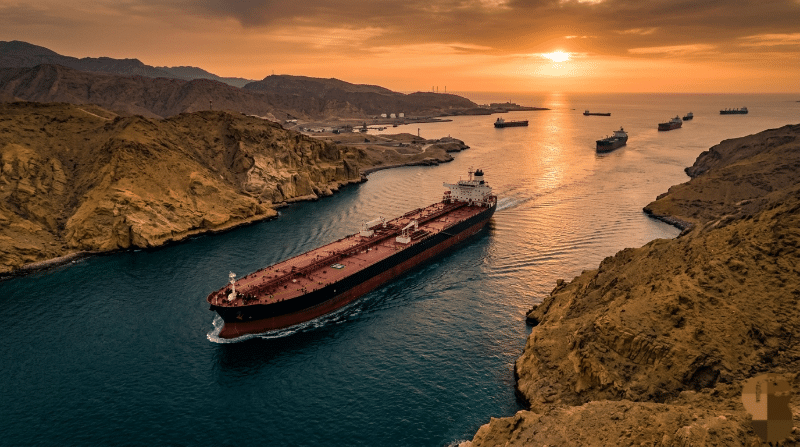
Iran port blockade operations commenced on Monday as the United States military began intercepting vessels departing from Iranian terminals. President Donald Trump confirmed the move, which has prompted Tehran to threaten retaliation against neighbouring Gulf ports.
The collapse of high-level talks in Islamabad over the weekend has left the region on a knife-edge, with global markets reacting to the sudden escalation of the port blockade.
While United States officials suggest that diplomatic engagement continues, and Pakistani Prime Minister Shehbaz Sharif noted ongoing efforts to resolve the conflict, the reality on the water remains volatile. Oil prices have surged back above $100 per barrel, reflecting fears that the Iran port blockade will lead to a permanent disruption of the Strait of Hormuz.
Trump defends Iran port blockade to prevent nuclear ‘extortion’
Speaking from the White House, President Donald Trump remained defiant regarding the necessity of the Iran port blockade. He insisted that the measure was essential to prevent Tehran from leveraging its position to secure a nuclear weapon.
“Iran will not have a nuclear weapon,” Trump told reporters. “We can’t let a country blackmail or extort the world.”
Since the conflict began on 28 February, Iran has effectively restricted the Strait of Hormuz to its own vessels, demanding fees and total control over the passage. The US-led Iran port blockade is designed to counter this by stopping any ships that comply with Iranian tolls. Trump warned that any Iranian “fast-attack” craft attempting to interfere with the Iran port blockade would be “eliminated” with immediate force.
Oil markets reel as Iran port blockade threatens energy security
The impact of the Iran port blockade on global energy security has been immediate. Brigadier General Reza Talaei-Nik, a spokesperson for Iran’s Ministry of Defence, warned that foreign efforts to police the region would only deepen the crisis. Although NATO allies, including Britain and France, have expressed a desire to see the waterway reopened, they have notably declined to participate in the active Iran port blockade, citing the risk of a wider war.
US Central Command clarified that the Iran port blockade would be “enforced impartially against vessels of all nations” entering or leaving Iranian ports.
However, they stressed that neutral transit through the Strait of Hormuz to non-Iranian destinations would not be impeded. Despite these assurances, traders remain anxious, as the Iran port blockade targets the heart of the world’s most vital oil transit route.
Tehran brands Iran port blockade ‘piracy’ amid ceasefire strain
The ceasefire that briefly halted United States and Israeli airstrikes is now under immense pressure due to the blockade. Tehran has officially branded the US naval restrictions as “piracy”, warning that if their ports are targeted, no port in the Gulf or Gulf of Oman will be secure. The Revolutionary Guards added that any military vessels approaching their waters under the guise of the port blockade would be considered a violation of the existing peace agreement.
On social media, President Donald Trump issued a final, stark warning regarding the enforcement of the port blockade:
“Warning: If any of these ships come anywhere close to our BLOCKADE, they will be immediately ELIMINATED, using the same system of kill that we use against the drug dealers on boats at Sea. It is quick and brutal.”
As Israel continues its separate ground campaign in southern Lebanon against Hezbollah, the Iran port blockade remains the primary flashpoint in a conflict that shows no signs of a swift diplomatic conclusion. With oil prices climbing 6 per cent in a single day, the global economic cost of the Iran port blockade is only beginning to be felt.