

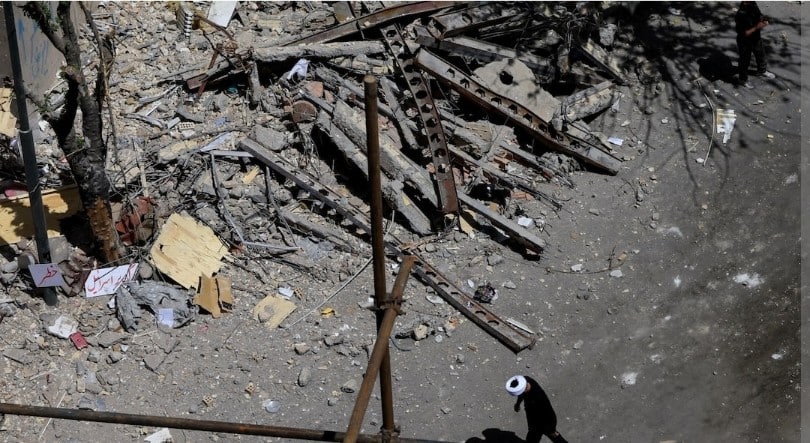
The US-Iran war cost has officially reached a staggering $25 billion, according to a senior Pentagon official who provided the first concrete look at Pentagon military spending for the ongoing conflict. On Wednesday, Jules Hurst, currently performing the duties of the comptroller, revealed the figure to the House Armed Services Committee, marking a pivotal moment in the public accounting of the hostilities.
This revelation arrived as the United States navigates a fragile ceasefire following the strikes that began on 28 February, a move that has seen tens of thousands of additional forces and three aircraft carriers deployed to the region.

The Breakdown of Pentagon Military Spending
While the $25 billion figure offers a baseline, the specifics of how the money was utilised remain somewhat opaque. Hurst told lawmakers that the vast majority of those funds were directed toward munitions.
However, he did not clarify if the estimate covered the projected expenses for rebuilding or repairing base infrastructure within the broader Middle East conflict zone.
The scale of the expenditure has already sparked intense debate in Washington. The $25 billion price tag is equivalent to the entire annual budget for NASA.
Furthermore, the math remains a point of contention; last month, sources indicated that the first six days of the war alone had cost at least $11.3 billion, leaving many to wonder how the current total remains at $25 billion after weeks of sustained operations.
Political Fallout Amid the Middle East Conflict
The timing of the announcement is particularly sensitive for the Trump administration. With only six months remaining before the midterm elections, Republicans face a difficult path to maintaining their House majority. Democrats have seized on the figures, attempting to link the unpopular war with broader concerns regarding domestic affordability and the national US defense budget.
Representative Adam Smith, the top Democrat on the committee, voiced the frustration of many in the chamber. Smith responded to Hurst, saying: “I’m glad you answered that question. Because we’ve been asking for a hell of a long time, and no one’s given us the number.”
Defending the US Defense Budget and Strategic Goals
Despite the soaring costs and falling approval ratings, Defense Secretary Pete Hegseth remains steadfast. In a series of fiery remarks, Hegseth defended the expenditure as a necessary price for global security, specifically the prevention of Iranian nuclear capabilities.
“What would you pay to ensure Iran does not get a nuclear bomb? What would you pay?” Hegseth asked lawmakers. He took a combative stance against critics, dismissing claims that the war had become a “quagmire” and labelling Democratic opposition as “feckless” and “defeatist.” Hegseth added: “You call it a quagmire, handing propaganda to our enemies? Shame on you for that statement.”
Economic Impact of the US-Iran War Cost
Beyond the direct military spending, the war is exerting significant pressure on the American economy. Disruptions in oil and natural gas shipments have sent gasoline prices climbing to their highest levels in nearly four years. These spikes are trickling down to agricultural products like fertilisers, compounding an already difficult inflationary environment.
For the average voter, these “hidden” costs are becoming a primary concern. Recent polling data from Reuters/Ipsos suggests that public support for the conflict is waning; only 34% of Americans currently approve of the war, a steady decline from 38% in March. With thirteen U.S. troops killed and hundreds wounded, the human and financial toll continues to weigh heavily on the national psyche as the November elections loom.