
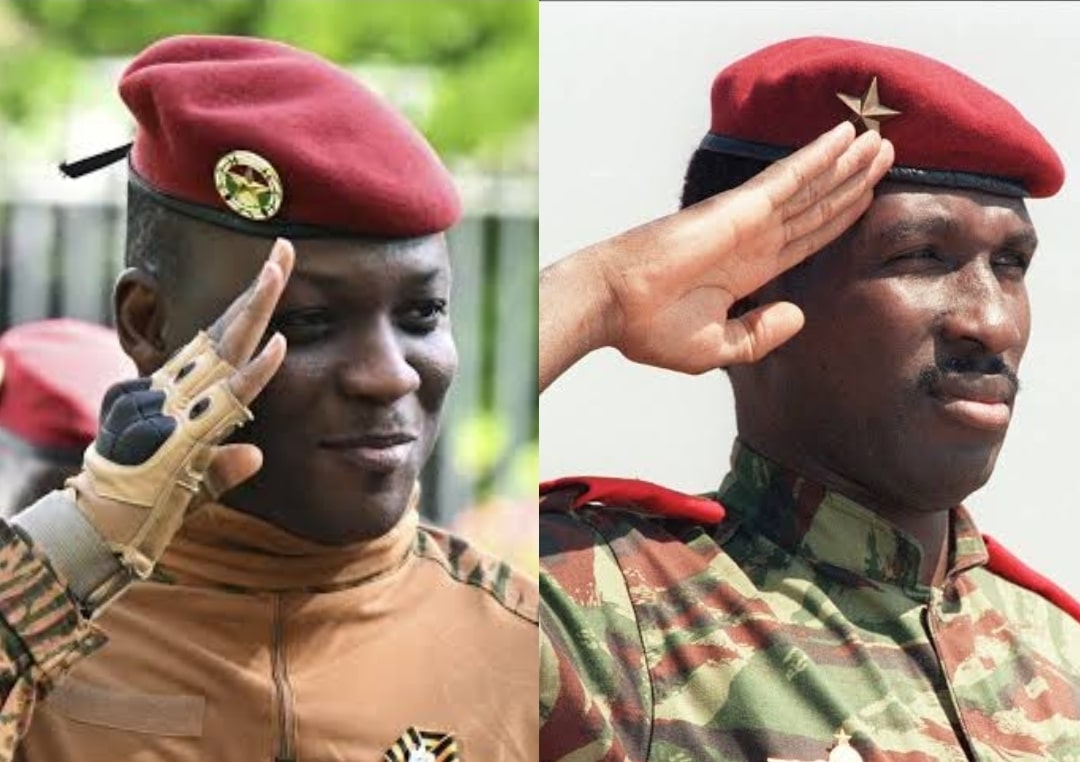
The political landscape of Burkina Faso has been markedly influenced by the leadership of figures who have played pivotal roles in its historical narrative. From the struggles for independence to the ongoing quest for justice and national identity, the leadership styles and ideologies of various figures have left indelible marks on the nation. Two such leaders, Thomas Sankara and Ibrahim Traoré, offer contrasting yet impactful legacies that continue to resonate within the sociopolitical fabric of Burkina Faso.
Thomas Sankara, often referred to as Africa’s Che Guevara, served as a revolutionary leader from 1983 until his assassination in 1987. His tenure is marked by ambitious policies aimed at promoting self-reliance and addressing colonial legacies. Sankara’s leadership was fueled by his vision of a Burkina Faso that was not only politically independent but also economically empowered. His focus on land reforms, gender equality, and anti-corruption initiatives significantly shaped the country’s trajectory, inspiring a generation of leaders and activists across the continent.
In contrast, Ibrahim Traoré emerged as a leader during a turbulent period in Burkina Faso’s recent history. Rising to prominence amidst a backdrop of insecurity and public discontent, Traoré’s leadership reflects a response to the challenges facing the nation today. His focus on military and security issues highlights a pragmatic approach aimed at restoring stability while navigating the complexities of governance in a context marked by external threats and internal dissent. Traoré’s relatively recent ascendancy presents an opportunity to assess how contemporary leadership can draw lessons from historical figures such as Sankara while addressing present-day challenges.
This introduction sets the stage for a deeper analysis of the leadership styles of Thomas Sankara and Ibrahim Traoré, examining how each has contributed to the evolving notion of leadership in Burkina Faso and the broader implications for the nation’s future.
Thomas Sankara: The Charismatic Revolutionary
Thomas Sankara, often referred to as “the African Che Guevara,” emerged as a defining figure in Burkina Faso’s history during his presidency from 1983 to 1987. His ascent to power was marked by a military coup that ousted the then-president, and his subsequent leadership was characterised by a visionary approach aimed at transforming Burkina Faso into a self-reliant state. Sankara advocated for a radical shift in political, economic, and social norms, which resonated deeply with citizens yearning for change.
Sankara’s ideology revolves around several core principles, including a commitment to self-reliance and a fierce stance against imperialism. By promoting the idea of “Burkinabé,” he cultivated a sense of national identity and unity that transcended ethnic divisions. His methodologies included land reforms, agrarian policies, and educational reforms aimed at fostering a literate and empowered population. As a proponent of social justice, Sankara placed a strong emphasis on women’s rights, implementing policies that aimed to enhance their roles in society and promote gender equality. This commitment to women’s empowerment not only changed the societal landscape in Burkina Faso but also positioned him as a progressive leader in the broader African context.
Despite facing numerous challenges—including opposition from traditional power structures and economic constraints—Sankara’s charismatic leadership captivated a generation. His ability to communicate and connect with the populace established a unique bond between the leader and the led. As a result, his influence extended beyond Burkina Faso; he sparked political discourse and inspired revolutionary movements across Africa. The legacy of Sankara continues to resonate, with many modern leaders citing his ideals in their quest for equitable governance and social reform. Through his unwavering commitment to national sovereignty and social justice, Thomas Sankara has left an indelible mark on the history of Burkina Faso, serving as a beacon for future leaders seeking to challenge the status quo.
Ibrahim Traoré: The Modern Leader
Ibrahim Traoré emerged as a prominent figure in Burkina Faso’s political landscape amid significant turmoil, characterised by security and economic crises. Ascending to leadership following the September 2022 coup, Traoré, a young military officer, symbolises a new generation of leadership grappling with enduring challenges. His military background informs his strategic approach to governance, particularly in confronting the escalating threat of terrorism, which has plagued the nation in recent years.
One of Traoré’s key initiatives has been the strengthening of security measures to combat extremist groups that have increasingly infiltrated the Sahel region. Tackling terrorism effectively requires a multifaceted strategy, which includes not only military action but also addressing the socio-economic grievances that often fuel extremism. In contrast to Sankara’s emphasis on ideological mobilisation and mass participation, Traoré appears more pragmatic, focusing on stabilising the nation through security reforms and military collaborations with regional partners.
In terms of socio-economic policy, Traoré has voiced a commitment to improving the livelihoods of Burkinabé citizens by prioritising infrastructure development, enhancing education, and promoting agricultural sustainability. These initiatives reflect a recognition of the urgent need to rebuild the nation’s economy, which has been severely impacted by conflict. By engaging with various ethnic and political factions, Traoré aims to foster unity in a nation that has experienced significant polarisation.
This leadership approach is markedly different from Sankara’s revolutionary ethos, focusing more on immediate practical solutions rather than solely idealistic aspirations. Traoré’s leadership thus reflects a complex balancing act between addressing contemporary issues and navigating the diverse political landscape of Burkina Faso while drawing upon the country’s rich historical legacy.
Comparative Analysis: Leadership Styles and Their Impact on Burkina Faso
The leadership styles of Thomas Sankara and Ibrahim Traoré represent two distinct approaches that have significantly influenced Burkina Faso’s socio-political landscape. Thomas Sankara, known as the “African Che Guevara,” advocated for a transformative vision of self-reliance and socialism, emphasising grassroots participation in governance. His decision-making process was characterised by radical reforms that addressed poverty, gender inequality, and environmental sustainability. Sankara’s bold initiatives, such as the national language policy and land redistribution, aimed to empower ordinary citizens and inspire collective action.
In contrast, Ibrahim Traoré’s leadership style is more pragmatic, focusing on immediate socio-political challenges while navigating regional instability and international relations. Ascending to power through a military coup, Traoré has emphasised security and national sovereignty. His decision-making is informed by a reactive approach, prioritising stability over extensive reforms. This shift highlights a broader context where external pressures and historical legacies shape the challenges of governance. While Sankara’s transformational ideals aimed for a comprehensive societal overhaul, Traoré’s leadership appears to prioritise maintaining order amidst uncertainty.
Both leaders engaged with the public in distinct ways. Sankara was known for his charismatic oratory and direct communication, often involving citizens in policy discussions and debates. This engagement fostered a sense of ownership among the populace, bolstering national unity. In contrast, Traoré’s communication strategy leans more towards consolidating power within military ranks and implementing swift resolutions to pressing issues. Although his approach may effectively address immediate needs, it risks alienating broader societal input and hindering long-term development.
While Sankara and Traoré exhibit contrasting leadership styles—with Sankara’s focus on revolutionary ideals and Traoré’s emphasis on stability—their legacies highlight a complex interplay between aspiration and reality in Burkina Faso’s ongoing quest for effective governance.