

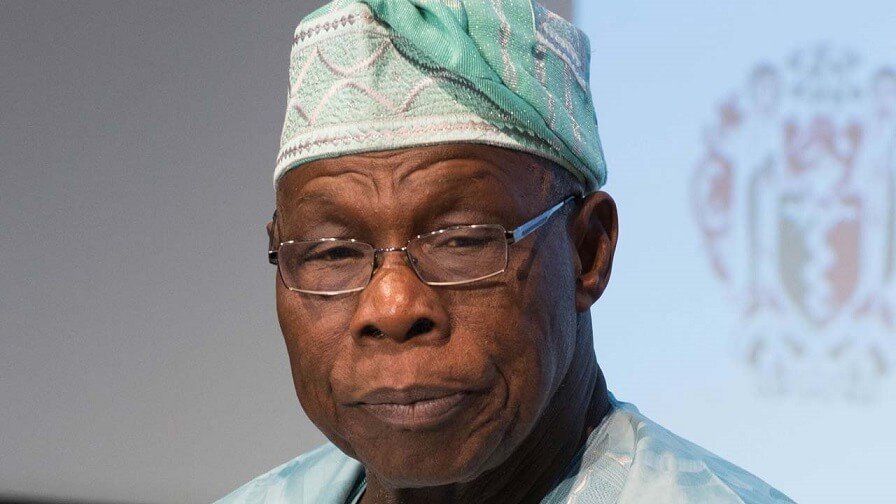
Former President Olusegun Obasanjo has argued that Bola Tinubu economic reforms, including the sharp naira devaluation Nigeria, have left citizens significantly poorer.
Speaking on Wednesday at the Financial Times Africa summit 2026 in London, United Kingdom, the elder statesman pulled no punches. He criticised the current administration’s flagship policies for compounding hardship across the country.

The former leader pointed directly to the rapid currency crash as a core driver of the crisis. He explained that a sudden 300 percent drop in value pushed exchange rates from five hundred naira to one thousand five hundred naira against the US dollar.
We do not live in isolation as a country,” Obasanjo told the audience in London. “We interact with the rest of the world. And overnight, you devalue the currency by 300 percent. The naira went from N500 to a dollar to N1,500 to a dollar.
How Naira Devaluation Drove Up Nigerian Poverty
The drastic shift in currency value triggered widespread economic shockwaves. According to the former president, this policy misstep cemented the nation’s status as the global epicentre of destitution.
“What that meant was that every Nigerian is made poor by 300 percent,” Obasanjo stated. “That made Nigeria become the poverty capital of the world, which means Nigeria has the largest number of poor people in the world.”
He added a blunt assessment of the situation for listeners: “You cannot say to me that that is good for Nigeria. You cannot say to me that that is good for us in any sense.”
Background on Tinubu Economic Reforms
The roots of the current economic climate stretch back to the early days of the current administration. In May 2023, President Bola Tinubu announced the immediate removal of the petrol subsidy. That single move triggered soaring fuel prices and higher transport costs across every state.
Just weeks later in June 2023, the government overhauled foreign exchange rules. Officials allowed the national currency to trade more freely while dismantling a complex system of multiple exchange rates.
Market Intent and Real-World Impact
Proponents argued that these changes would boost market efficiency. They hoped to draw in foreign investment and fix long-standing distortions in the currency market.
Instead, the adjustments collided with harsh economic realities. A steep drop in the currency value fuelled runaway inflation. The cost of imported goods skyrocketed, placing intense pressure on families and local businesses.
Everyday Pressures on Nigerian Households
Citizens now face immense financial strain on multiple fronts. The surging price of food, daily transport, and basic household items has stripped away normal purchasing power. Families continue to bear the heavy weight of these systemic changes as policy debates persist.