
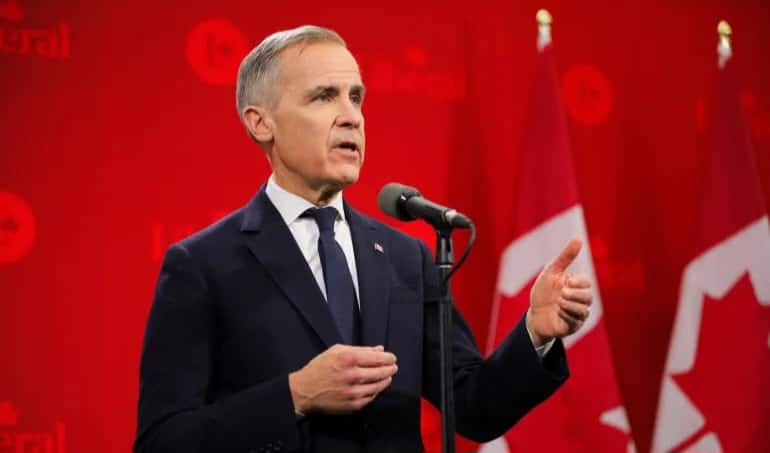
A strategic one-week diplomatic mission to India, Australia, and Japan signals a bold push by Prime Minister Mark Carney to expand trade, attract investment, strengthen security alliances, and elevate Canada’s global influence.
In the evolving landscape of global diplomacy and economic competition, nations that succeed are those that actively shape the international agenda rather than merely react to it. The recent whirlwind diplomatic mission undertaken by Canadian Prime Minister Mark Carney represents precisely such an effort.

More than a series of ceremonial visits, the tour signals a strategic repositioning of Canada in a rapidly shifting global order—one defined by economic realignments, technological competition, and the growing influence of the Indo-Pacific region.
Selling Canada to the Global Community
Canada has long been recognized as a stable democracy with strong institutions, abundant natural resources, and a highly skilled workforce. Yet, in an increasingly competitive global economy, these advantages must be actively communicated.

Prime Minister Carney’s meetings with political leaders, investors, and industry stakeholders across the Indo-Pacific served as a powerful platform to showcase Canada’s economic strengths. From clean energy leadership to advanced technology sectors and vast reserves of critical minerals, Canada is positioning itself as a key player in the industries shaping the future global economy.
Wooing Global Investors and Capital
Attracting international investment was a central pillar of the Prime Minister’s tour. The competition for global capital is intensifying, particularly in sectors such as:
- Artificial Intelligence (AI)
- Renewable energy and Green Tech
- Infrastructure development
- Advanced manufacturing
Canada offers investors an appealing proposition, combining political stability with access to North American markets. By engaging with powerhouses in India, Australia, and Japan, the Prime Minister reinforced Canada’s commitment to creating an environment where global capital can thrive.
Expanding Trade and Business Partnerships
For decades, Canada’s economic fortunes have been closely tied to trade with the United States. While that relationship remains essential, economic diversification is increasingly necessary.
The Indo-Pacific region represents one of the most dynamic economic corridors in the world. By strengthening relationships with India, Australia, and Japan, Canada is opening new doors for:
- India: Tapping into a rapidly expanding consumer market.
- Australia: Collaborating on resource innovation and mining expertise.
- Japan: Leveraging industrial leadership and high-tech supply chains.
For Canadian businesses, these ties translate into expanded export opportunities and deeper global market integration.
Infrastructure and Economic Renewal
Modern transportation systems, energy networks, and digital connectivity are fundamental to economic competitiveness. International partnerships developed during this diplomatic mission could play a significant role in supporting Canada’s infrastructure transformation.
Investments in ports, transportation corridors, and digital infrastructure will be essential to ensuring that Canadian industries remain competitive. Such initiatives reflect a broader vision of national renewal, leveraging international partnerships to strengthen domestic prosperity.
Security and Strategic Indo-Pacific Cooperation
Economic diplomacy cannot exist in isolation from security. The Indo-Pacific has become a focal point of global geopolitical dynamics, making partnerships with democratic nations in the region vital.
Through cooperation with the “Quad” influences (India, Australia, and Japan), Canada is contributing to efforts aimed at:
- Strengthening regional stability.
- Protecting global supply chains.
- Promoting responsible technological development.
- Enhancing maritime cooperation and cyber resilience.
Canada’s Expanding Global Role
Prime Minister Carney’s engagement underscores an emerging vision: Canada as a bridge between continents—linking North American markets with the dynamic economies of Asia. This role carries both opportunity and responsibility, requiring sustained diplomatic engagement and strategic economic leadership.
Conclusion
The Prime Minister’s Indo-Pacific mission reflects a strategic effort to position Canada for the challenges of the 21st-century. By promoting trade diversification and reinforcing security alliances, Canada is not standing on the sidelines of global transformation—it is actively shaping its future.