

In moments of high-level diplomacy, nations speak in carefully calibrated signals. Protocol, presence, and even absence are read for meaning. In Nigeria, however, these readings often travel beyond the language of statecraft into the realm of sentiment—where identity, ancestry, and expectation begin to shape interpretation.
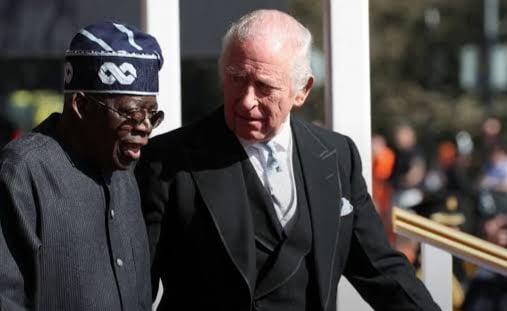
The recent conversations trailing the United Kingdom visit of President Bola Ahmed Tinubu offer a useful case study. Questions have been raised in some quarters about the non-visibility of Kemi Badenoch, a prominent British politician of Nigerian descent, during aspects of the visit. For some, her absence has been interpreted as symbolic. For others, it has been framed as strategic. Beneath these interpretations lies a deeper issue—how Nigerians understand power, identity, and diplomacy in a globalised political order.
This is where clarity becomes necessary.

State Interest Over Ancestry
Diplomacy is not organised around ancestry. It is organised around state interest. Public officials, regardless of origin, operate within the institutional frameworks of the countries they serve. A British cabinet minister, regardless of heritage, functions within the priorities, protocols, and policy directions of the United Kingdom. Their responsibilities are defined not by ancestral sentiment but by constitutional obligation.
To assume otherwise is to misunderstand the architecture of modern governance.
The expectation that shared ethnicity should translate into political alignment is rooted in a domestic political culture where identity often shapes access and influence. In Nigeria, ethnicity has historically been a factor in political mobilisation, representation, and negotiation. It is therefore not surprising that such expectations are sometimes projected outward—onto international relationships where the rules are fundamentally different.
But global politics does not operate on inherited sentiment.
The Protocol of Power
A politician of Nigerian origin in the United Kingdom is, first and foremost, a British political actor. Their relevance within diplomatic engagements depends on their portfolio, their institutional role, and the priorities of the host government. Protocol is not a cultural courtesy; it is a structured system. Understanding this distinction is essential if Nigeria is to engage effectively on the global stage.
There is, however, a second layer to the issue—perception.
In the absence of clear communication, gaps are often filled by speculation. When citizens observe high-level visits and do not see expected faces, questions naturally arise. In societies where trust in official narratives is uneven, those questions can quickly evolve into assumptions. Assumptions, when repeated, begin to take on the appearance of fact.
This is where leadership communication becomes critical.
“Silence in the face of public curiosity does not neutralise speculation; it often amplifies it.”
While not every diplomatic detail requires public explanation, clarity on the principles guiding engagement can help prevent misinterpretation. Diplomacy thrives on discretion, but democratic societies require a measure of transparency to sustain trust.
The Risk of Sectional Preference
The conversation has, in some instances, been framed through a cultural lens, particularly within Yoruba discourse. This introduces a question that must be handled with care: can diplomacy reflect ethnic affinity?
The answer, in functional terms, is no.
A state cannot conduct its foreign relations on the basis of ethnic alignment without undermining its own legitimacy. Nigeria is a multi-ethnic federation. Its external engagements must reflect national coherence, not sectional preference. To frame diplomatic interactions as expressions of ethnic interest is to risk reducing the state to a collection of competing identities.
That path leads to fragmentation, not strength.
This does not mean that identity is irrelevant. Cultural background can shape perspective. Shared heritage can create informal connections. But these factors operate at the margins of diplomacy, not at its core. They may influence tone, but they do not determine structure. The danger arises when informal expectations are mistaken for formal obligations.
Strategic Clarity for a Global Nigeria
Nigeria aspires to play a more significant role in global affairs. It seeks investment, partnerships, and influence within international institutions. Achieving these goals requires a clear understanding of how power operates beyond its borders. Misreading diplomatic signals through the lens of domestic identity politics can lead to flawed assumptions and misplaced expectations.
A nation that interprets global engagement primarily through sentiment risks strategic miscalculation.
The more productive approach is to deepen institutional understanding. Who sets the agenda in a state visit? Which offices determine participation? What factors guide diplomatic representation? These are the questions that align with the realities of international relations. Anything else belongs to the realm of conjecture.
Conclusion
Moving Beyond Instinct
This moment therefore offers an opportunity—not for controversy, but for reflection. Nigeria must begin to separate identity from statecraft in its public discourse. It must recognise that diaspora figures, however accomplished, are not extensions of domestic political structures. They are participants in different systems, governed by different rules and accountable to different constituencies.
Respecting that distinction does not diminish national pride. It strengthens strategic clarity. At the same time, Nigerian leadership must remain attentive to perception. In a connected world, optics matter. The absence or presence of individuals at high-level events will always attract interpretation.
Ultimately, the issue is not about one visit or one individual. It is about how a nation understands its place in the world. Power in the modern world is not inherited through ancestry. It is exercised through systems.
Honour in identity is valuable. But clarity in statecraft is indispensable. Nigeria must learn to distinguish between the two.