

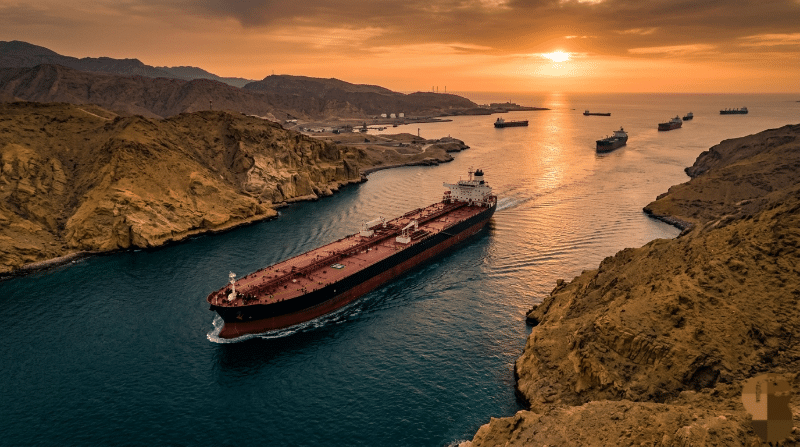
The Strait of Hormuz blockade shows no sign of easing as tensions between Tehran and Washington reach a critical juncture. Despite the recent extension of the US-Iran ceasefire, high-level Iranian officials have declared a return to normal shipping traffic “impossible” while the American naval presence remains in place.
This ongoing impasse represents a significant maritime transit disruption, threatening to stifle international trade routes that have already been pushed to their breaking point.
Standoff Deepens Despite Diplomatic Efforts
Iranian President Masoud Pezeshkian has identified the American presence as the primary barrier to genuine progress. In a recent statement posted on X, he argued that the blockade, combined with persistent “threats” and a “breach of commitments,” serves as the main obstacle to meaningful negotiations with the US.
“The world sees your endless hypocritical rhetoric and contradiction between claims and actions,” the President stated. These remarks follow President Donald Trump’s announcement on Tuesday that while the ceasefire would be extended, the naval operation targeting Iranian ports would continue indefinitely. This stalemate has left diplomatic teams scrambling, with scheduled talks in Pakistan yet to yield a breakthrough.
Shipping Risks and the “Released Immediately” Demand
The crisis has extended beyond political maneuvering, directly impacting the lives of thousands of mariners. The head of the UN’s International Maritime Organisation, Secretary-General Arsenio Dominguez, has issued a stark call for action. “I cannot understand why companies would take risks and endanger seafarers’ lives,” Dominguez noted, calling for “innocent seafarers to be released immediately.”
While the UN chief did not name specific vessels, it is widely understood he is referring to the crews of the MSC Francesca and MSC Epaminondas. These cargo ships have been detained by Iran after attempting to transit the waterway during a brief, illusory window of reopening. These vessels were reportedly part of a convoy that attempted a risky passage over the weekend, only to be caught in the hardening resolve of Iranian forces.
Strait of Hormuz: The Cost to Global Energy Security
For the global economy, the stakes could not be higher. Nearly 20,000 seafarers remain effectively stranded within the Gulf, and there is no clear timeline for their safe return. As the waterway becomes increasingly dangerous, only a fraction of normal traffic is moving through. Experts warn that the continued restriction of this vital chokepoint is deeply damaging for both regional stability and global energy security.
Shipping companies, which typically prefer to operate away from the spotlight, are now forced to navigate an increasingly hazardous environment. While Switzerland-based MSC has kept a notably low profile, industry rivals have begun to openly state that the safety of their crews remains their top priority.
Ultimately, maritime analysts agree that only a definitive end to hostilities can secure the passage required to prevent a prolonged economic crisis. As the situation remains fluid, the world continues to watch the narrow waters of the Gulf with growing apprehension.