
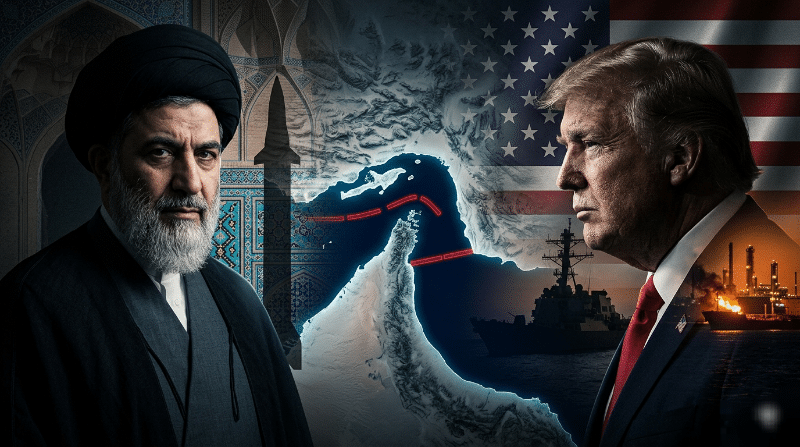
Tehran has submitted a fresh proposal for Iran war negotiations with the United States, according to Iranian state media and Pakistani officials on Friday. This diplomatic shift arrives amid a tightening Strait of Hormuz blockade that has crippled energy exports and sent shockwaves through the international community.
Pakistan, acting as a mediator, reportedly received the documentation late on Thursday and has since forwarded the terms to Washington in an attempt to break the current deadlock.

Economic Fallout and the Strait of Hormuz Blockade
The ongoing Strait of Hormuz blockade remains the primary catalyst for market instability. By choking off 20% of the world’s oil and gas supplies, the closure has caused unprecedented disruption to energy markets. Consequently, global oil prices have eased slightly on the news of the proposal but remain well above $100 a barrel.
The U.S. Navy continues to block exports of Iranian crude. On Friday, the U.S. Treasury issued a stern warning to the shipping industry, noting that any payment of tolls to Iran for passage through the Strait would result in heavy sanctions. While a ceasefire has been technically active since April 8, the threat of renewed military action remains.
Military Escalation Risks in the US-Iran Maritime Conflict
The US-Iran maritime conflict has reached a fever pitch, with Iran activating air defences in anticipation of potential strikes. Iranian sources suggest they are prepared for a “short, intensive U.S. strike,” which could be followed by Israeli involvement.
“We’ve seen what happened to your regional bases; we will see the same thing happen to your warships,” warned Aerospace Force Commander Majid Mousavi, as quoted by Iranian media. This rhetoric highlights the fragility of the current peace.
Global Reaction to Iran War Negotiations
Regional powers have expressed deep scepticism regarding Tehran’s latest overtures. UAE presidential adviser Anwar Gargash emphasised that “collective international will and provisions of international law” must guarantee freedom of navigation.
Gargash added:
“And, of course, no unilateral Iranian arrangements can be trusted or relied upon following its treacherous aggression against all its neighbors.”
Despite the friction, President Donald Trump faces a formal U.S. deadline this Friday to either end the war or justify its extension to Congress under the 1973 War Powers Resolution. Administration officials suggest that, because of the April ceasefire, hostilities have technically terminated for the purpose of the resolution, allowing the date to pass without a shift in military policy.
Impact on Global Oil Prices and Energy Security
The hope for a diplomatic breakthrough is currently the only factor keeping global oil prices from further record rallies. Trump reiterated on Thursday that Iran would never be allowed to possess a nuclear weapon, though he remains optimistic about the economic benefits of peace. He suggested that gasoline prices—a vital concern for the Republican Party ahead of the November midterms—would “drop like a rock” if a resolution is reached.
However, the path to peace is fraught. Reports indicate that U.S. military leaders have briefed the President on plans to use ground forces to seize portions of the Strait to ensure commercial shipping can resume.
Future Outlook for the US-Iran Maritime Conflict
In preparation for a post-conflict scenario, the State Department has invited partner nations to join the “Maritime Freedom Construct.” This coalition aims to secure the waterway once hostilities cease. While nations like Britain and France have engaged in talks, they have clarified they will only assist in opening the Strait after Iran war negotiations yield a definitive conclusion.
For now, the world waits to see if Washington will accept the new terms or if the US-Iran maritime conflict will enter a new, more volatile chapter.