

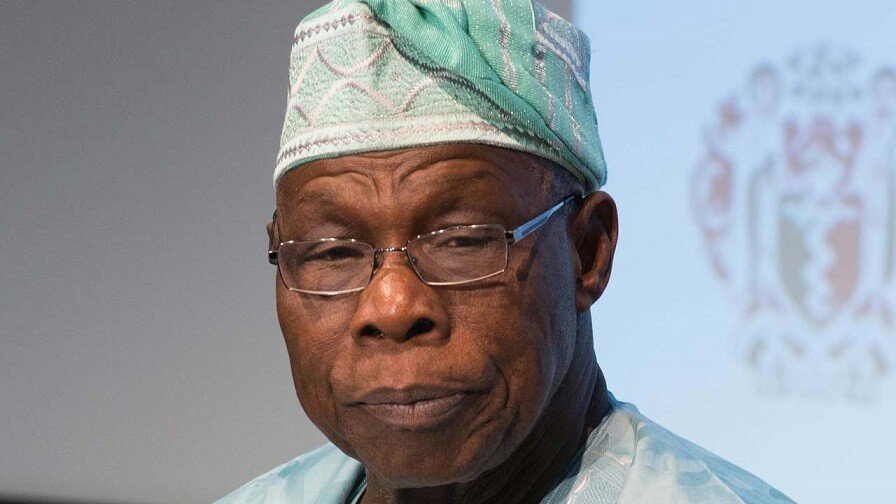
There are moments when a chair becomes much more than a chair. The Nigerian protocol controversy at the 60th birthday celebration of the Olota of Ota, Oba Adeyemi Obalanlege, is one of those moments. Former President Olusegun Obasanjo attended the ceremony alongside the Ooni of Ife, Oba Adeyeye Ogunwusi, and other dignitaries. When he was reportedly informed that a particular chair had been reserved for the Ooni, the former Nigerian President insisted on sitting in it. He subsequently explained his position in terms of the superiority of presidential office over kingship, saying, in substance, that when a President is present, he should receive greater honour than any king.
That explanation is where the real problem begins. Nobody should quarrel with the constitutional importance of the presidency. Nobody should also dispute the enormous stature of Olusegun Obasanjo. He is a former Head of State, former President, retired military officer and one of the most consequential Nigerians of the last half century. Nigerian law itself recognises special protocol for former Heads of State, placing them in third position at public functions after the serving President and serving Vice President.

But there is a difference between being accorded protocol as a former President and behaving as though the presidency is a permanent personal possession. A former President is not the President. That distinction should be obvious to Obasanjo more than to most people. The office belongs to the Republic. The occupant changes. The authority of the office continues, but it does not follow the individual home after his tenure and remain permanently available for personal deployment.
The Reality Behind the Ota Chair Incident
This is precisely why the Ota chair incident deserves something more serious than the usual social media quarrel over who should sit where. The issue is not whether Olusegun Obasanjo deserves honour. He does. The issue is whether the honour attached to an office once occupied can be converted into a continuing personal authority to determine the protocol of every gathering the former occupant attends.
There is an uncomfortable irony here. Olusegun Obasanjo has previously been emphatic about protocol, hierarchy and the distinction between constitutional authority and traditional authority. In Iseyin in September 2023, he ordered traditional rulers to stand and honour Governor Seyi Makinde. He told them that in Yoruba culture, age and position are respected, and argued that while a governor remains in office, his position is superior to that of any monarch. He went further, insisting that “there is constitution and there is culture. One must not disturb the other.”
That statement should now be returned to its author. There is constitution and there is culture. There is also protocol. And protocol cannot be invoked only when it confirms one’s preferred position.
If a serving governor’s constitutional office must be respected even by traditional rulers, then the former occupant of a constitutional office must equally understand the limits of his present position. If a monarch must recognise the authority of a sitting governor, the former governor does not acquire the authority of the present governor merely because he once occupied the office.
The same principle applies to the presidency. Obasanjo was President. He is no longer President.
The difference is not semantic. It is the foundation of orderly public life.
There is another point that deserves attention. If the account of the incident is accurate, the issue did not arise from some anonymous seating error discovered after everyone had sat down. The reports say Olusegun Obasanjo was informed that the chair was intended for the Ooni and nevertheless insisted on taking it.
That changes the character of the incident. Had the protocol officers mistakenly placed him in the wrong chair, responsibility would principally belong to the organisers. A competent protocol team should have anticipated the presence of a former Nigerian President and an eminent traditional ruler and arranged the seating accordingly.
But once the former President was made aware of the arrangement, the responsibility became personal. He could have smiled and moved to another chair. He could have asked the organisers to clarify the protocol. He could even have quietly allowed the matter to pass. Instead, according to the reports, he asserted a principle. And that principle deserves examination.
Constitutional Limits Facing any Former Nigerian President
The danger in Obasanjo’s argument is not that he places constitutional office above traditional office in the appropriate constitutional context. There is considerable truth in the distinction. A traditional ruler does not exercise the constitutional powers of a serving President.
The difficulty is extending that distinction into a personal claim of permanent precedence after leaving office. Nigeria’s law itself does not do that.
The law gives former Heads of State recognised protocol. It does not turn them into sitting Presidents. Indeed, the statutory order of precedence makes the distinction unmistakable: the serving President comes first, the serving Vice President second, and former Heads of State follow in third position.
That is the language of a constitutional democracy. The former President is honoured. The former President is respected. The former President retains dignity. But the former President has left the office.
Perhaps this is the deeper difficulty with Obasanjo and his public life in retirement. He has left government several times, but he has never entirely left the psychology of government.
He remains extraordinarily present. He intervenes in elections. He writes letters to Presidents. He summons political leaders into his conversations. He lectures governors. He advises political parties. He rebukes traditional rulers. He offers prescriptions for democracy. He pronounces on national morality. He speaks about Africa with the authority of a man who has spent a lifetime at the centre of its political history.
Much of that is legitimate. A former leader does not lose his citizenship or his right to speak merely because his tenure ends. But speaking is different from commanding. Advice is different from authority. Moral influence is different from constitutional power. And respect is different from submission.
This distinction appears increasingly important in the Obasanjo story.
At the 65th birthday celebration of former Ekiti Governor Ayo Fayose in November 2025, Obasanjo’s remarks again became a subject of controversy. His words about Fayose combined praise with a pointed reminder that the celebrant was not, in his assessment, the best of his political children. Fayose subsequently complained about the manner in which the occasion unfolded and said Obasanjo’s intervention had provoked him intensely. Those later claims are Fayose’s account and should be treated as such.
But the episode belongs to a larger pattern:Obasanjo rarely enters a public gathering merely as another guest. He enters with a history. He enters with authority. He enters with opinions. And often, he enters with a verdict.
That is the extraordinary thing about Obasanjo and also, increasingly, the thing that requires interrogation. Experience can produce wisdom. It can also produce certainty. Certainty can produce authority. And authority, when insufficiently restrained, can produce the assumption that one’s judgement must prevail. That is where even great men require caution.
Unpacking the Broader Nigerian Protocol Controversy
Obasanjo has spent decades teaching Nigerians about leadership, discipline, responsibility and respect for institutions. He should therefore be held to a higher standard, not a lower one. His defenders will say that he has earned the right to speak his mind. Of course he has. But earning the right to speak does not confer the right to be obeyed.
He has earned respect. He has not earned perpetual incumbency. He has earned a place in Nigerian history. He has not earned ownership of the Nigerian present.
This is why the Ota chair incident matters. It is a small stage on which a much larger question has appeared. Can a former President distinguish between the dignity that belongs to the office he once occupied and the authority that belongs to the person occupying it today? Can an elder statesman respect protocol when protocol does not favour him? Can a man who has spent a lifetime insisting that others recognise hierarchy recognise when the hierarchy has changed?
And perhaps the most uncomfortable question of all: canObasanjo accept that there are occasions when his judgement is simply not the final judgement?
Nobody should pretend that Olusegun Obasanjo is an ordinary former office holder. His life is too large for that. His contributions to Nigeria and Africa cannot be erased by one controversy, nor should they be. But greatness carries obligations.
The greater the history, the greater the responsibility to understand the limits of personal authority. The soldier who once gave orders must eventually learn the difference between an order and an opinion. The President who once occupied the highest elective office must eventually accept the humility of being a former President. The elder statesman who lectures others about institutions must submit himself to the institutions and protocols that outlive him.
Otherwise, retirement becomes only a change of title.
Chief Olusegun Obasanjo has left Aso Rock. He has left the Presidency. He has left government. But watching him across the years, one is sometimes left with the uncomfortable impression that the Presidency never quite left him.
That is the real meaning of the Ota chair incident.
It was never really about a chair. It was about whether an office can end in law while remaining alive in the psychology of the man who once occupied it. For Olusegun Obasanjo, that question has now become impossible to avoid. Former President is a title of honour. It is not another name for President.
And no matter how distinguished the former occupant may be, the Republic must always remain larger than the man who once ruled it.