
Beneath the glossy veneer of political campaigns, flag-offs, and rallies lies a profound paradox defining modern governance: while democratic systems promise prosperity, liberty, and the good life, Nigerian Media and civil society leaders recognise that these systems often deliver widespread disillusionment instead.
As the country sets its sights on the upcoming 2027 general elections, media experts and veteran journalists have converged in Ibadan with a singular, urgent mission: to cure democracy’s “broken promises” through robust developmental journalism and rigorous accountability reporting.
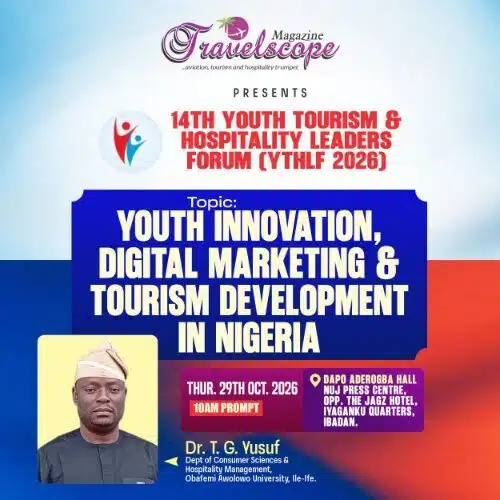
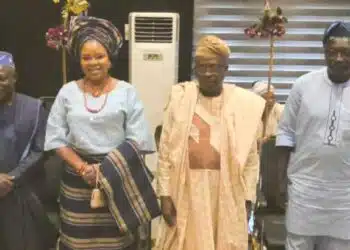
The two-day capacity-building interface, held at the Golden Tulip Hotel in Jericho, Ibadan, was organised by the International Press Centre (IPC), Lagos. Operating under Component 4 (Support to Media) of the European Union Support to Democratic Governance in Nigeria (EU-SDGN III) Programme, the high-level meeting drew over 40 editors, publishers, and Nigeria Union of Journalists (NUJ) leaders from Oyo State and across the South-West.
Moving Beyond the “Illusory Eldorado”
Setting the tone for the engagement, the Executive Director of the IPC, Mr. Lanre Arogundade—represented at the event—stressed that the countdown to 2027 demands a fundamental reassessment of how the press covers elections.
Arogundade noted that elections should transcend the cyclical theater of political rallies and candidate endorsements. Instead, they must center on the citizenry—their aspirations, deepest concerns, and fundamental right to make informed choices.
“Beyond reporting political activities, the media has a core responsibility to facilitate informed public discourse, scrutinize political promises, hold public officials accountable, and ensure that citizen voices drive the democratic process,” Arogundade stated.
Delivering the lead presentation titled “2027 General Election in the Context of Democratic & Accountability Reporting,” Dr. Taiwo Adisa, former Chief Press Secretary to Oyo State Governor Seyi Makinde, took participants down memory lane to the pro-democracy struggles of the 1990s.
Adisa observed that many journalists and activists rode the wave of an “illusory Democratic Eldorado,” mistakenly believing that the exit of military rule would automatically birth systemic prosperity. Citing legislative scholar David Beetham and Italian political theorist Norberto Bobbio, Adisa framed the current public discontent as the “democracy paradox”—the gaping chasm between democratic ideals and lived realities.
To bridge this gap, Adisa urged editors to ditch personality-driven reporting in favor of developmental, issue-based journalism. He challenged the Fourth Estate to actively interrogate manifestos, track campaign promises, and amplify the priority concerns of marginalized groups, including women, youths, and vulnerable communities.
How Nigerian Media Can Combat the Scourge of Information Pollution
As the 2027 horizon approaches, the integrity of public information faces an unprecedented threat from digital falsehoods. Addressing this critical vulnerability, media expert Mr. Olusola Oludiran delivered a masterclass on “Integrating Fact-Checking for Democratic and Accountability Reporting.”
Oludiran warned that the proliferation of misinformation, disinformation, and malinformation on social media is deliberately designed to manipulate public perception, trigger emotional volatility, and distort electoral choices.
“False information can trigger violence, undermine public trust, distort electoral choices and destroy reputations within minutes. The cost of one unverified story can be far greater than the time it takes to verify it,” Oludiran cautioned.
Equipping newsrooms for the battles ahead, Oludiran introduced editors to advanced verification tools—such as Google Fact Check Explorer, InVID, and TinEye—while strongly advocating for the establishment of dedicated internal fact-checking desks across Nigerian media houses prior to the 2027 polls.
A Renewed Commitment to the Public Good
Participants at the Ibadan forum praised the IPC and the European Union for their timely intervention. Stakeholders exited the summit with a renewed pledge to uphold professional accountability standards, positioning the media not merely as passive observers of the electoral calendar, but as active architects of a transparent, responsive, and people-centered democracy.
As the 2027 general elections draw closer, the message from Ibadan is clear: the redemption of Nigeria’s democratic experiment rests on a fearless, factual, and development-driven press.