
Elon Musk has unveiled a futuristic version of Tesla’s long-awaited Roadster featuring rocket-inspired technology that allows the electric sports car to perform airborne manoeuvres, bringing renewed attention to the long-standing dream of flying cars. The vehicle was demonstrated at a Tesla event at a SpaceX facility in Texas on October 15, 2026.
The unveiling marks a dramatic new chapter for Tesla’s electric vehicle ambitions, combining high-performance automotive engineering with technology inspired by the aerospace industry. However, although the demonstration showed the vehicle leaving the ground, the car should not yet be confused with a conventional aircraft capable of sustained flight.

How Does Elon Musk’s Flying Car Work?
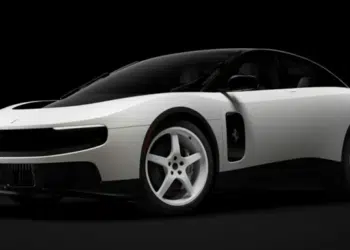
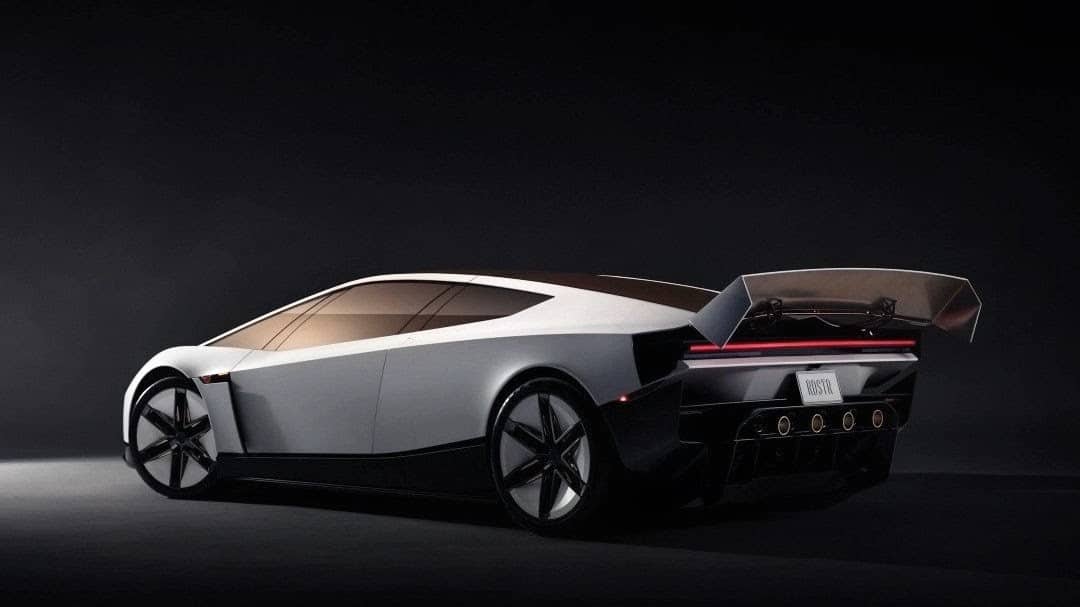
The vehicle is a redesigned version of the next-generation Tesla Roadster that Musk first introduced in 2017. Its latest demonstration featured technology developed in collaboration with engineers from SpaceX.
According to reports from the unveiling, the vehicle uses high-pressure gas thrusters alongside a powerful suction system. The thrusters help the car perform aerial manoeuvres, while the suction system is designed to hold it against a surface during specialised demonstrations.
During the presentation, the Roadster climbed an inverted ramp, manoeuvred through the air and landed on its wheels. The demonstration vehicle operated without a driver, with Musk explaining that this was done for safety reasons.
What Are the Expected Performance Features?
The new Roadster is being promoted as an exceptionally fast electric sports car, with several ambitious performance claims.
- Acceleration: Tesla demonstrated a claimed 0–60 mph acceleration time of approximately one second.
- Rocket-inspired propulsion: Specialised thrusters are designed to assist with acceleration and airborne manoeuvres on the most advanced version.
- Electric powertrain: The Roadster retains its identity as an electric sports car.
- Advanced aerodynamics: A specialised suction system is intended to increase grip and enable unusual driving demonstrations.
- Future production: Musk indicated that production is planned for 2028, although the schedule remains subject to change.
These figures and capabilities are based on the unveiling and reported manufacturer claims. Independent testing will be needed to establish real-world performance, reliability and practical limitations.
Flying-car concepts and experimental vehicles existed long before Tesla’s latest Roadster. Several companies have also developed electric vertical take-off and landing aircraft, commonly known as eVTOLs, designed to carry people through the air.
What makes Tesla’s demonstration unusual is its attempt to combine a recognisable electric sports car with rocket-inspired airborne manoeuvres.
However, there is a significant distinction between briefly lifting a vehicle off the ground and operating a road vehicle that can safely fly over meaningful distances. The demonstration does not, by itself, establish that the Roadster can function as a practical aircraft.
For that reason, describing it as a groundbreaking flying-car development is more accurate than declaring it definitively the world’s first flying car.
When Will the Flying Tesla Roadster Be Available?
Despite the unveiling, consumers will have to wait before the vehicle becomes a production reality.
Tesla has faced years of delays with the next-generation Roadster since its original announcement in 2017. Following the latest presentation, production is expected in 2028, but that target is not a guarantee of customer deliveries.
The vehicle’s eventual availability will depend on manufacturing readiness, engineering validation and the requirements governing its operation.
Its most advanced flying configuration also raises additional questions about whether the airborne capability will be permitted on public roads or restricted to controlled environments
Safety and Regulatory Challenges
Although the demonstration generated excitement, a car capable of leaving the ground presents substantial safety challenges
Engineers would need to address stability, emergency landing procedures, the protection of occupants and bystanders, and the safe operation of its propulsion system. Regulators would also need to determine which rules apply when a vehicle operates as both a road car and an aircraft.
The distinction is particularly important because road vehicles and aircraft are subject to different certification and operating requirements.
Until those issues are resolved, the Roadster’s airborne features should be viewed as experimental capabilities rather than proof that motorists will soon be able to fly their cars through ordinary city streets.
Elon Musk’s unveiling of the redesigned Tesla Roadster has brought the flying-car concept back into the global spotlight. Its demonstration of rocket-inspired thrust, airborne manoeuvres and advanced vehicle control represents an unusual development in electric sports car engineering.
Nevertheless, important questions remain about sustained flight, safety, regulatory approval and the vehicle’s eventual production timeline.
For now, the Roadster offers a glimpse of an ambitious technological possibility rather than proof that fully operational flying cars are ready for everyday use. Whether Tesla can turn this demonstration into a practical, commercially available vehicle will become clearer as development continues.