
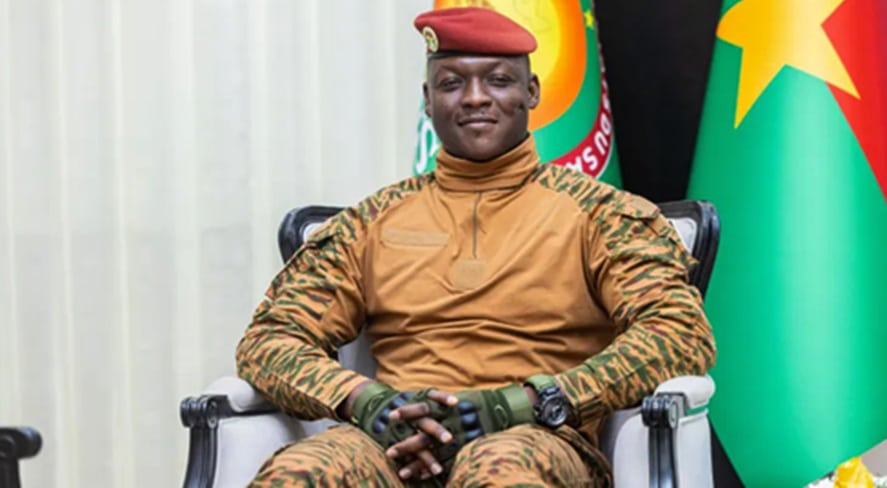
Captain Ibrahim Traore, the 38-year-old army officer who seized power in a September 2022 coup, has rapidly become one of Africa’s most recognisable figures. Lauded by supporters as a beacon of West African anti-imperialism and resistance to foreign influence, the leader of the Burkina Faso military junta now faces a pivotal moment. Yet, whilst his public profile expands across the continent, the leader known for his bold stance on Ibrahim Traore Burkina Faso governance faces persistent insecurity, tightening political controls, and growing questions over whether national renewal can deliver tangible change amid the ongoing Sahel security crisis.
In April, Traore instructed the Burkinabe populace to “forget about democracy”, contending that the nation was navigating a revolutionary phase rather than a democratic transition. The declaration followed his administration’s decision to extend military rule and dissolve political parties, signalling that a return to civilian governance is no longer an immediate ambition.

The stark contrast between Traore’s international stature and internal realities defines his tenure. Burkina Faso has stood at the centre of the regional security emergency for nearly a decade, with armed groups linked to al-Qaeda and ISIL (ISIS) expanding across vast swathes of territory, consistently overwhelming successive regimes.
Why Ibrahim Traore Drives West African Anti-Imperialism Sentiment
Traore’s resonance extends far beyond national borders. He has tapped into widespread frustration regarding foreign military intervention, economic dependency, and political elites perceived as disconnected from everyday citizens.
Since taking power, he has expelled French forces, deepened ties with Russia, championed domestic industry, and prioritised economic self-reliance. Alongside fellow military administrations in the Sahel, his government has consciously pivoted away from traditional Western security alliances.
His addresses frequently evoke the legacy of former revolutionary leader Thomas Sankara, who governed from 1983 until his assassination in 1987 and remains an enduring icon of pan-African sovereignty. Supporters maintain that Traore has restored national dignity by challenging long-standing external dependencies.
“What’s happening in Burkina Faso is a genuine decoupling of legitimacy from performance,” Kabir Adamu, a security analyst and founder of Beacon Consulting Limited in Nigeria, told Al Jazeera. “Traore has restructured the security architecture around sovereignty rather than efficacy.”
Adamu noted that initiatives such as establishing the Volunteers for the Defence of the Homeland, withdrawing from the Economic Community of West African States (ECOWAS), and forging closer security ties with Russia have struck a chord with a populace exhausted by years of ineffective, foreign-backed military campaigns.
A Burkinabe diplomat based in Ghana, speaking anonymously, observed that Traore’s appeal stems from a desire for leadership unswayed by foreign interests.
“I have followed the speeches of Western leaders for decades,” the diplomat told Al Jazeera. “Traore is the first leader in years who looks like he isn’t reading from their script.”
The diplomat added that supporters interpret Western criticism as confirmation that Burkina Faso’s independent trajectory directly challenges established geopolitical dynamics.
Structural Reforms Under the Burkina Faso Military Junta
Traore has sought to convert sovereignty rhetoric into policy, emphasising local production, state control over strategic sectors, and reduced reliance on external partners. Official reports highlight increased investment in agriculture—specifically staple crops like rice and maize—alongside efforts to boost local manufacturing and infrastructure projects.
Concurrently, the regime has expanded the Volunteers for the Defence of the Homeland, a state-backed civilian auxiliary force created to assist armed forces in areas where state authority remains fragile.
Navigating the Deepening Sahel Security Crisis
Security remains the ultimate test for Traore, who assumed office promising to halt the decline that has plagued the nation for years. Armed groups linked to al-Qaeda and ISIL (ISIS) expanded across the Sahel following regional instability originating in neighbouring Mali.
Since 2022, military operations have intensified, accompanied by frequent announcements of recaptured towns. Officials assert that stability has returned to several regions and that the state is reclaiming lost ground.
“Traore’s presidency is ultimately judged by whether security has improved,” Mustapha Bature Sallama told Al Jazeera. He is a private investigator and security and intelligence specialist from Ghana who is based near the Ghana–Burkina Faso border.
Sallama explained that Burkina Faso faces severe threats from Jama’at Nusrat al-Muslimin (JNIM) and ISIL’s West Africa Province (ISWAP). Millions require humanitarian aid, over two million people remain displaced, and independent verification of official military gains remains strictly limited. He added that intelligence cooperation between Burkina Faso and Ghana continues to monitor cross-border threats.
Despite official assurances, Burkina Faso remains severely impacted by violence. Attacks persist across multiple sectors, civilian casualties continue to rise, and humanitarian agencies report widespread distress. Over two million citizens remain displaced, while media and researcher access to affected areas has shrunk significantly.
Political Restraints and Civil Freedoms Under Captain Ibrahim Traore Burkina Faso Rule
The administration has shifted from a temporary transition towards consolidating power. In January, authorities dissolved political parties and suspended political activities, citing the need to prevent division during a national crisis.
State control has extended further into civil life. Last month, Traore declared that “the battle has begun” against Sunni clerics accused of promoting extremism, following the adoption of a new Religious Freedoms Law and subsequent arrests. The move surprised many, as religious leaders had previously formed part of his broader base. Critics warn these actions jeopardise civil liberties, while authorities maintain that emergency circumstances demand extraordinary measures.
Weighing the Record Against the Image
Traore’s ascent rests on a clear message: Burkina Faso must control its security, resources, and destiny. For supporters, he embodies a new generation challenging former colonial powers and rejecting Western frameworks.
Yet symbolic victories face the practical test of daily governance. Measured by political messaging and sovereign posturing, Traore has achieved significant influence. Measured by internal security, displacement figures, and civil liberties, the realities remain complex.
“We are proud to see a leader who stands up to the West and wears our traditional clothes. That pride is real,” a youth leader in Ouagadougou, who requested anonymity because of concerns for their safety, told Al Jazeera.
“But pride doesn’t feed a family, and it doesn’t protect a village. We want Captain Traore to be a symbol of strength, but we also need him to be a symbol of safety lingering here at home.”