
World football governing body FIFA has abandoned its controversial World Cup private investment plan after facing extraordinary opposition from international member associations.
The decision halts a proposed $4.2bn (£3.3bn) transaction that would have transferred a 20 percent stake in FIFA’s core commercial engine—including the men’s World Cup—to external venture capital investors. The business unit targeted by the proposal carried an overall valuation of $20bn.
European football’s governing body, UEFA, launched an immediate boycott of FIFA competitions on Thursday, escalating a governance rift that rapidly threatened to destabilise global competition structures.
In an official statement, UEFA called it “irresponsible and indefensible that a proposal of such significance for football was conceived in secret.”
The Nyon-based body further accused FIFA executive leadership of placing the sport’s “soul” up for sale.
Resistance broadened significantly when the Asian Football Confederation (AFC) publicly challenged the governance methods used to draft the deal, calling for a complete structural review.
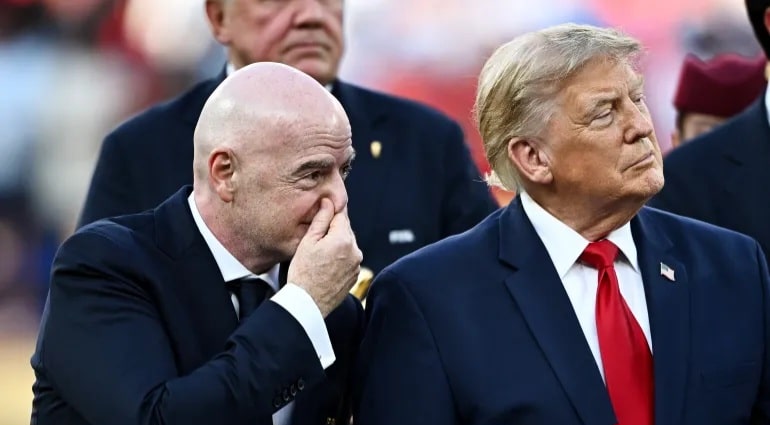
Facing an unsustainable diplomatic rupture across two major continents, FIFA President Gianni Infantino confirmed the project was terminated late on Friday.
“Having listened carefully to all the views, it has become clear that the project has created divisions of a nature that, regardless of the level of support, are no longer in the interest of the objective set out in the first place,” Infantino said.
“Our purpose has always been – and will always be – to unite and improve. As a result, this proposal will not proceed.”
The fallout produced immediate structural consequences inside Zurich headquarters. Infantino’s senior adviser, Carlos Cordeiro, resigned on Friday, calling the plan “a bad deal for football”.
Concurrently, FIFA Chief Operating Officer Kevin Lamour stated that internal staff were “deceived” by Infantino, characterising the private equity attempt as a “project of one person”.
Political leaders also intervened. British Prime Minister Andy Burnham stated publicly on Friday that Infantino was “the wrong man to lead the organisation”.
FIFA World Cup Private Investment Plan Collapse Signals Deep Structural Crisis
The sudden withdrawal of the proposal exposes systemic fragility within global football governance, ending a long period of unchecked executive centralisation in Zurich.
For decades, FIFA has maintained absolute operational sovereignty over World Cup commercial rights. Attempting to monetise these assets via private equity marked an unprecedented shift towards institutional finance, alarming traditional administrators who fear losing control over calendar scheduling and revenue distribution.
The venture capital initiative was set to be led by Joshua Kushner, founder of Thrive Capital, through a dedicated vehicle named Thrive Eternal. Kushner is the brother of Jared Kushner, son-in-law to United States President Donald Trump.
President Trump clarified his position on Friday from Camp David, stating he did not speak with Infantino regarding external investment stakes.
Presidential Authority Challenged Ahead of March Election
The scandal arrives at a critical juncture for Infantino, who planned to run unopposed for a final term through 2031 at the upcoming congress in Morocco on March 18. Candidates have until November 18 to declare their intentions.
Opposition is now consolidating rapidly around alternative candidates, including CONCACAF chief Victor Montagliani and AFC President Sheikh Salman bin Ebrahim Al Khalifa. Sheikh Salman previously finished second to Infantino during the 2016 election.
In a formal declaration on Thursday, Sheikh Salman described the secret negotiations as “totally unacceptable”.
“FIFA’s unilateral actions appear to undermine the very foundations of continental football, which are based on solidarity, cooperation and transparency,” he stated.
The AFC added that recent events “exposed fundamental weaknesses in FIFA’s consultation and decision-making processes that must now be addressed,” demanding an “urgent review of its governance and decision-making framework”.
With continental blocs aligning against Zurich’s unilateral leadership style, Infantino faces the most severe threat to his presidency since taking office eleven years ago.