

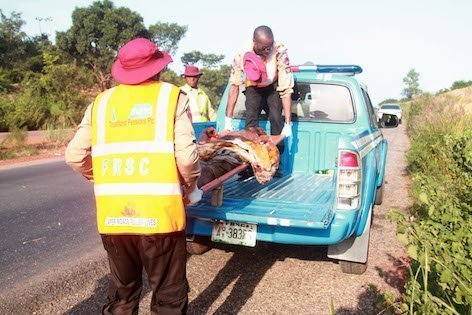
The persistent challenge of Nigeria road traffic accidents demands an immediate, dual-fronted approach that combines rigid Federal Road Safety Corps (FRSC) traffic enforcement with data-driven public education.
Established in 1988, the FRSC holds the explicit mandate to guarantee safer motorways and minimise transport-related deaths across the federation. Yet, despite the agency’s continuous interventions, the nation still records some of the highest transit mortality rates on the African continent. While recent data indicates a marginal decline in total casualties, the baseline numbers remain unacceptably high. Crucially, adult males continue to make up the vast majority of these victims, consistently accounting for the highest percentage of overall casualties on our national grid.

Unpacking the Major Causes of Road Crashes
When we look closely at the data, overspeeding stands out as the single greatest driver of highway tragedies. However, a deeper look at the causes of road crashes reveals a complex web of human error and mechanical failure. Road users routinely contend with reckless driving, highly dangerous overtaking, terrible vehicle maintenance, driver exhaustion, and severe overloading.
[Human Error] —> Overspeeding & Reckless Overtaking
[Mechanical] —> Poor Vehicle Maintenance & Overloading
[Environmental] —> Degraded Road Infrastructure
These factors combine to create highly hazardous conditions on major interstate arteries. The issue is not a complete lack of infrastructure or institutional presence, but rather a widespread culture of driving indiscipline that undermines basic safety standards.
Evaluating FRSC Traffic Enforcement Strengths
Nigeria’s current road management architecture possesses distinct structural strengths. The very existence of a dedicated body like the FRSC gives the country a specialised, centralized institution solely tasked with traffic management, policy implementation, and rapid rescue operations. In recent years, post-crash emergency response times have notably improved, saving lives that would have otherwise been lost to delays.
Furthermore, targeted enforcement drives and aggressive road safety campaigns have yielded clear dividends. The raw number of apprehended traffic violators has risen sharply. Yet, historical patterns show that accidents spike dramatically during festive periods, when highway congestion peaks and commercial pressure intensifies. In response, public enlightenment initiatives have progressively shifted toward behaviour-change communication. These programmes directly target high-risk groups, including commercial drivers, motorcyclists, and transport union workers.
The Obstacles Hinder Safetly Progress
Despite these documented milestones, deep systemic bottlenecks continue to stall progress. Annual casualty figures remain stubbornly high, claiming thousands of Nigerian lives each year. Drivers still battle poor driving habits, a lack of self-discipline, extreme speeding, and the growing menace of driving under the influence of illicit substances.
Furthermore, poor road maintenance and sub-standard vehicle upkeep add heavily to the chaos, though the government continues working to address these infrastructural deficits. Ultimately, the FRSC itself freely acknowledges that the current climate requires a paradigm shift. The nation must place a far greater emphasis on proactive prevention, total compliance, and strict obedience to traffic control lights.
Strategic Solutions for Safer Highways
To systematically curb Nigeria road traffic accidents, the FRSC and its allied stakeholders must intensify operations designed to block traffic violations before they occur. Courts must issue stiffer punishments for major offences such as speeding, dangerous driving, driving under the influence of alcohol or drugs, wrong-way driving, and overloading. These specific violations remain responsible for the vast majority of fatal crashes across the country.
“The rule is simple: when you drink, don’t drive.”
To back this up, authorities should launch random alcohol and drug testing loops at major motor parks and along critical highways to stop substance abuse before a driver ever turns the ignition key.
[Stricter Penalties] -> [Mandatory Retraining] -> [Grassroots Sensitisation]
At the same time, we need a major upgrade to our physical road infrastructure. True progress relies on a mix of public enlightenment and formal driver training. Commercial drivers should undergo mandatory, regular retraining, and the acquisition of a defensive driving licence must become compulsory. Furthermore, the state must actively engage religious leaders and transport unions to drive grassroots sensitisation campaigns deep into the community level. Finally, repeat offenders must face escalatory penalties, including heavier fines and the swift suspension of driving licences to permanently deter future traffic violations.
Turning the Tide on Highway Fatalities
In conclusion, Nigeria undeniably possesses both the institutional framework and the core road infrastructure required to build a safer, world-class transport network. However, moving the needle will require far stronger preventive measures, absolute compliance with established traffic laws, upgraded road surfaces, and sustained, well-funded road safety campaigns. Only by tightening FRSC traffic enforcement and demanding personal driver accountability can the nation finally break the deadly cycle of highway tragedies.