

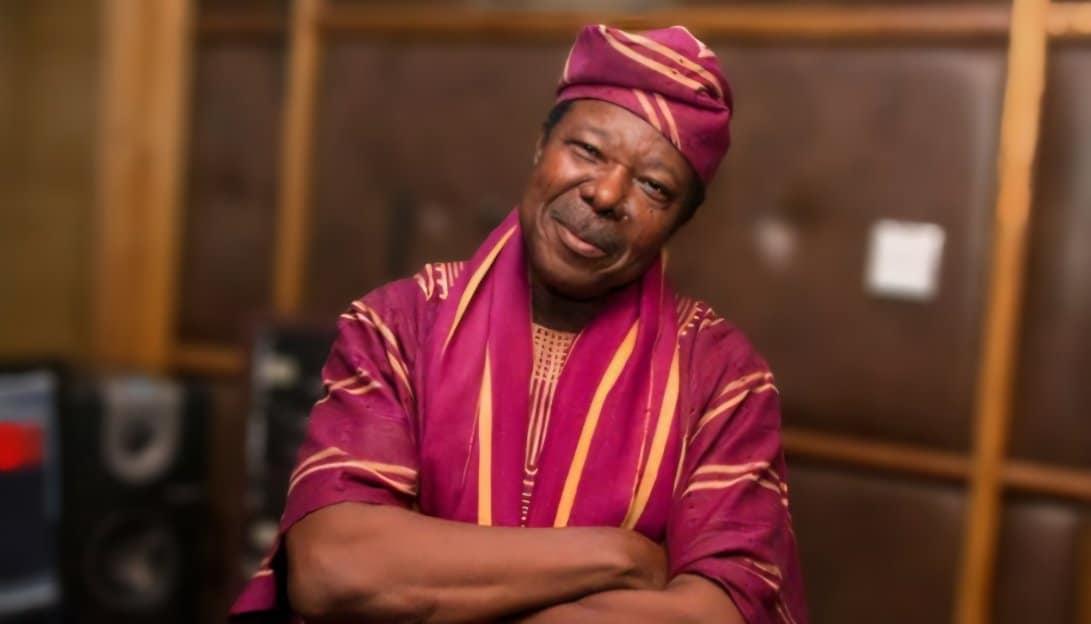
Celebrating 80 years of greatness, this comprehensive profile traces the journey of King Sunny Ade—from his early days in Western Nigeria to becoming a global ambassador of Jùjú music and two-time Grammy nominee.
King Sunny Ade: The Genesis of a Juju Music Legend
Born Sunday Adeniyi Adegeye, on September 22, 1946, in Oshogbo, Nigeria, to a royal family from Ondo and Akure, King Sunny Ade reached his historic 80th birthday milestone as one of Africa’s most influential living cultural titans. Raised in an environment steeped in traditional Yoruba culture and Christian church melodies, his early exposure to rhythm laid a permanent foundation for his artistic destiny.
Despite family expectations to pursue formal academic paths, young Sunday harbouring an unsilenced passion for performance art, left school under the guise of attending university in Lagos. During the mid-1960s, he gravitated toward the bustling Lagos entertainment circuit. He began his apprenticeship with Moses Olaiya’s Federal Rhythm Dandies, a popular highlife group where he honed his guitar prowess, stage presence, and vocal delivery.

The Evolution and Rise in Jùjú Music
In 1967, King Sunny Ade took a decisive leap by founding his own ensemble, Green Spots, which was later renamed The African Beats. During this era, Jùjú music—a traditional fusion of Yoruba vocal traditions, complex percussion, and acoustic instrumentation—was dominated by veterans such as I.K. Dairo and Ebenezer Obey.
Key Innovations Introduced to Jùjú Music:
- Pedal Steel Guitar Integration: Introduced Hawaiian glide sounds into traditional African arrangements.
- Expanded Polyrhythms: Incorporated dual talking drums to deepen the rhythmic dialogue.
- Modern Instrumentation: Blended electric synthesisers, bass guitars, and clarinets with indigenous percussion.
- Dynamic Stagecraft: Revolutionised live performances with synchronised stage formations and dance routines.
King Sunny Ade modernised the Jùjú genre through these bold structural choices. His distinct style—characterised by intricate guitar solos, call-and-response vocals, and philosophy-laden lyrics—swiftly captured the West African music landscape. Albums like Challenge (1970) and E Dide E Moki Sola established his commercial dominance, transforming Jùjú from local party entertainment into a sophisticated art form.
Breakthroughs, Global Acclaim, International Recognition
The turning point for his global career arrived in the early 1980s following the passing of Reggae legend Bob Marley. Island Records founder Chris Blackwell sought an authentic third-world artist capable of captivating international audiences and signed King Sunny Ade and His African Beats.
Their 1982 album, Juju Music, was a critical and commercial triumph worldwide. It peaked on the US Billboard charts, introducing listeners across Europe and North America to sweeping guitar lines and hypnotic Yoruba percussion. The 1983 follow-up, Synchro System, earned King Sunny Ade his first Grammy Award nomination in the Ethnic/Traditional Folk category, making him the first Nigerian musician to achieve this historic distinction.
Milestones in His Musical Career:
- Highlife Apprenticeship: Began his professional musical journey in the mid-1960s with Moses Olaiya’s Federal Rhythm Dandies.
- Band Formation (1967): Founded Green Spots, later evolving into The African Beats.
- Global Record Deal (1982): Signed to Island Records and released the internationally acclaimed Juju Music.
- First Grammy Nomination (1983): Earned a Grammy nomination for Synchro System.
- Second Grammy Nomination (1998): Received another nomination for Odù, solidifying his status as an African music icon.
His 1984 release Aura featured a notable collaboration with American harmonica maestro Stevie Wonder. Later in his career, his 1998 masterpiece Odù garnered a second Grammy nomination, solidifying his standing as a global ambassador of African music.
Career Navigations: Triumphs Over Trials
The journey was not without significant obstacles:
- Contractual Disagreements: Following the success of Aura, creative differences and commercial demands led to his departure from Island Records in 1984. Rather than succumbing to the setback, he founded his own independent label, Atom Park Records, gaining full creative and financial autonomy.
- Band Restructuring: Managing a large touring orchestra of over 20 musicians often presented financial and logistical hurdles. In the late 1980s, internal disputes led to the departure of several key band members. King Sunny Ade responded by assembling a new group, dubbed The Golden Mercury of Africa, maintaining his signature sonic quality.
- Intellectual Property Battles: Copyright infringement and widespread music piracy in developing markets frequently impacted revenue streams. He countered these challenges by advocating for artists’ rights, investing in real estate, establishing nightclubs, and serving as a director for the Musical Copyright Society of Nigeria (MCSN).
Discography: Essential Albums and Release Timeline
King Sunny Ade’s career is defined by dozens of defining projects across multiple decades:
- 1967 — Alanu Loluwa: Debut recording with Green Spots on African Songs Ltd.
- 1974 — Syncro System Movement Vol. 12: Early landmark recording establishing his signature band sound.
- 1977 — The Golden Mercury of Africa: Highly influential LP reflecting his growing artistic leadership.
- 1982 — Juju Music: Landmark global breakthrough released via Island/Mango Records.
- 1983 — Synchro System: Critically praised release earning his historic 1st Grammy Award nomination.
- 1984 — Aura: Famous crossover effort featuring guest appearances by Stevie Wonder.
- 1986 — Sweet Banana: Independent project released through his Atom Park Records imprint.
- 1989 — Wait For Me: Social advocacy collaboration recorded alongside Onyeka Onwenu.
- 1995 — E Dide (Get Up): Major release distributed globally via Mesa/Bluemoon Records.
- 1998 — Odù: Celebrated international album securing his 2nd Grammy nomination.
- 2000 — Seven Degrees North: Critical project published via V2/Mesa Records.
- 2010 — Bábá Mo Túndé: Late-career retrospective studio album issued via IndigeDisc.
Legacy and Global Influence
As King Sunny Ade enters his ninth decade, his legacy extends far beyond vinyl grooves and digital streams. He redefined the possibilities of indigenous African music on the world stage without diluting its cultural essence or linguistic identity.
His guitar technique—characterised by microtonal bends, complex fingerpicking, and rhythmic locking with talking drums—remains a subject of study for ethnomusicologists globally. Modern Afrobeats and contemporary African pop artists continue to draw inspiration from his stagecraft, rhythmic structures, and entrepreneurial resilience. King Sunny Ade stands as a master craftsman, a cultural preservationist, and an immortal beacon of global music history.