
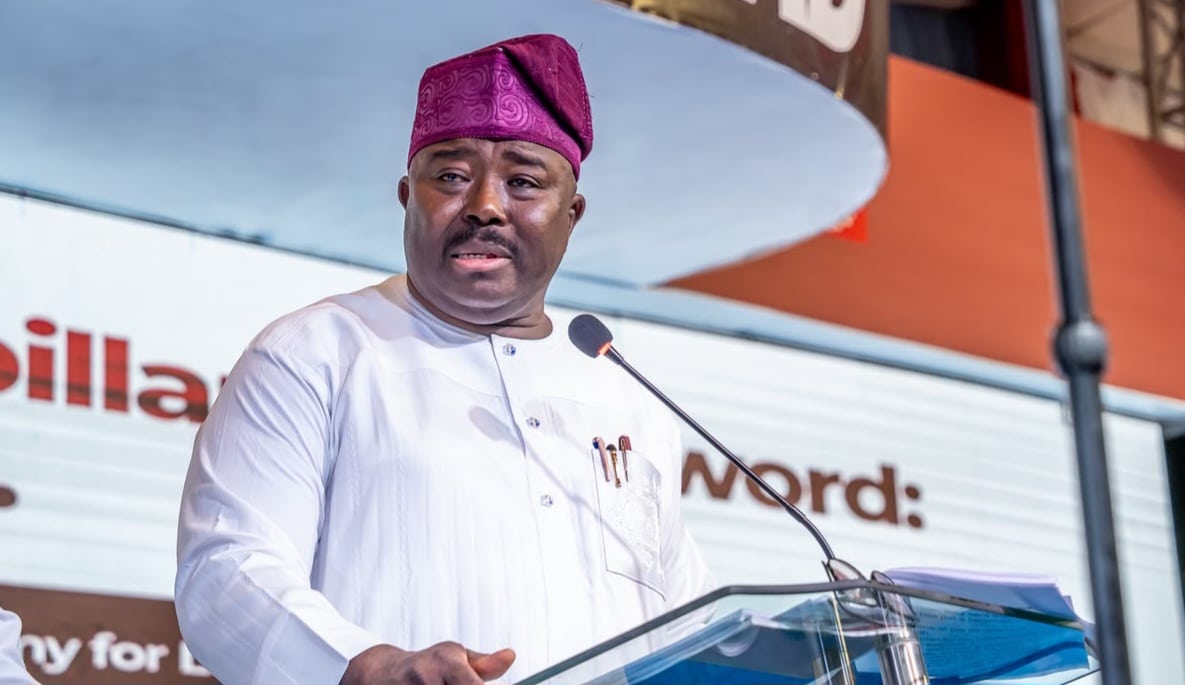
The unveiling of Senator Sharafadeen Abiodun Alli’s OYO AHEAD manifesto has introduced a new dimension to the 2027 Oyo State governorship conversation. Beyond the usual campaign promises, it attempts to define not just what a government intends to do, but how it proposes to govern. Its central message is that Oyo needs a development model built on grassroots empowerment, economic productivity, institutional accountability and measurable performance.
An Oyo renewal blueprint anchored in experience
What makes the manifesto politically significant is its effort to connect the candidate’s journey with a programme of government. Alli has served as Chairman of Ibadan North Local Government, Secretary to the State Government, Chief of Staff, Senator and Chairman of Odu’a Investment Company. He presents himself as a politician whose experience spans grassroots administration, constitutional politics, legislative representation and business management. That is a solid foundation for expecting the agenda to translate into tangible results.
Local government autonomy: the most consequential pillar
The first pillar may well prove the most politically consequential. By promising transparent access to council allocations, monthly funding and greater freedom for councils to meet community needs, Alli places grassroots governance at the centre of his philosophy. The message is unmistakable: democracy must be felt beyond Government House, and its dividends must reach the communities where ordinary people live and work.
Infrastructure, healthcare and education in the Oyo AHEAD manifesto
The infrastructure proposals deserve attention. Rather than focusing only on new construction, the manifesto promises an audit of unfinished roads, published completion schedules, farm access roads, improved electricity, potable water and affordable housing. Infrastructure, it suggests, should be judged by its economic and social usefulness, not the political visibility of projects.
In healthcare, the proposed Oyo Care Guarantee for infants, pregnant women and residents above 70 is a significant social intervention. Together with stronger primary healthcare, more medical personnel and wider health insurance coverage, it recognises that healthcare is not a privilege for those who can afford it. With the right funding, staffing and institutional commitment, these promises can become a sustainable system.
Education is where the manifesto tries to reconnect Oyo with its historic reputation as a pioneer. Reducing classroom congestion, repairing schools, expanding scholarships, establishing skills centres and linking graduates to jobs speak directly to the future of the state’s young population.
From consumption to production: economy and agriculture
Perhaps the most compelling economic proposition is the move from an economy of consumption to one of production, investment and job creation. The plan includes industrial parks, a revived Oluyole Free Trade Zone, a ₦10 billion Youth Fund, a digital skills programme and support for small businesses. The ₦150 billion annual internally generated revenue target is ambitious, resting on expanded business activity, efficient revenue administration and the elimination of financial leakages.
Agriculture adds a regional dimension, particularly across Oke-Ogun, Ogbomoso and Ibarapa. The proposals for processing facilities, revived farm settlements, mechanisation, storage, agricultural insurance and export promotion recognise that farmers need markets and value chains, not just harvests. If properly executed, this could turn subsistence farming into a major engine of industrial growth.
Security and accountability: a measurable pledge
Security is, appropriately, treated as the foundation for every other pillar. The plan covers community security networks, protection and insurance for hunters and vigilantes, improved surveillance and farmer-herder mediation. Development cannot flourish where fear controls access to farms, schools and businesses. Public disclosure of projects, contractors and costs reinforces the point that security and accountability are inseparable.
One striking feature is Alli’s pledge to publish quarterly performance reports and to decline a second-term request if Oyo is not measurably better by the end of his first tenure. It is a bold undertaking. It shifts the conversation from the entitlement of incumbency to the obligation of performance.
Turning the Oyo AHEAD manifesto into a governing programme
The strength of OYO AHEAD lies not only in the breadth of its promises but in the opportunity to turn them into a practical programme. That will need financial planning, sound legal frameworks, effective coordination and clear targets.
This places a responsibility on the OYO AHEAD Steering Committee. Beyond mobilisation and public presentation, it must sustain the technical work of reliable data, realistic costing, legal guidance and implementation timelines. The depth of that preparation will show whether OYO AHEAD is a carefully considered programme or merely a collection of campaign promises.
As the 2027 governorship election approaches, the debate should focus on the governance philosophy, experience, policy direction and preparedness of those seeking the people’s mandate. Alliances and personalities will shape the contest, but the enduring question is which proposals offer a clear and practical pathway to development, prosperity and accountable leadership.
OYO AHEAD has placed such a pathway before the people. Its seven pillars address the state’s priorities, with an emphasis on grassroots governance, economic productivity, human capital and accountability. With his political experience, administrative background and familiarity with Oyo’s challenges, Senator Alli is well placed to lead the effort. The promise of OYO AHEAD is renewal; its ultimate measure will be the transformation it delivers to the lives of the people.