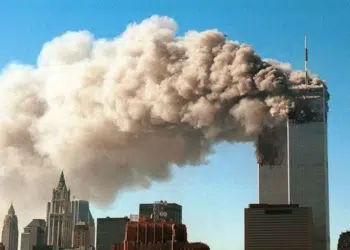


Twenty-five years after the deadliest foreign attack on American soil, the United States paused on Friday for a solemn 9/11 25th anniversary reflection. Communities across the nation joined together to commemorate the September 11 attacks, honouring the nearly 3,000 people killed when hijacked airliners struck the World Trade Centre, the Pentagon, and a field in Shanksville, Pennsylvania.
Across the country, citizens wrestled with the long reverberations of a tragedy that reshaped modern history, foreign policy, and domestic security.

Ground Zero Memorial Service Unites Presidents and Families
In lower Manhattan, victims’ relatives stood side by side with Vice President JD Vance and four former U.S. presidents at the Ground Zero memorial service. The morning silence began precisely at 8:46 a.m., marking the exact moment American Airlines Flight 11 hit the World Trade Center’s North Tower.
Shortly after, family members started reading the names of all 2,977 victims killed on September 11, alongside the six people killed in the 1993 World Trade Centre bombing. Demonstrating the passage of time, young children who never met their lost relatives took to the podium to read the names aloud.
Mourners observed six moments of silence throughout the morning to mark each strike and building collapse. For the first time, officials observed a seventh moment of silence to acknowledge the grave 9/11 health effects and toxic dust exposure that killed thousands of first responders and residents in the decades following the collapse.
Gregory Carafello attended the Manhattan gathering to honour his lifelong friend James Martello. Martello worked at Cantor Fitzgerald, a financial firm that lost over 650 employees. Carafello managed to evacuate from the 18th floor of the South Tower.
“Everyone should realise that it was a very bad, catastrophic day for many families,” he said. “These were not warriors. These were people like you and me going to work.”
National Remembrances Commemorate the September 11 Attacks
In Arlington, Virginia, military leaders gathered under heavy morning rain at the west side of the Pentagon where American Airlines Flight 77 struck, killing 184 people. President Donald Trump scheduled an address at the site later in the day. Concurrent ceremonies took place in Shanksville, Pennsylvania, where passengers on United Airlines Flight 93 fought back against hijackers to stop a strike on Washington.
The events of 2001 permanently altered American life, yet the day remains deeply personal for those left behind. Caroline Ogonowski’s father, John, piloted Flight 11 when it was hijacked after departing Boston. Ogonowski, now 39, recently welcomed her first child and named him after her late father.
“This year, there’s this new sadness in knowing that they won’t ever get to know each other,” Ogonowski said. “My father will never know his grandson. And my son will never know his grandfather. We owe it to my father and all the others that we lost on that day to make sure that we continue to teach future generations about what happened, about who these people were, who these heroes were, and how our country came together and became stronger because of it.”
Confronting Generational Pain and 9/11 Health Effects
An entire generation of Americans has reached adulthood with no living memory of the attacks, yet their political and social landscape remains defined by them. The tragedy launched the global “war on terror” and two decades of military conflict in Iraq and Afghanistan.
At home, the initial surge of national solidarity stood alongside immediate challenges for minority communities. Muslim Americans encountered increased discrimination, with public sentiment remaining impacted for decades. Political figures like New York City Mayor Zohran Mamdani, the city’s first Muslim mayor, faced calls from political opponents to skip Friday’s gathering, which he firmly rejected.
Meanwhile, medical consequences continue to claim lives long after the physical debris was cleared. Firefighters, police, and recovery personnel spent months breathing polluted air at Ground Zero. The New York City Fire Department lost 343 members on the day of the attack. Over 600 additional firefighters have since died from toxic exposure, including 26 deaths this year alone.