
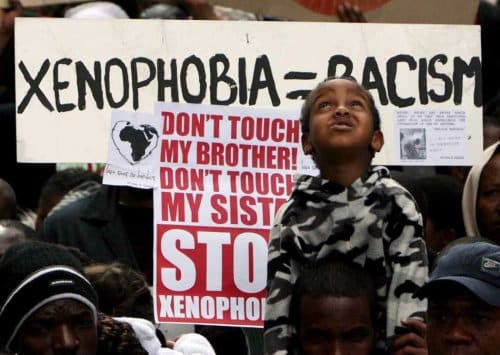
The Nigerian government has formally summoned South Africa’s acting high commissioner following a surge in xenophobic attacks in South Africa that has seen migrants targeted across multiple cities, including Pretoria.
In a move that signals a deepening Nigeria-South Africa diplomatic crisis, the Nigerian Ministry of Foreign Affairs invited the envoy to Abuja for urgent talks on Monday, 4 May. The summons follows what Nigerian officials described as “documented instances of mistreatment of Nigerian citizens and attacks on their businesses.”
The unrest, which has intensified over the past week, has been marked by reports of harassment and violence directed at foreign nationals. In a particularly alarming turn, accounts from affected communities suggest that protesters have targeted schools, attempting to block or forcibly remove the children of foreign nationals from classrooms.
Escalation of the Nigeria-South Africa diplomatic crisis
The violence has already turned fatal. Reports indicate that at least two Nigerians are among those killed in recent days, heightening anxiety within the diaspora and triggering demands for immediate intervention from the federal government.
Kimiebi Imomotimi Ebienfa, spokesperson for the Nigerian Ministry of Foreign Affairs, stated that the government remains “deeply concerned about the safety and welfare of its citizens.”
He confirmed that Abuja is now pursuing “all necessary diplomatic channels” to secure the protection of its nationals.
“The Federal Government remains committed to safeguarding the rights and dignity of Nigerians abroad,” Ebienfa said. “We urge calm among our citizens while engagements with South African authorities continue.”
Persistent xenophobic attacks in South Africa spark alarm
In Pretoria, President Cyril Ramaphosa has issued an appeal for restraint. He called on foreign nationals to respect local laws while insisting that his administration remains committed to the rule of law and the protection of human rights.
“No form of violence or vigilantism will be tolerated,” Ramaphosa said in remarks reported by local media. “South Africa remains a constitutional democracy that protects all who live within its borders.”
Expert warns of systemic breakdown in foreign national safety
Despite the rhetoric from Pretoria, analysts suggest the response is failing to address the root causes. Dr Arlowe Fischer, a Senior Fellow at the Pan-African Institute for Geopolitics, notes that the recurring nature of these incidents points to a systemic breakdown.
“What we are seeing is a disconnect between high-level diplomatic pleasantries and the reality of populist anger on the streets,” Dr Fischer explains.
“If the South African government cannot provide a credible roadmap for safety, the Nigeria-South Africa diplomatic crisis will move from ‘pressure’ to a total severance of strategic cooperation.”
For the thousands of Nigerians living in South Africa, the atmosphere remains one of profound uncertainty. Community leaders report that fear is spreading rapidly, with many families now actively considering relocation. While some are calling for stronger security guarantees, others believe the situation has moved beyond the point of local policing.
As the Nigerian Ministry of Foreign Affairs prepares for Monday’s high-level meeting in Abuja, the stakes could not be higher. The outcome will serve as a litmus test for whether diplomatic pressure can finally end the attacks in South Africa —or whether this latest cycle of violence will be allowed to persist unchecked.