
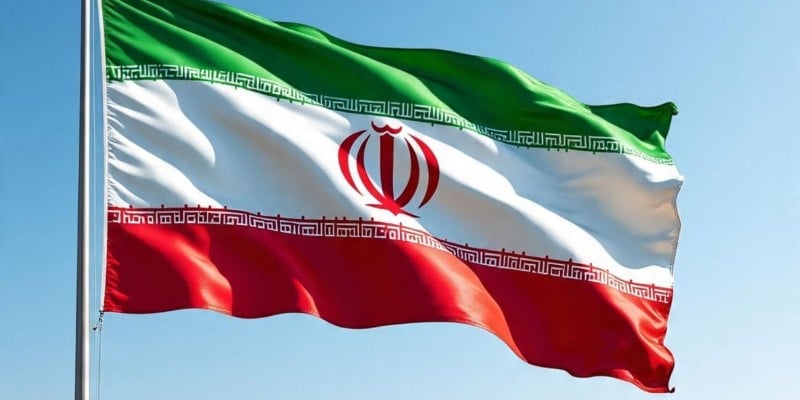
A senior commander of the Islamic Revolutionary Guard Corps, General Ebrahim Jabbari, has threatened that Iran will expand its retaliatory strikes and cripple economic hubs across the Middle East region if the United States and Israel sustain their attacks on the country.
General Jabbari, speaking amid rising hostilities, said Tehran would respond forcefully to any further assaults on what he described as Iran’s “main centres.”

“We are saying to the enemy that if it decides to hit our main centres, we will hit all economic centres in the region,” Jabbari declared, according to Iran’s state-linked news agency, quoted by Al Jazeera.
He further claimed that Iran had shut down the Strait of Hormuz, a critical maritime passage through which roughly one-fifth of the world’s traded oil flows.
The narrow corridor is also vital for liquefied natural gas exports from Gulf states such as Qatar and the United Arab Emirates.
“Currently, the price of oil is above $80 and will soon reach $200,” Jabbari was quoted as saying, suggesting that disruptions to global energy supply could intensify if the standoff worsens.
Regional officials are increasingly alarmed over the vulnerability of key installations, including power grids, desalination facilities, and oil infrastructure.
Energy analysts reportedly noted that approximately 20 million barrels of crude oil, about 20 percent of global daily consumption, pass through the Strait of Hormuz each day, underscoring the potential global impact of any sustained disruption.
Security observers were reported as saying that the unfolding crisis represents a significant shift in the Middle East’s threat landscape.
For years, Gulf states concentrated on non-state actors such as Yemen’s Houthi rebels and Lebanon’s Hezbollah.
However, the current confrontation suggests a move toward more direct state-level hostilities with far-reaching economic implications.