
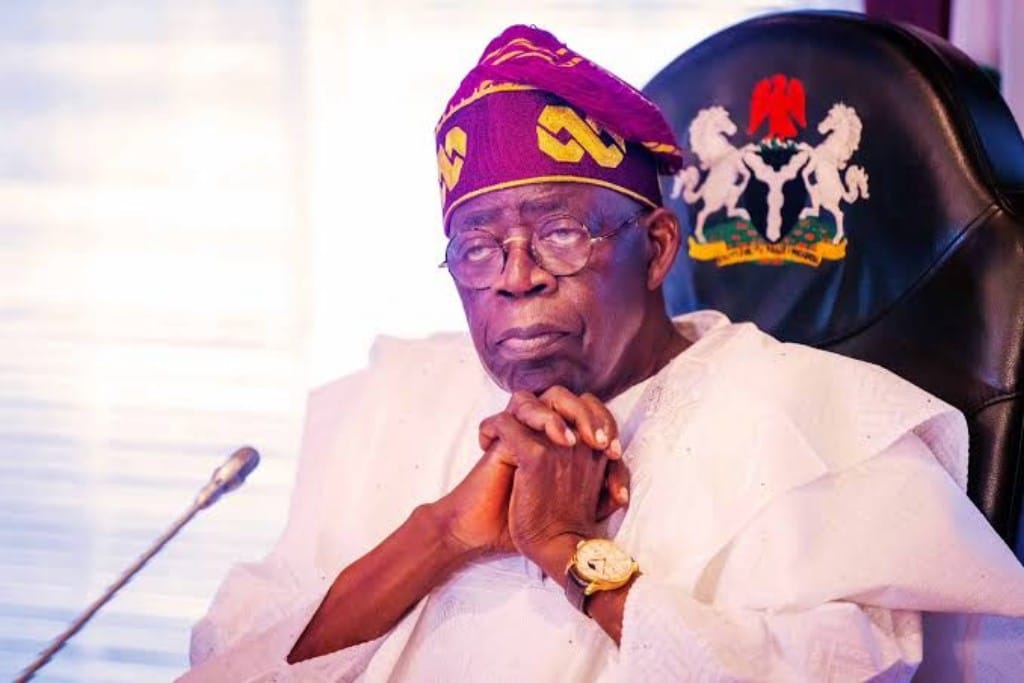
Few figures in Nigeria’s Fourth Republic evoke as much fascination, admiration, suspicion and debate as President Bola Ahmed Tinubu. To his supporters, he is a political strategist of rare endurance who built a formidable network of influence and eventually captured the highest office in the land. To his critics, he represents the entrenched culture of power brokerage and political godfatherism that has long complicated Nigeria’s democratic evolution.
Both views exist simultaneously. Understanding how that paradox emerged is essential to understanding contemporary Nigerian politics.
For more than three decades, Tinubu has navigated Nigeria’s shifting political terrain with unusual resilience. His journey has taken him through several identities: pro-democracy activist, state governor, regional power broker, national kingmaker and ultimately President of the Federal Republic. In a political environment where alliances collapse quickly and influence often evaporates once public office is lost, Tinubu’s ability to endure and expand his reach has made him one of the most consequential actors of the democratic era that began in 1999.
How he managed to do so is the puzzle that begins this series.
Nigeria’s political history is often narrated through towering personalities whose influence defined particular epochs. Nnamdi Azikiwe embodied the nationalist mobilisation that drove the struggle for independence. Obafemi Awolowo represented ideological clarity and programmatic governance in the First Republic. Ahmadu Bello symbolised northern political consolidation during the same period. Later came leaders shaped by the military era, including Ibrahim Babangida and Olusegun Obasanjo, whose authority derived from the command structures of uniformed rule.
Tinubu belongs to a different political generation altogether. His rise is inseparable from the democratic environment that followed the end of military rule. In that environment, political authority could no longer be seized through decree or inherited through colonial-era political hierarchies. It had to be negotiated through elections, sustained through alliances and defended within an unpredictable democratic arena.
That environment rewarded a different kind of political skill.
Tinubu’s early political formation emerged during one of Nigeria’s most turbulent moments. The annulment of the June 12, 1993 presidential election triggered a profound national crisis that mobilised a broad coalition of activists, intellectuals and politicians committed to restoring democratic rule. Tinubu became associated with that resistance through the National Democratic Coalition, widely known as NADECO.
Many members of that movement faced persecution, detention or exile during the final years of military rule. The struggle created networks of political solidarity that would later shape alignments in the Fourth Republic. Yet resistance politics alone does not explain Tinubu’s later prominence. Nigeria produced many pro-democracy activists who returned from that period with moral authority but never translated it into enduring political power.
Tinubu did something different. He moved from protest politics into the less glamorous but more consequential task of building political structures.
The opportunity emerged with Nigeria’s transition to civilian rule in 1999. Tinubu became governor of Lagos State at the dawn of the Fourth Republic. At the time, Lagos was already Nigeria’s commercial nerve centre, but it was also administratively overstretched and politically complex. Governing Lagos required navigating intense economic pressures, federal-state tensions and the expectations of a rapidly expanding urban population.
Tinubu’s years in office produced changes that would later shape the foundation of his political influence. One of the most visible developments was the expansion of the state’s internally generated revenue, which significantly strengthened Lagos’ fiscal capacity. Another was the deliberate recruitment of technocrats into governance. Over time, Lagos developed a reputation for administrative experimentation and institutional restructuring.
These initiatives had consequences beyond governance. Fiscal autonomy strengthened the state’s negotiating power with the federal government. Institutional reforms created a generation of technocrats who later assumed influential roles in government and public administration. Lagos gradually evolved into more than a state government. It became a political ecosystem.
That ecosystem proved durable.
Perhaps the most striking feature of Tinubu’s political career emerged after he left office as governor in 2007. In Nigeria’s political culture, former governors often fade quickly once their tenure ends. Their successors distance themselves, alliances dissolve and their influence declines.
Tinubu defied that pattern.
Instead of retreating from the political arena, he expanded his influence by cultivating alliances across the Southwest and beyond. Several political figures who emerged through the Lagos political structure maintained varying degrees of loyalty to the network he had assembled. Over time, this pattern generated a reputation that would define his political identity for years: that of the kingmaker.
The term carried different meanings depending on who used it. Supporters interpreted it as evidence of strategic brilliance and leadership cultivation. Critics saw it as confirmation of a political godfather system that exerted excessive control over electoral outcomes.
Yet both perspectives acknowledged the same reality. Tinubu had succeeded in building one of the most durable political networks in Nigeria’s democratic history.
Political machines are not unique to Nigeria. In many political systems, influential figures have built networks capable of mobilising resources, coordinating electoral strategies and sustaining loyalty across multiple cycles of political competition. Such structures survive not through ideology alone but through organisation, patronage and strategic management of alliances.
In the Fourth Republic, Tinubu demonstrated a consistent ability to operate within this model.
Over time his influence expanded beyond regional politics. His role in coalition building during the opposition realignment that preceded the 2015 general election marked a decisive moment. The merger that produced the All Progressives Congress created the first opposition platform capable of defeating an incumbent ruling party at the federal level.
That development altered Nigeria’s political landscape.
The victory of Muhammadu Buhari in the 2015 presidential election resulted from a combination of factors, including voter dissatisfaction with the incumbent administration and the effectiveness of the opposition coalition. Within that coalition, Tinubu was widely regarded as one of the principal architects of the alliance that made the outcome possible.
His reputation as Nigeria’s most influential political kingmaker grew accordingly.
Yet the kingmaker narrative would eventually give way to a different chapter. After years of shaping political outcomes from behind the scenes, Tinubu himself sought the presidency. In 2023 he achieved what few political strategists in Nigeria’s history had managed to accomplish: converting long-standing influence into direct control of the nation’s highest office.
The kingmaker had become the king.
That transformation raises the central question that frames this series. How did a politician who began as an opposition activist during the military era evolve into the dominant strategist of the Fourth Republic and ultimately into Nigeria’s president?
Answering that question requires moving beyond simplistic narratives that either glorify or condemn. Nigerian political discourse often oscillates between these extremes, reducing complex figures to caricatures. Serious analysis requires a more balanced approach.
Tinubu’s career embodies many of the contradictions that define Nigeria’s democratic experience. He is credited with helping to transform Lagos into a more administratively functional state while also attracting criticism for the concentration of political influence within his network. He is regarded as a master strategist by supporters and as a symbol of entrenched political patronage by opponents.
Both interpretations contain elements of truth.
Such contradictions are not unusual in political history. Many influential leaders have combined institution building with aggressive power consolidation. What matters is not whether contradictions exist but how they shape governance and political development.
That is the broader inquiry this series intends to pursue.
Future installments will examine Lagos as the foundation of Tinubu’s political architecture, the mechanics of his kingmaker reputation, the years of political battles that tested his resilience and the strategic intelligence that allowed him to navigate Nigeria’s volatile political terrain.
Ultimately, the most important question lies ahead.
Winning power is an achievement. What a leader does with that power determines his place in history.
Tinubu has already secured a place in Nigeria’s political narrative through his endurance, organisational skill and strategic reach. Whether that place becomes one of enduring historical significance will depend on the choices made during his presidency and the legacy that follows.
For now, one observation remains difficult to dispute.
In the complex theatre of Nigeria’s Fourth Republic, few figures have shown a greater capacity to adapt, survive and shape the architecture of power.
That is why the Tinubu phenomenon deserves careful study.
(Part One: The Outsider Who Became the System).